
A submission photograph should help someone understand the artwork. Start with an accurate, clearly framed image, then use additional views when the surface, depth or scale needs more explanation.
You can improve an artwork photograph by making a few deliberate choices before pressing the shutter. Prepare the space, clean the camera lens and look carefully at the whole frame. The submitted works below illustrate different documentation questions. They are not presented as examples of mistakes by the artists.
Keep the camera square to a flat work
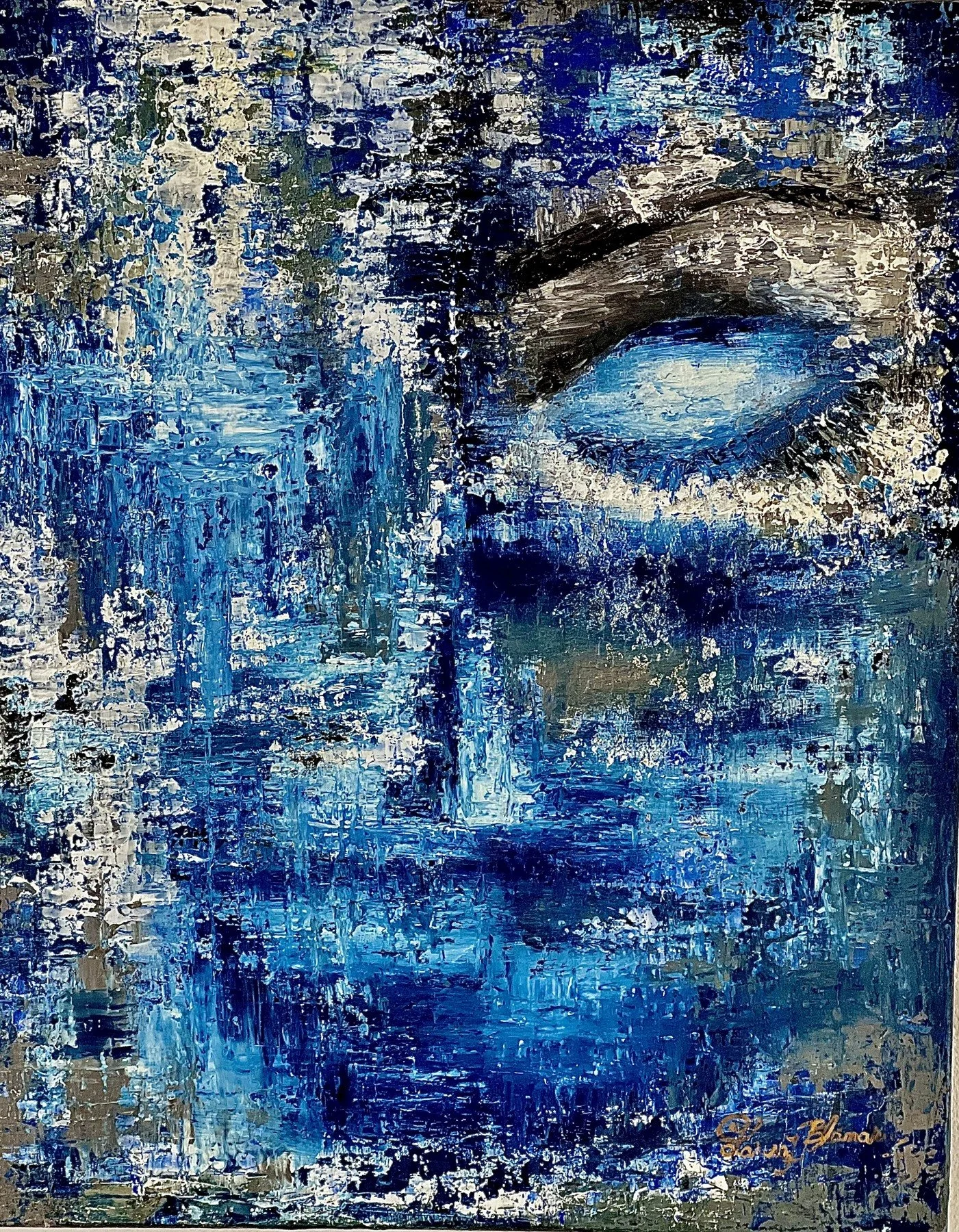
A flat artwork is usually easiest to understand when the camera faces it squarely. Larisa Holovati Blănaru’s textured painting benefits from a view that keeps the whole composition legible. Position the camera near the centre of the work, keep it steady and check that its edges have not become unintentionally distorted.
Larisa Holovati Blănaru’s textured painting reminds us that a full view and a detail serve different purposes. Begin with the whole work. If impasto or brushwork matters, add a closer photograph rather than making the only image a crop that leaves the overall composition unclear.
Use light that describes the surface
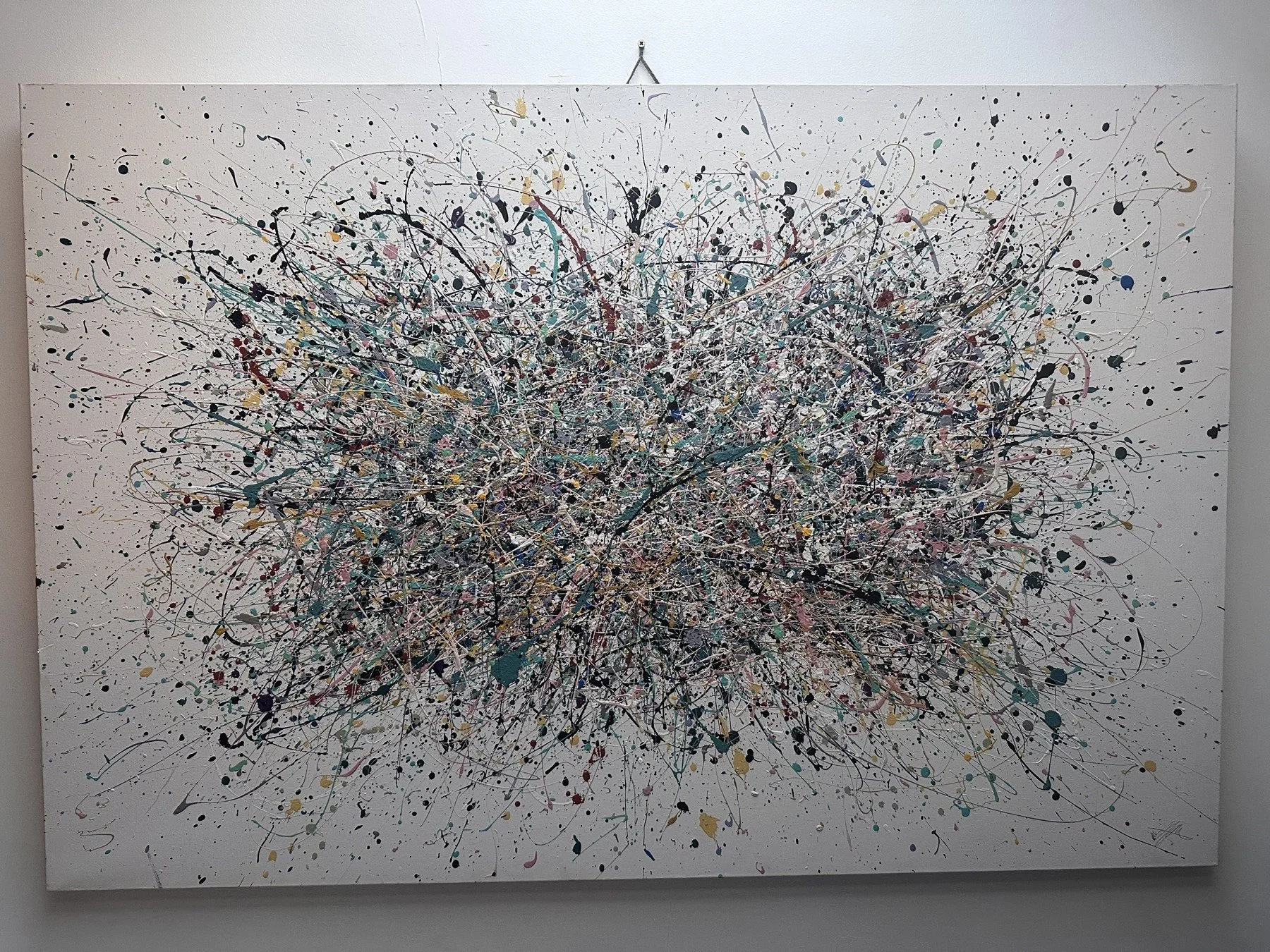
Sadie Foster’s Primavera includes emulsion, acrylic and flower petals. Its many fine marks and material layers need light that makes them visible without letting a strong reflection dominate. A photograph should describe the surface faithfully, while a separate detail can show aspects that disappear in an overall view.
Try soft, even light as a starting point. Avoid mixing strongly different light sources, and watch for glare or your own shadow. Compare the photograph with the artwork in front of you. If a texture disappears or a reflection covers an important area, change the lighting or position and try again.
Capture fine detail without losing the whole work
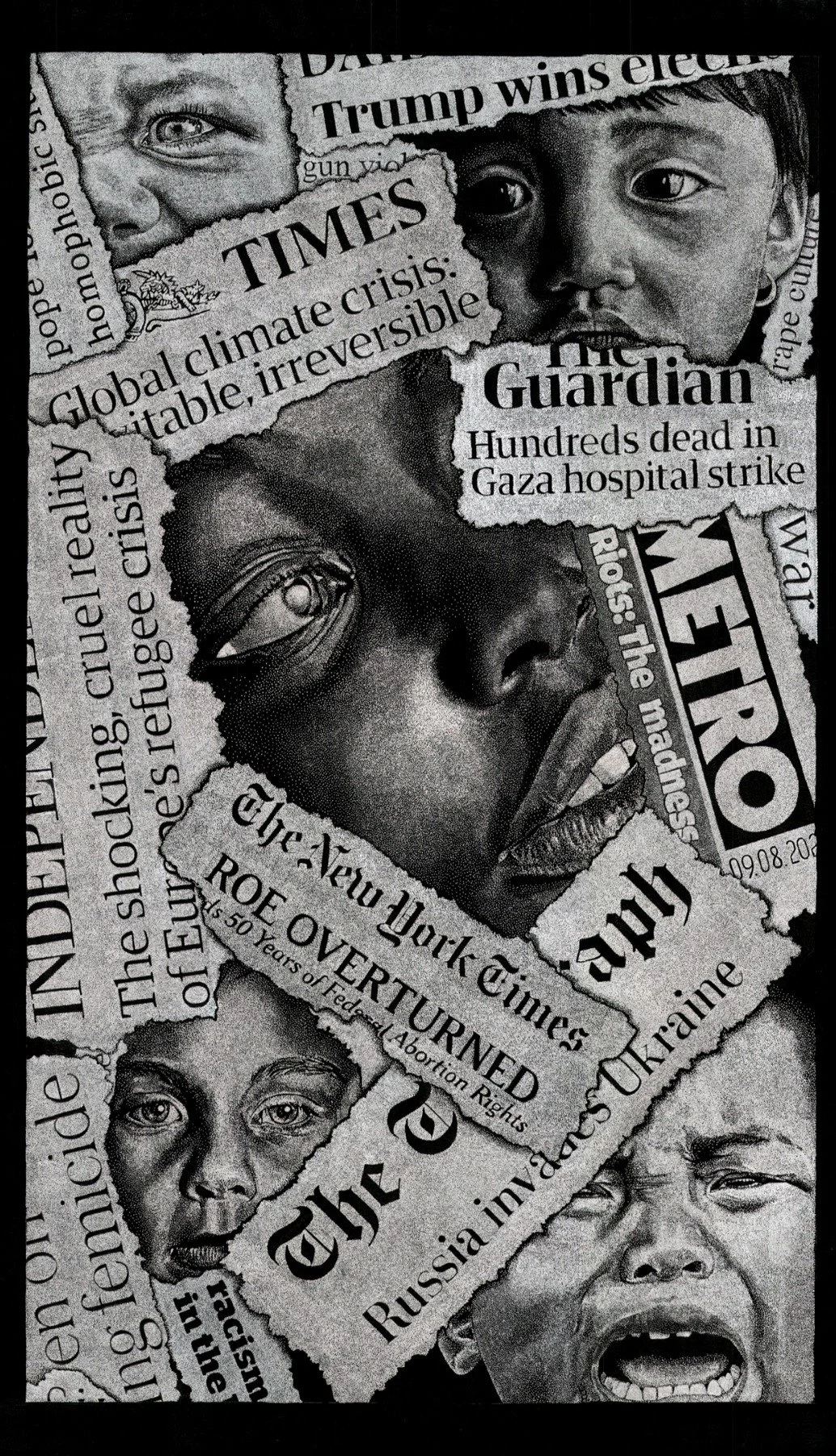
Giulia Mastracchio’s Doomsday was yesterday uses stippling and pen to build faces and newspaper-like elements. Fine work needs sufficient detail to remain legible, but an extreme close-up cannot explain the composition by itself. Pair a clear full view with a carefully chosen detail when the application allows additional images.
Photograph fine marks at a resolution that preserves their character. If you supply a detail, label it clearly and include a full view as well. Keep the camera steady, inspect the saved file at a useful size and check that sharpening or compression has not introduced distracting artefacts.
Check borders and the surrounding scene
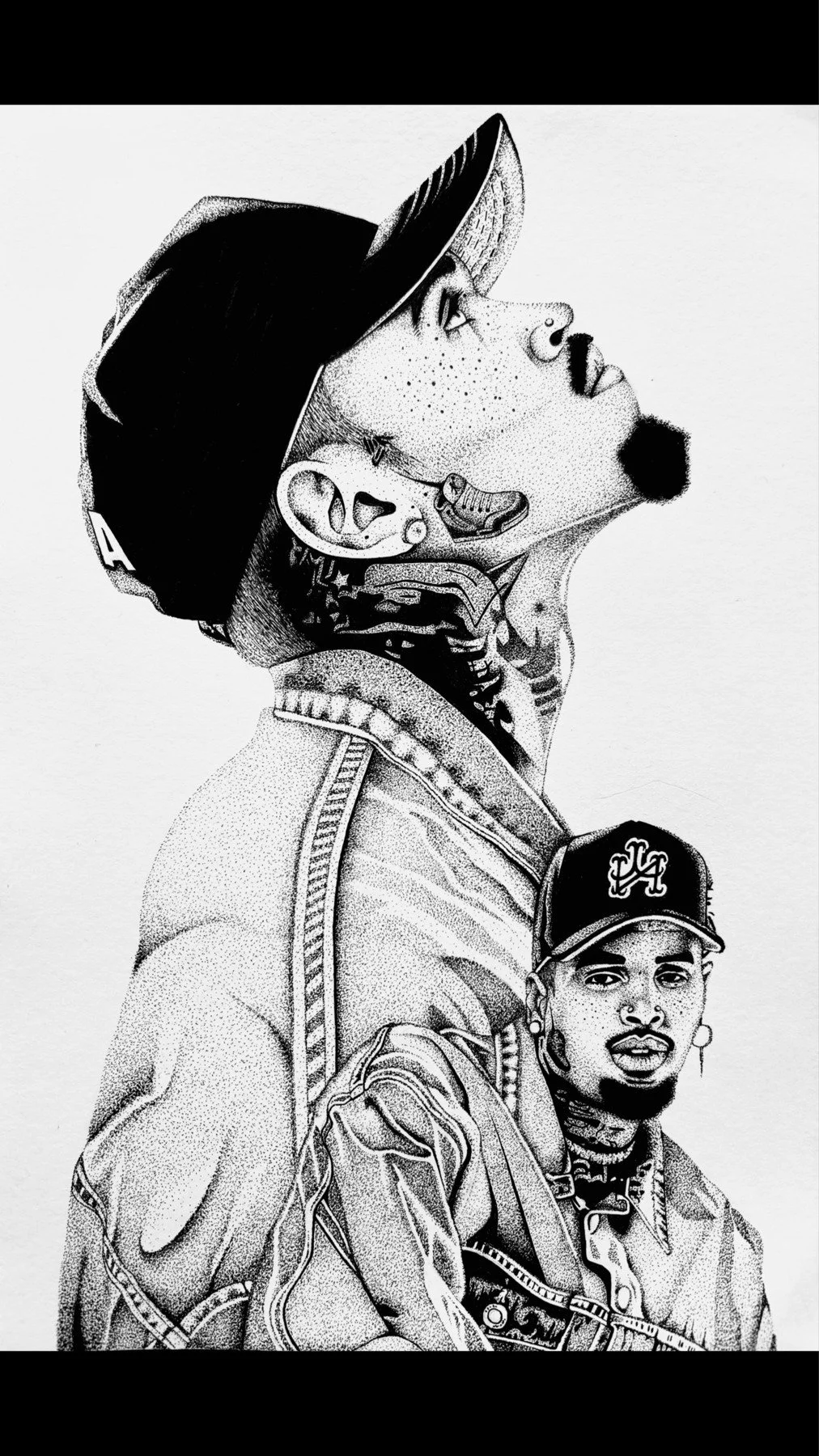
Cerys Shaw’s submitted stippling portrait shows why it helps to distinguish the artwork from the file around it. When preparing your own image, check for interface bars, unintended borders and unrelated surroundings. Keep the marks and the paper intact; cleaner documentation should not change the artist’s composition.
Remove unrelated clutter when possible and allow enough separation from the background for the outline to remain clear. Do not edit away a structural part of the work to make the image cleaner. If the display base belongs with the piece, show it and describe it in the artwork details.
Export a faithful submission copy
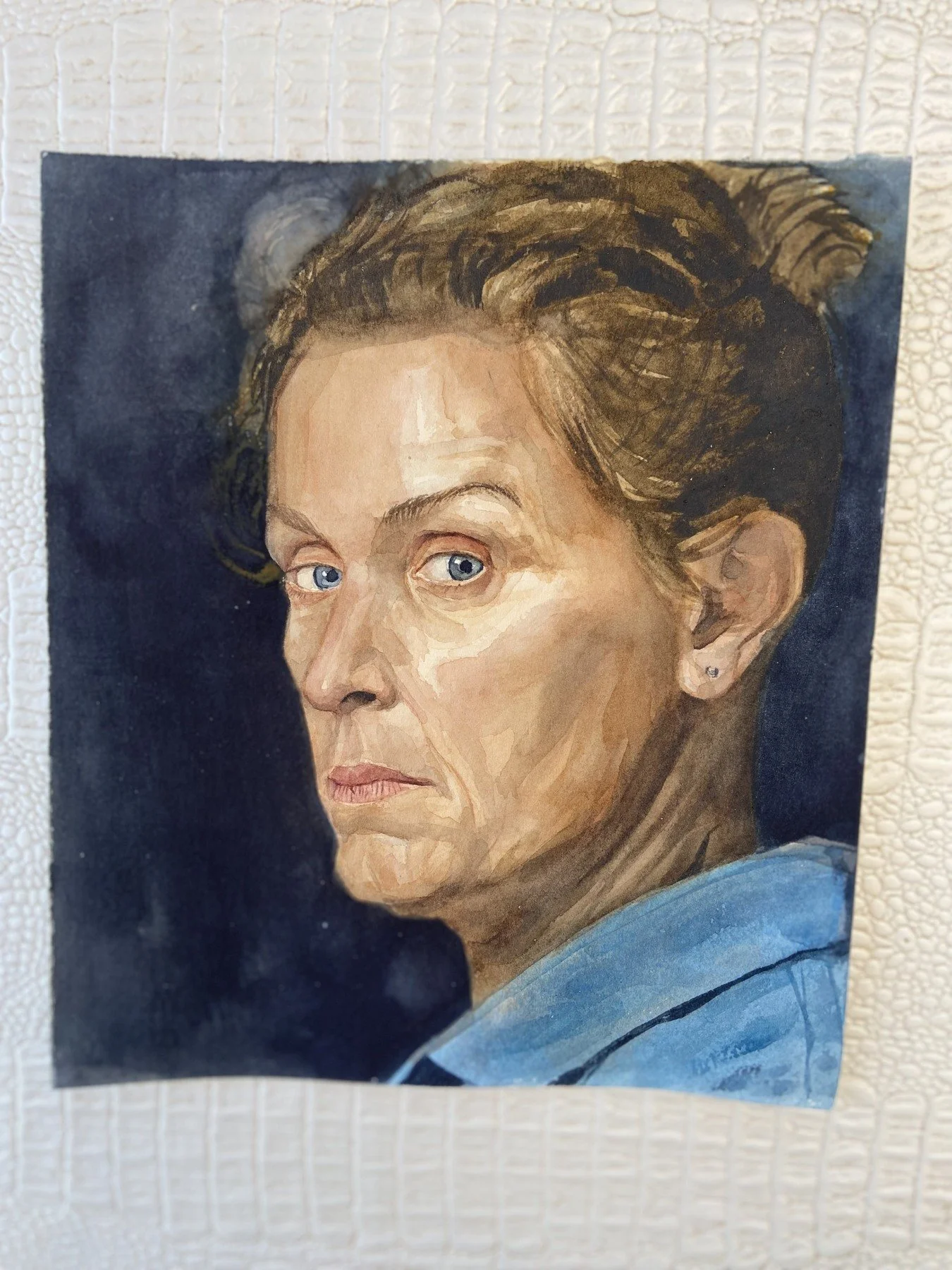
Javier Romera’s watercolour Portrait depends on subtle differences between skin tones, blue clothing and the darker background. Treat colour and brightness edits with restraint. The aim is a faithful record, not a more dramatic version of the painting. Review the file you will actually submit, rather than relying only on its thumbnail.
Keep a master file and export a separate copy to the organiser’s specifications. Check the dimensions, file type and size limit. Use a filename that identifies the artist and artwork, then reopen the exported file before uploading. Send the original image file rather than a screenshot of your photo library or a social-media post. A final review on another screen can help reveal obvious cropping or brightness problems, although screens themselves vary.
Explore HUGE’s Paris open call
HUGE’s Paris exhibition takes place on 5–7 February 2027 at 18 rue Lally Tollendal, Paris. The application deadline is 20 January 2027. Physical places start at £150 and digital places at £50. Read the application details and choose the format that fits your work and circumstances.
