
Lyon’s Festival of Lights offers a reason to think about how light changes what we see. For an art-focused visit, leave room for both the city’s illuminated evening programme and the quieter attention of looking at individual artworks.
The official Festival of Lights website lists 5–8 December 2026. HUGE’s exhibition runs 4–6 December 2026 at 53 Cr Tolstoï, 69100 Villeurbanne, overlapping the festival on 5 and 6 December. The dates create an opportunity to combine the two experiences. HUGE’s venue is in Villeurbanne; this guide does not present the exhibition as part of the official festival programme.
Look for what light does to colour
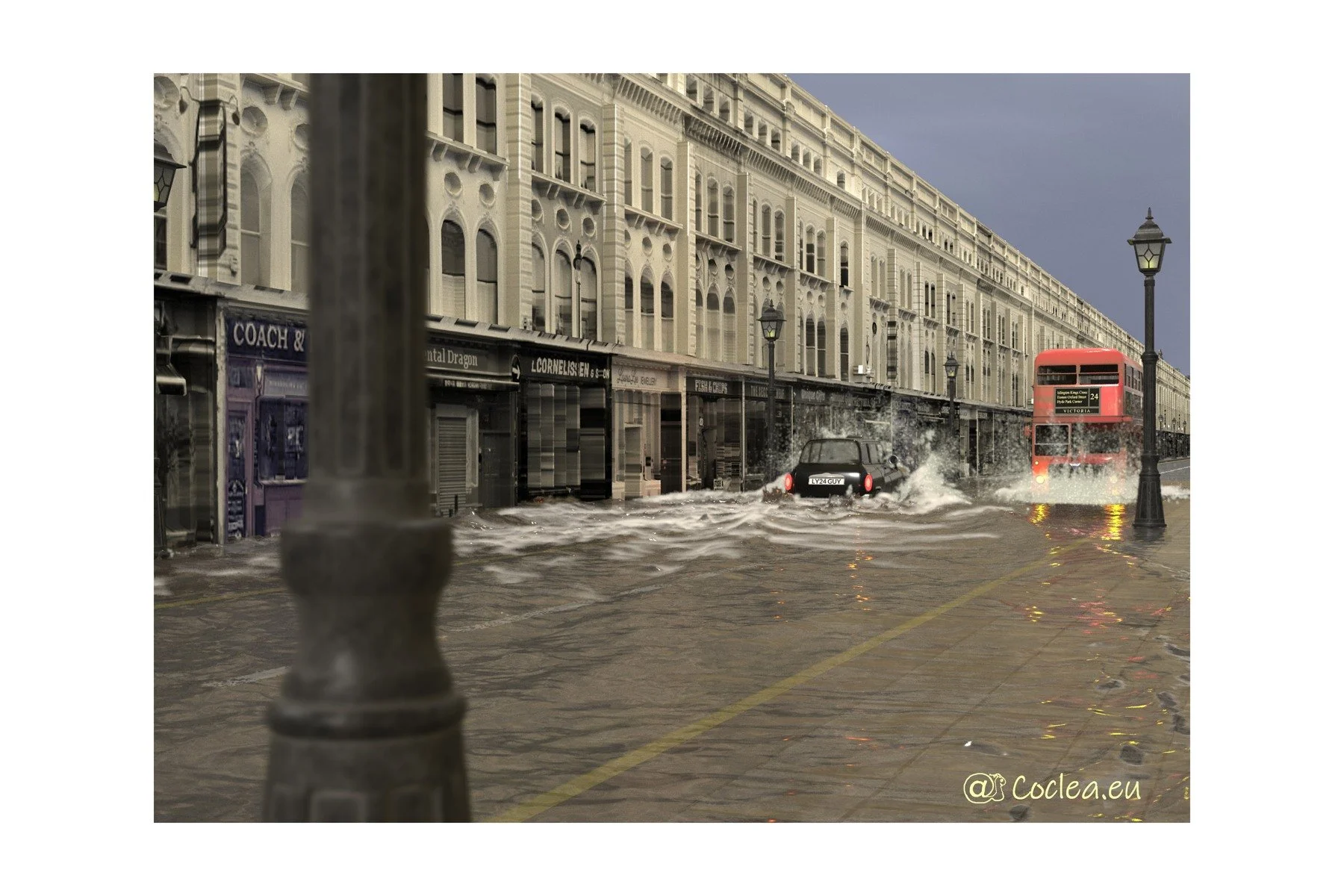
Coclea’s Wikiscape presents an imagined city through motion graphics and video art; the submitted image offers a still view of that constructed environment. It is a useful starting point for noticing how illumination changes our reading of buildings and space. The image is an artwork, rather than a photograph of Lyon.
You can take that question into a festival visit without needing specialist vocabulary. Notice where a work directs your eye, which colours remain in shadow and whether the surrounding architecture becomes part of the picture. Your observations can be brief notes or small sketches.
Leave time for slower looking
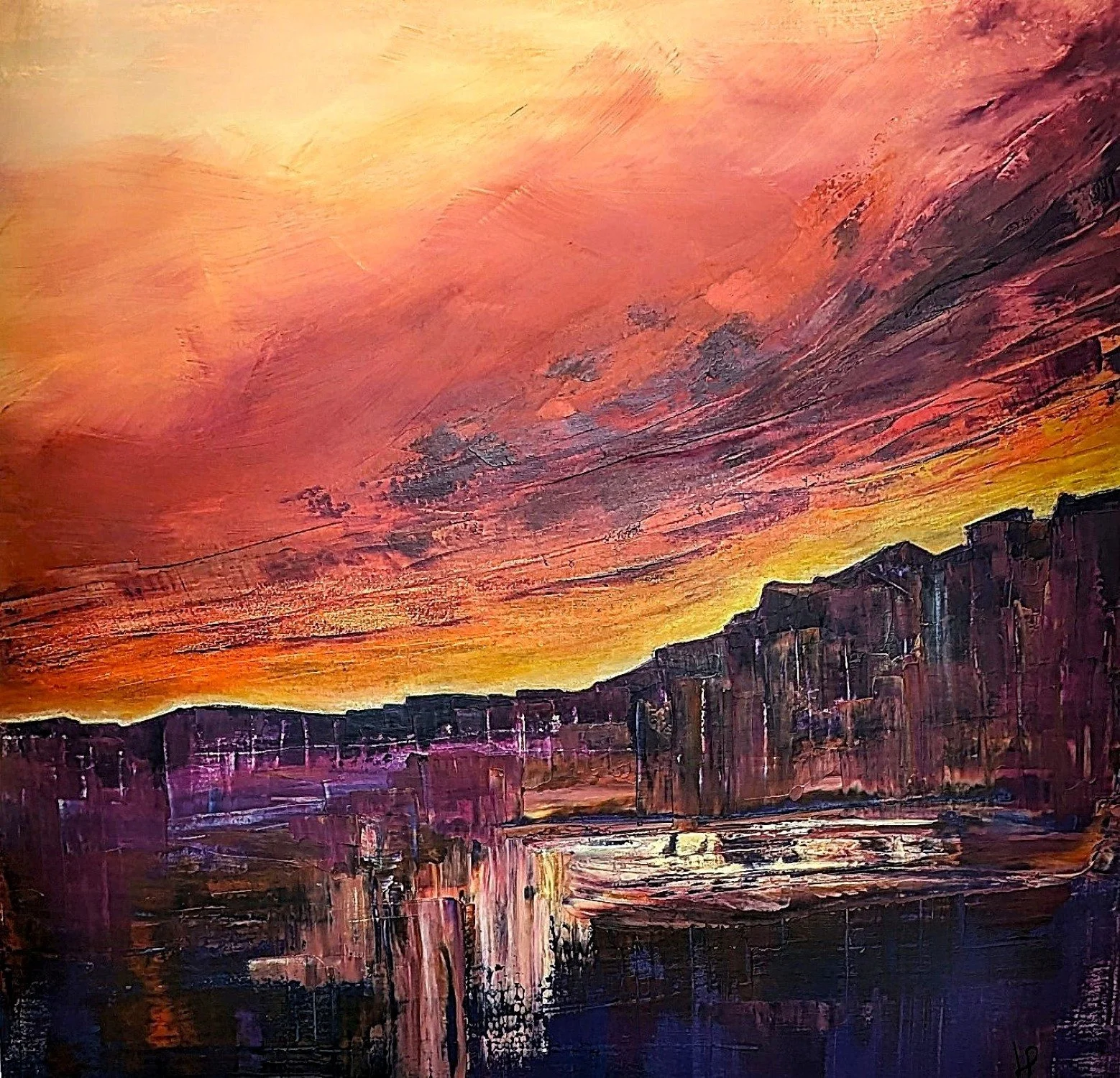
Lisa Price’s Canyon Sunrise places a glowing sky above a dark, layered landscape. The eye can move between the sweeping colour and the smaller marks that build the surface. Looking for that shift between a first impression and sustained attention can enrich a visit to both outdoor installations and gallery exhibitions.
A day of art does not have to be a list of things completed. Allow time to return to one work, read its caption and compare your first impression with what you notice later. That approach works as well in a gallery as it does outdoors.
Balance the dramatic with the everyday
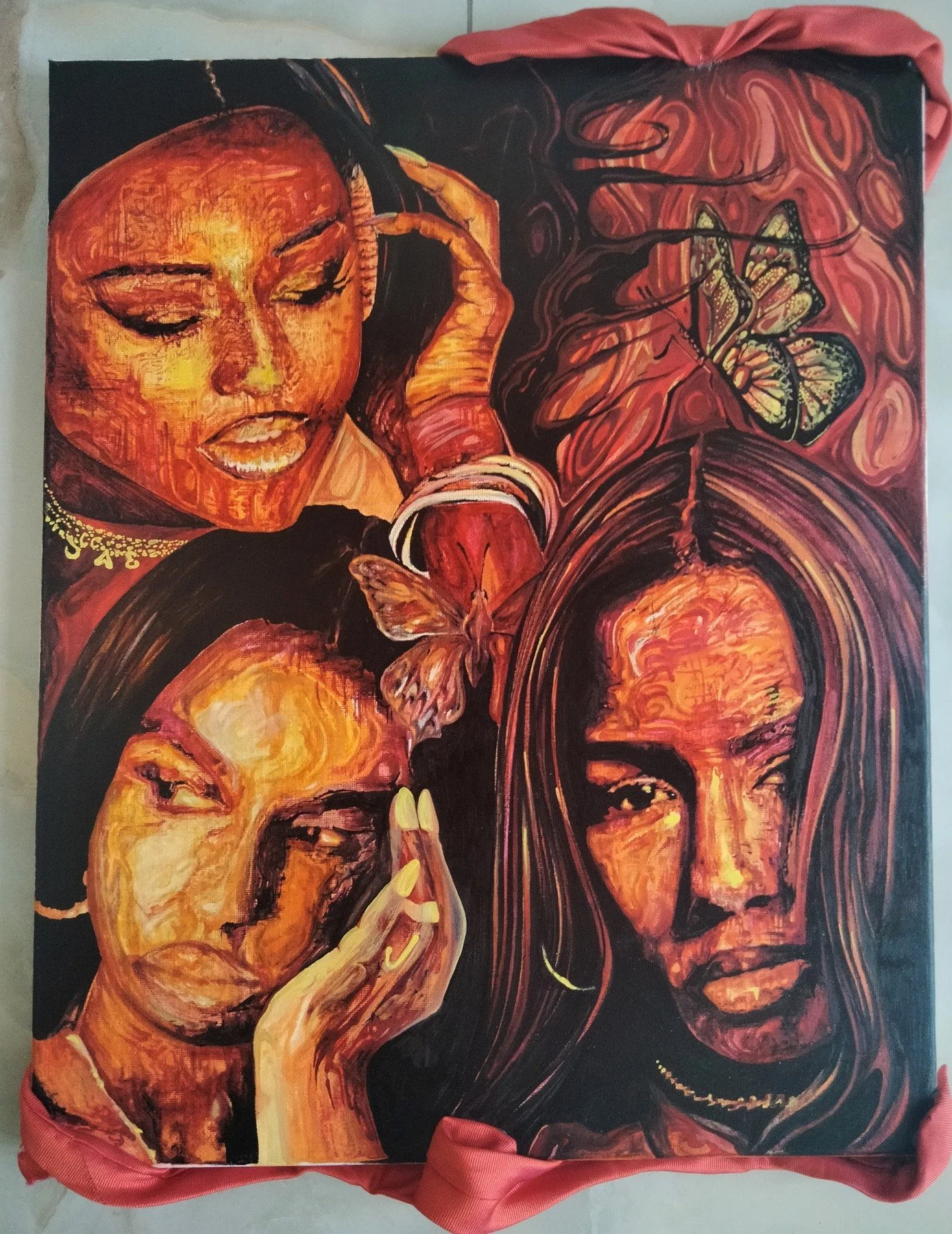
Hayzi Siddique’s The Chrysalis Years brings warm, illuminated faces into a dense composition of red and pink forms. Light does not have to fill an entire scene to guide attention. A smaller image can make a concentrated encounter with colour and expression, alongside the scale of a city-wide evening programme.
Build some quiet time into your visit. A pause to look at a smaller work or review a few photographs can make the larger experiences more memorable. Rather than trying to record everything, choose a detail you want to remember and write down why it caught your attention.
Check the current programme before travelling
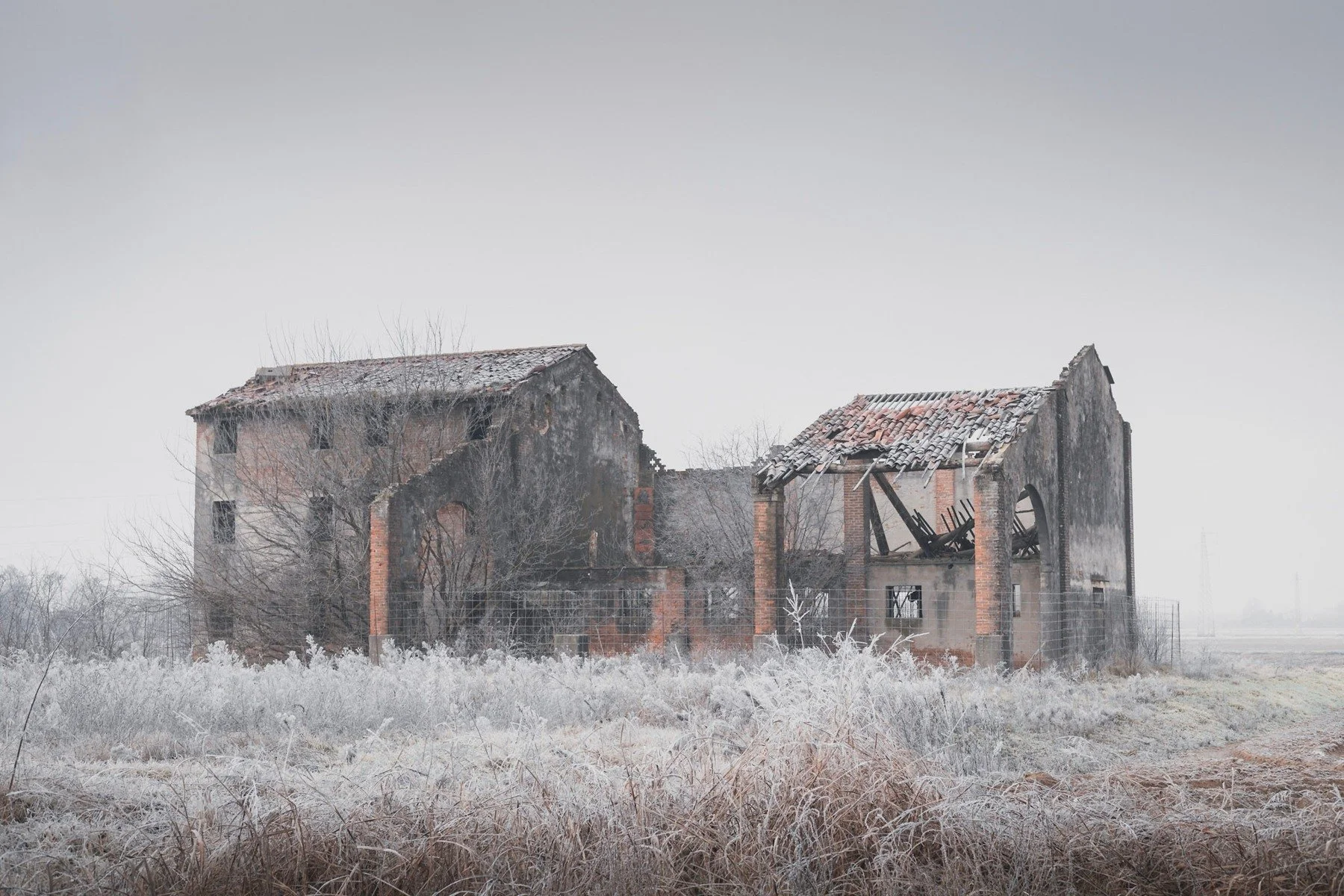
Damiano Zucco’s Bassa takes a quieter approach to atmosphere, with abandoned buildings emerging from mist and pale grass. Soft light changes how much a viewer can see. Keep that openness to different kinds of visual experience when planning your visit, while checking the practical details through current official information.
Use the festival’s official website for the current programme, locations, opening hours and access information. Check transport and any evening restrictions close to your visit. Do not rely on a previous year’s map or assume every installation follows the same timetable.
Make space for HUGE in Villeurbanne
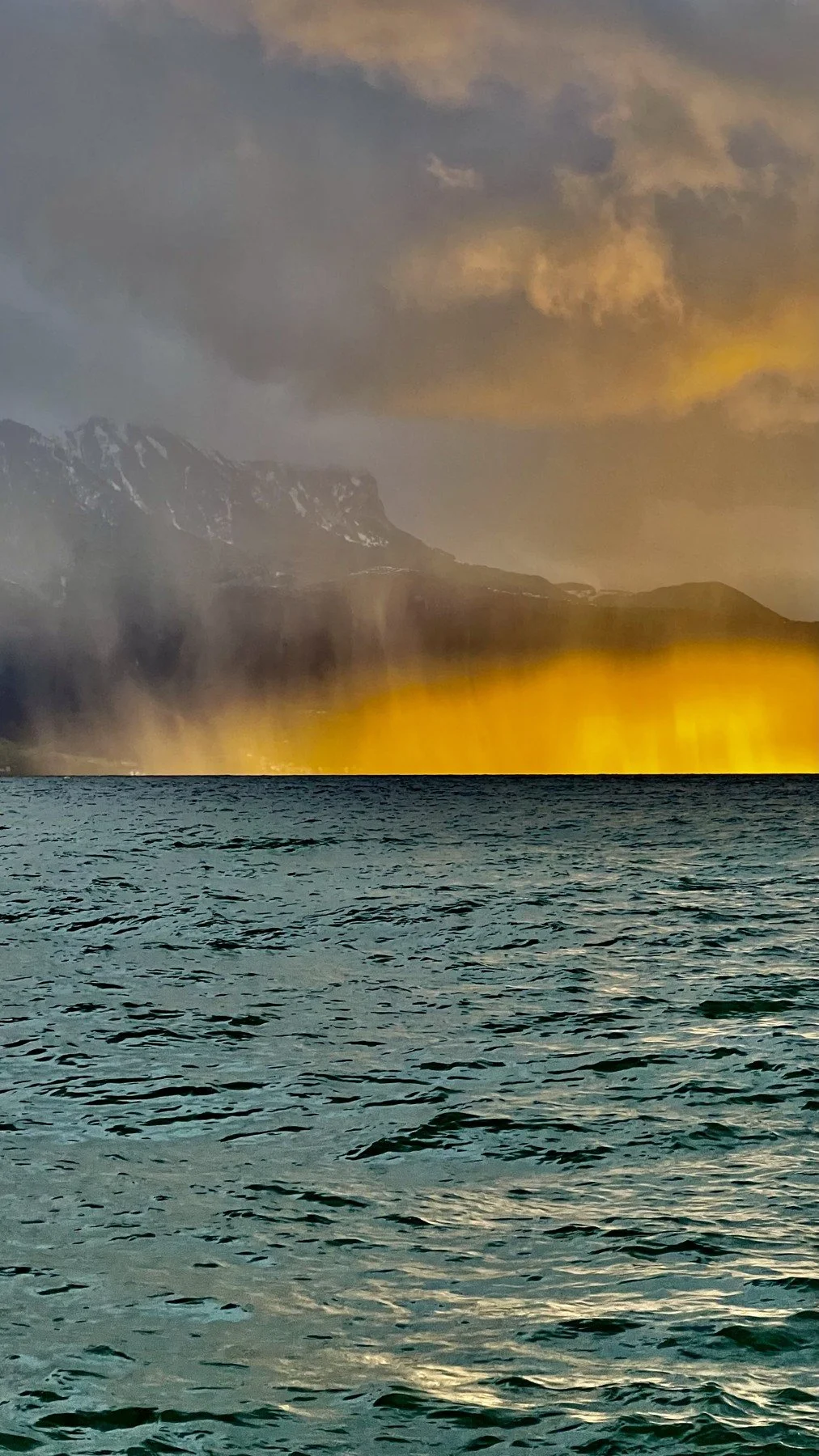
Brigitte B Burckhardt’s On Fire sets dark water against a glowing horizon. The contrast gives the image its atmosphere without needing a large installation. The five works in this guide come from HUGE submissions; they offer ways of thinking about light and are not a confirmed Lyon exhibition lineup.
For HUGE’s show, plan around the published 4–6 December dates and check the exhibition’s visiting details before setting out. Artists considering participation should act earlier: the open-call deadline is 18 November 2026. Physical places start at £100 and digital places at £45.
