
From 27 to 29 November 2026, HUGE Gallery brings a selection of artists from around the world to The Factory, 21–31 Shacklewell Lane, London E8 2DA, for a three-day exhibition of physical and digital work. Before the doors open, we asked ten of our exhibiting artists the same seven questions: how they started, what they're showing, how they work and what London visitors should look out for.
What came back is a conversation between very different practices: layered abstraction in acrylic and wax, spray paint on wood and steel, gold-leaf portraits of African queens, 35mm film photography, live-drawn fashion illustration and looped video. We also put a personal question to each artist. Read on, then come and see the work in person.
Get your tickets on Eventbrite
Meet the Artists at a Glance
Ten artists, ten practices. Here is each artist with the work they submitted to HUGE London. Their full profiles follow the interview.
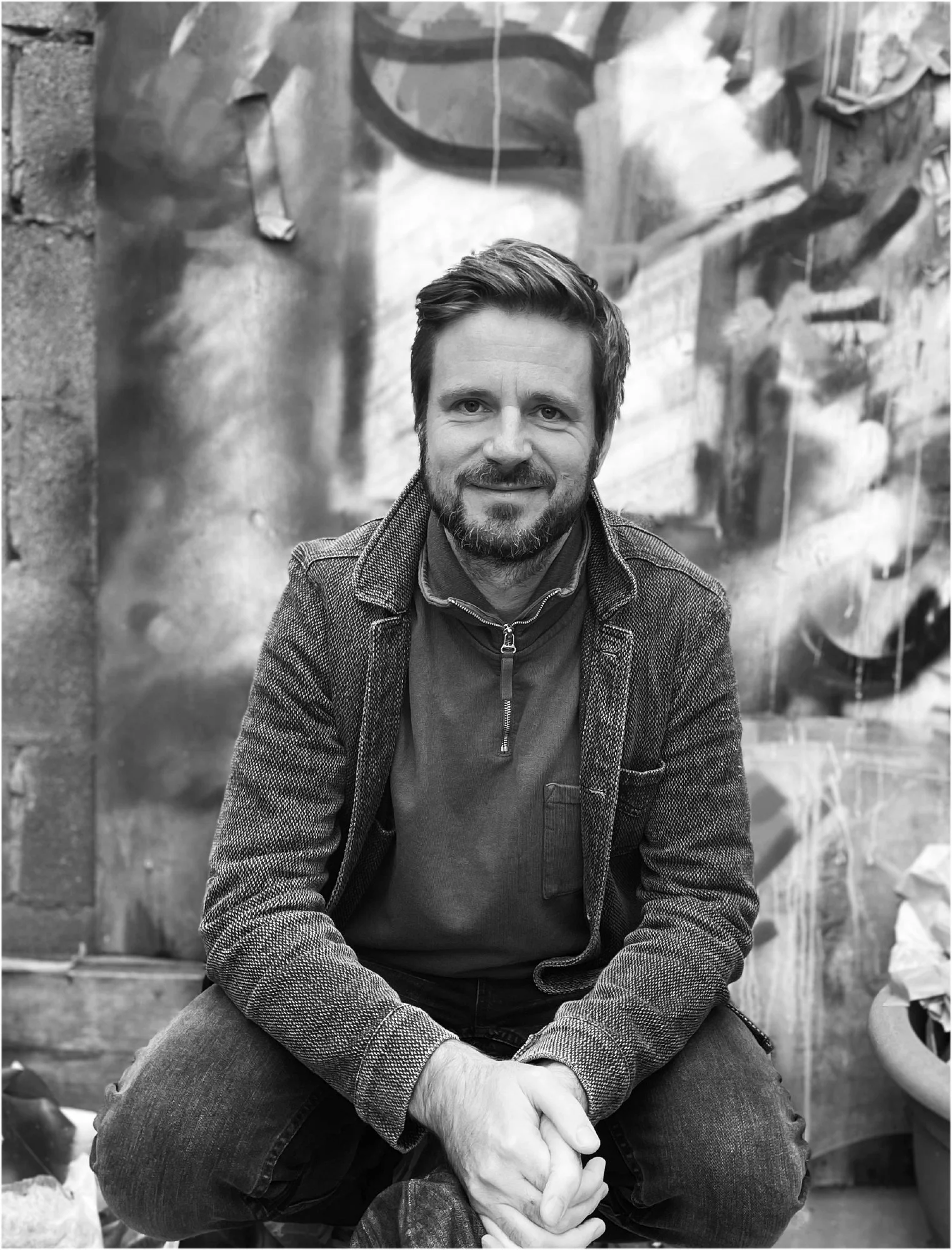
Nick Alexander
@___nickalexander___
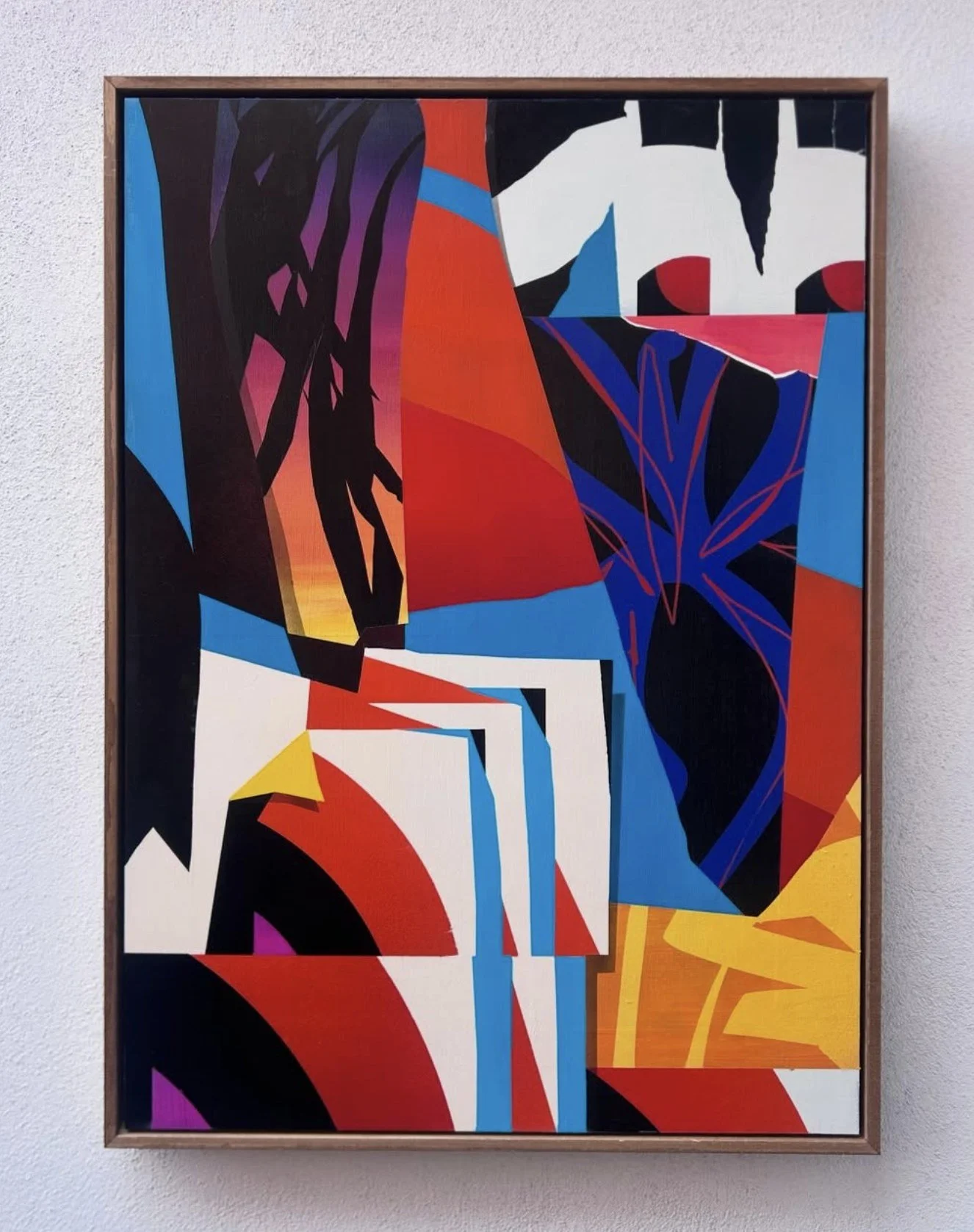
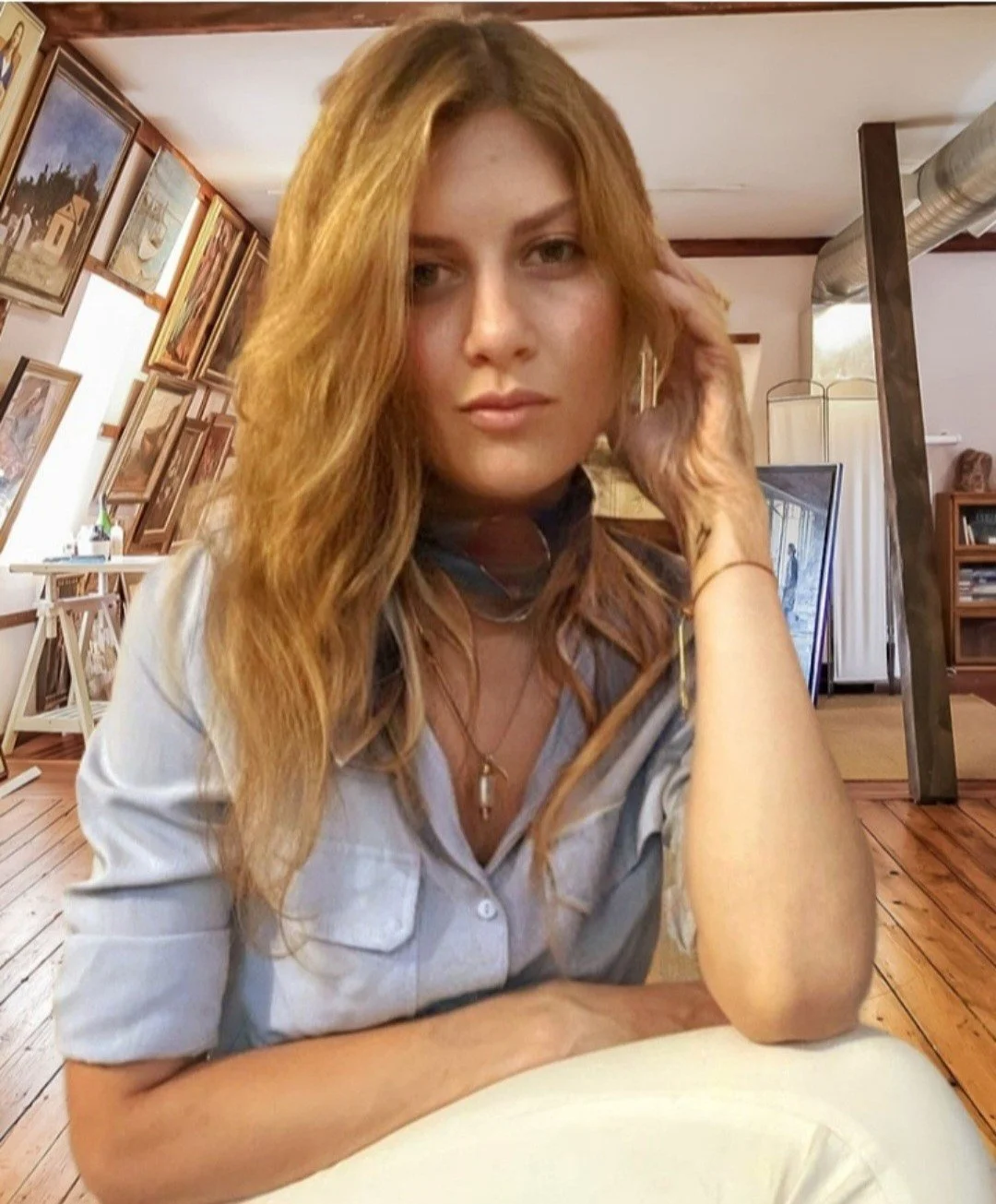
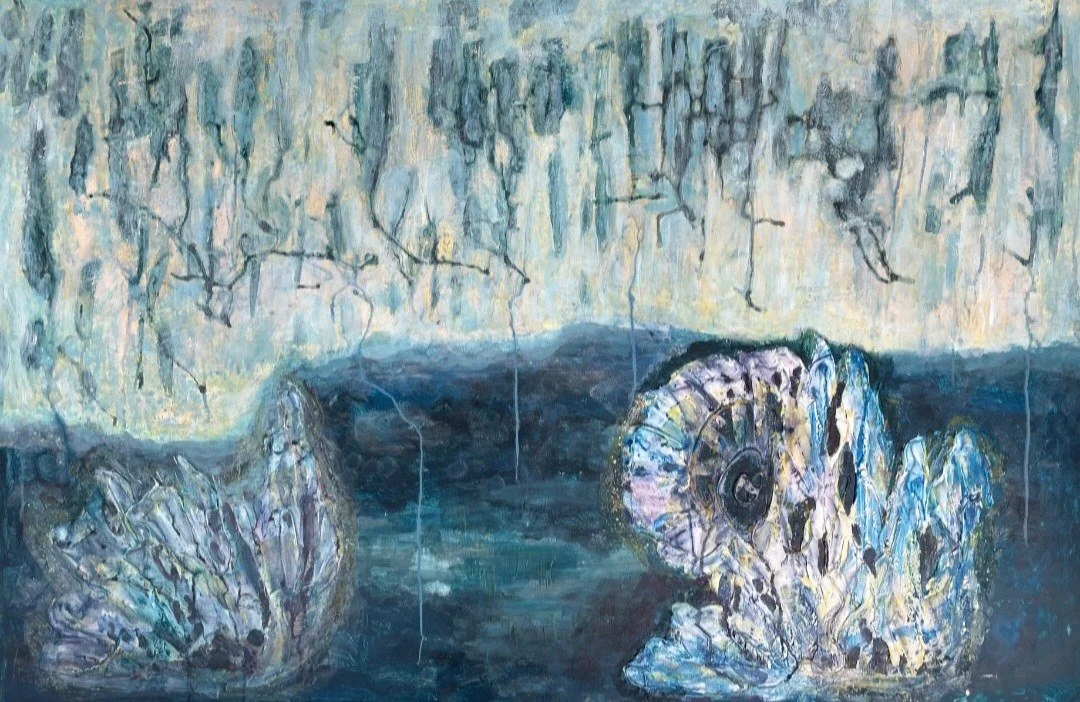
Svetlana Popović (Lana S)
@lanas.art_
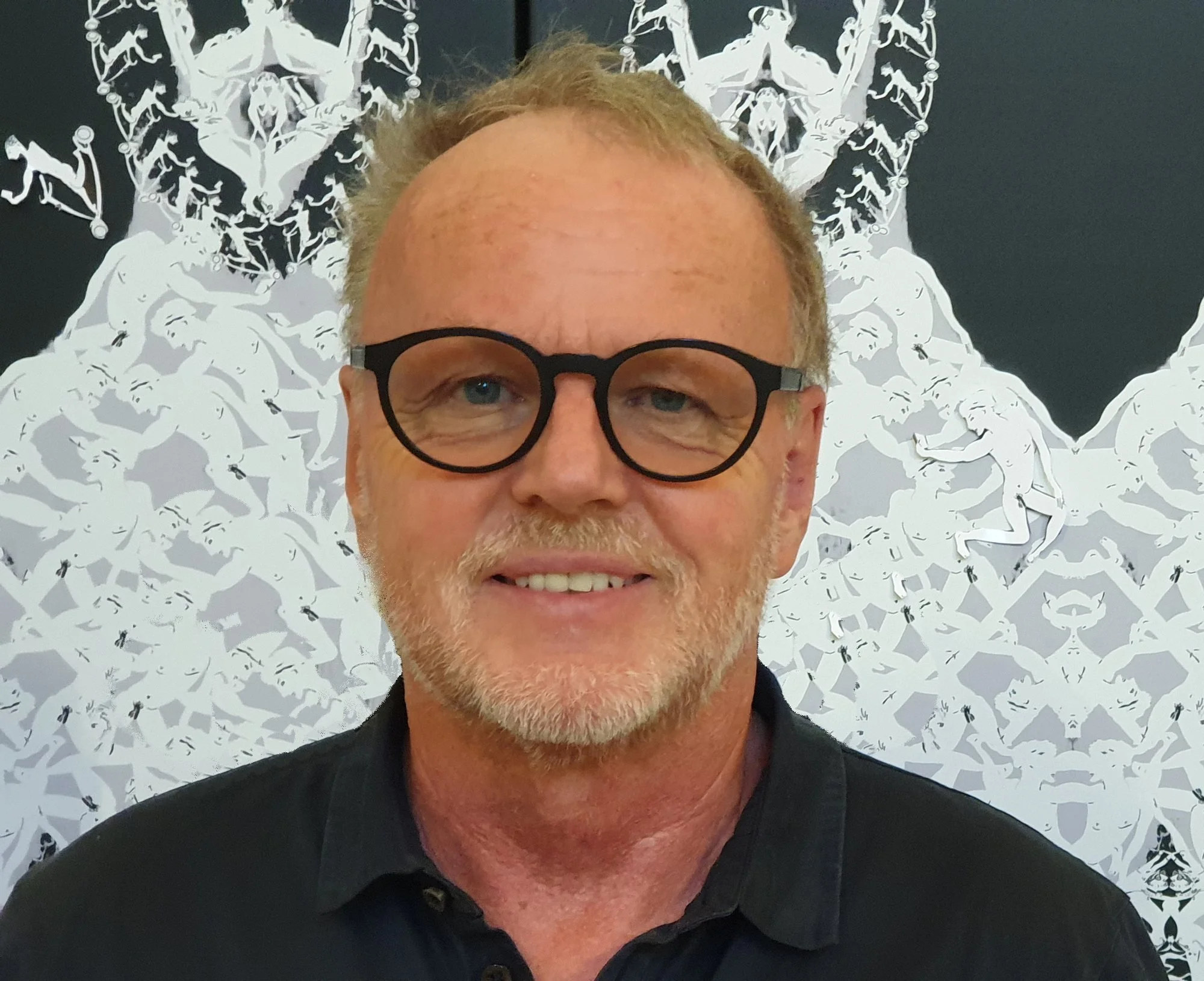
Daniel Garbade
@d_garba_de
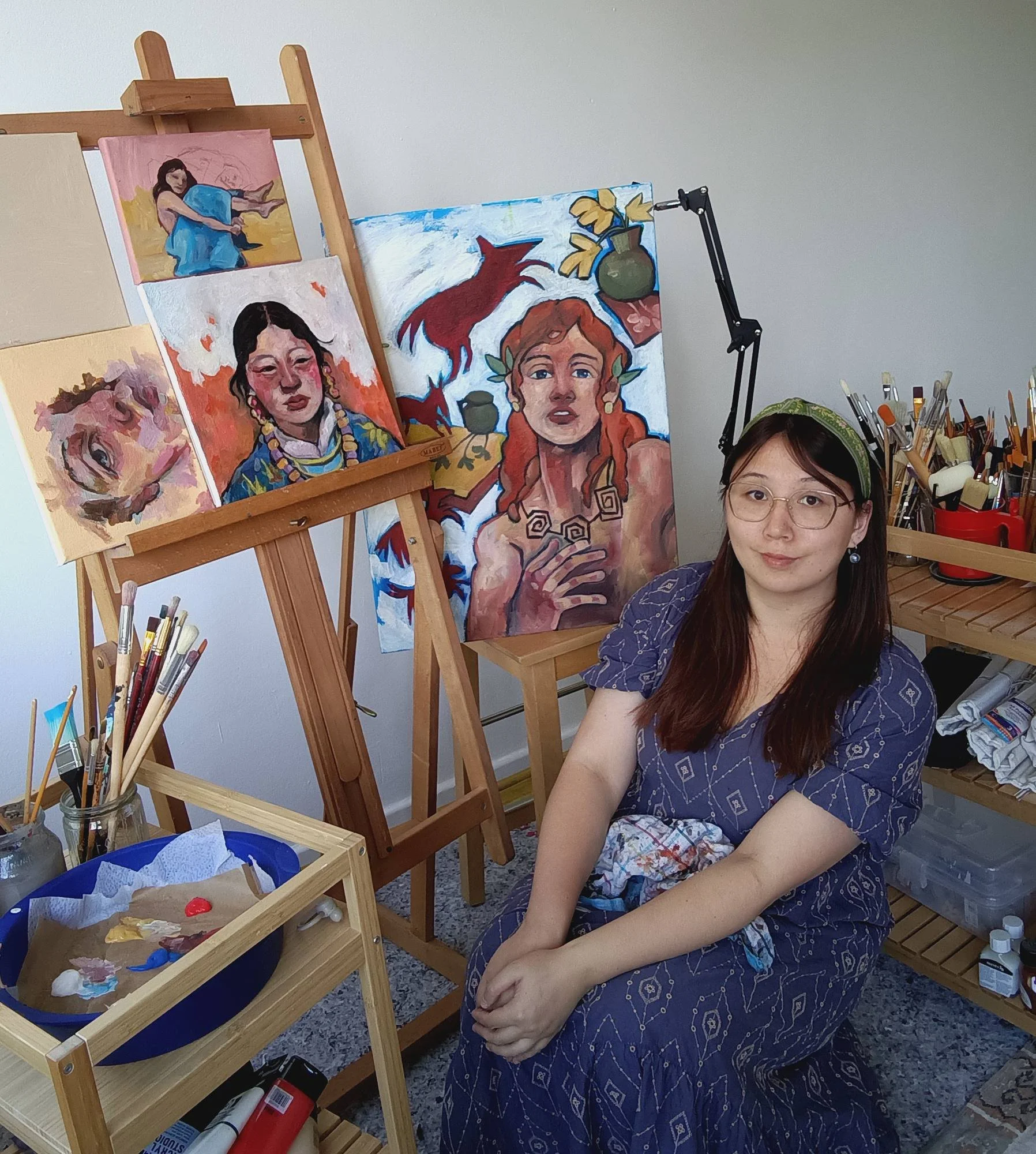
Moylin Buldain
@moylinstudio
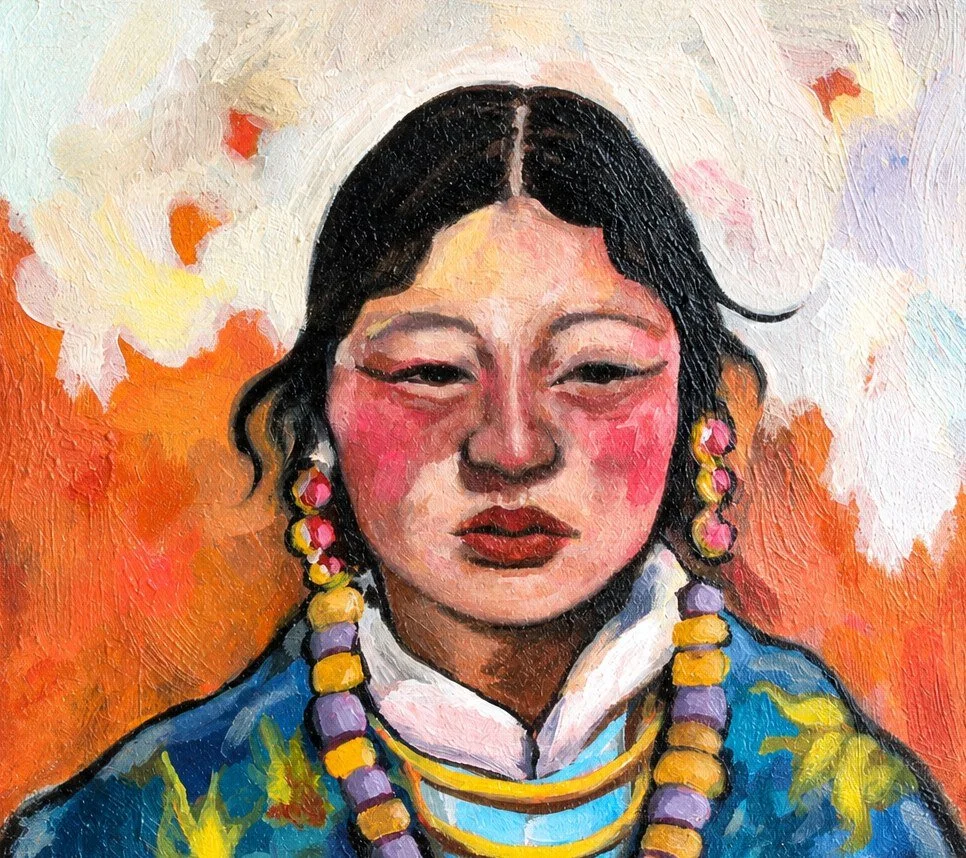
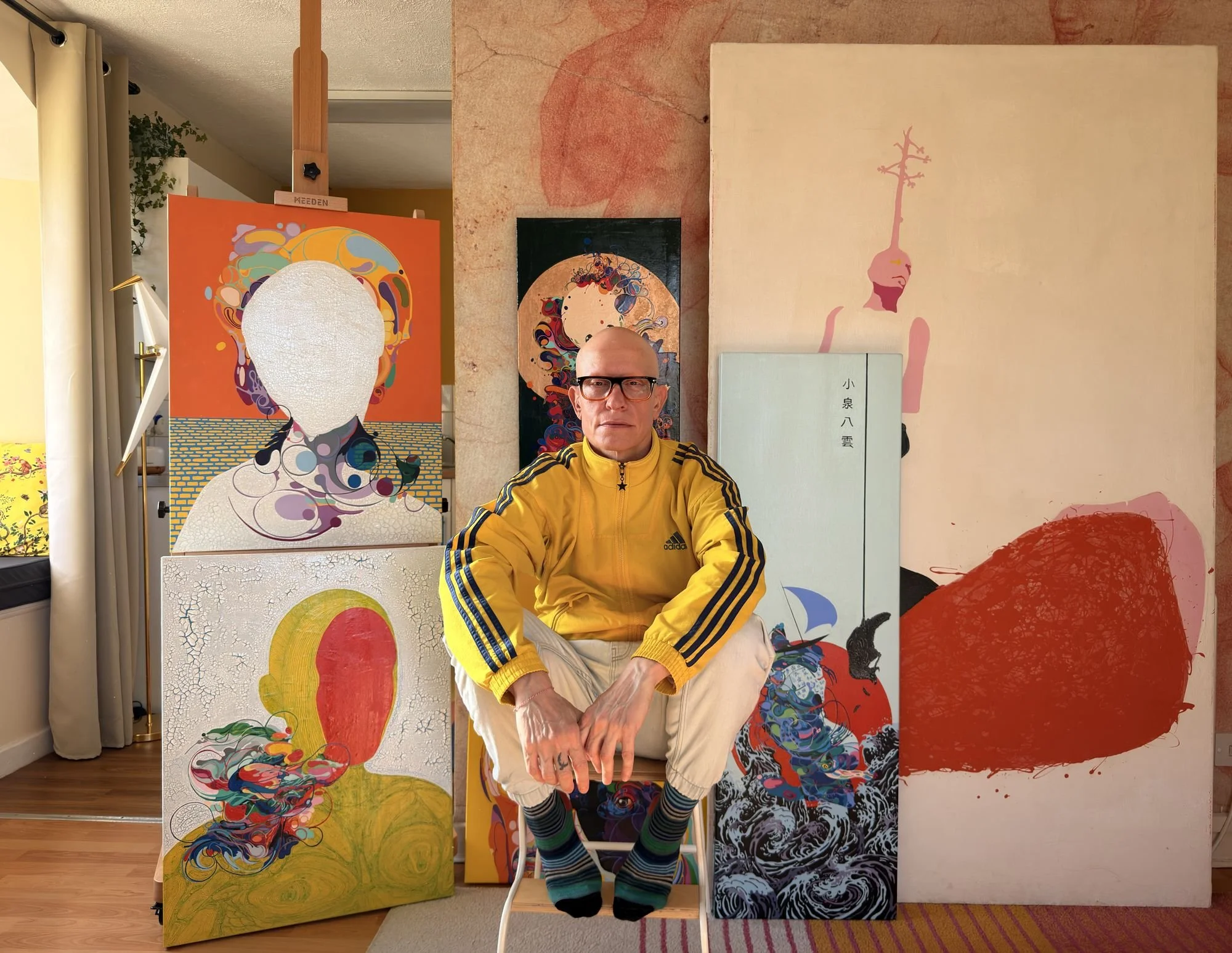
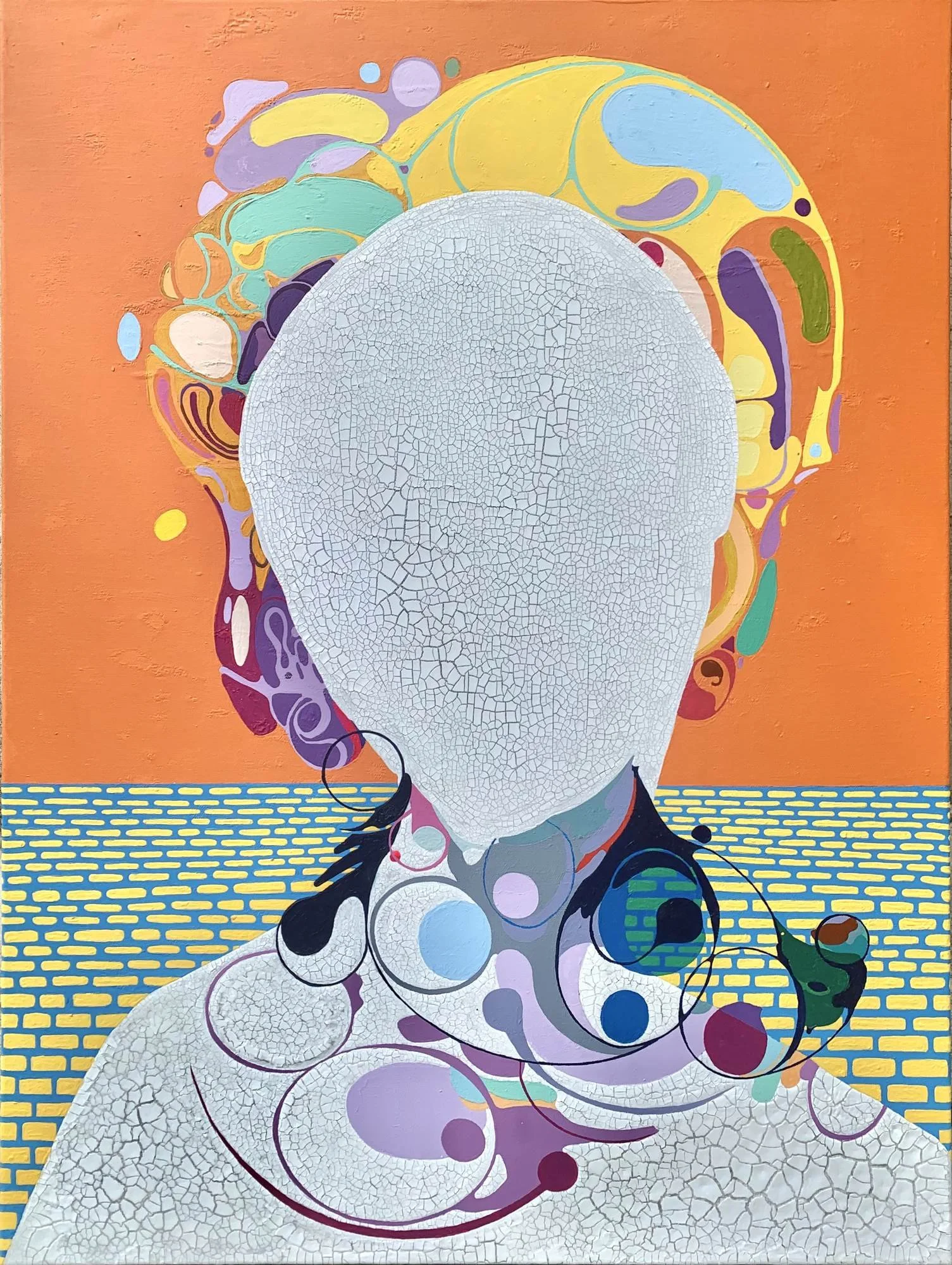
Dimitris Pikros
@dimitrispikros
Sharon Gershman
@sharons_art12
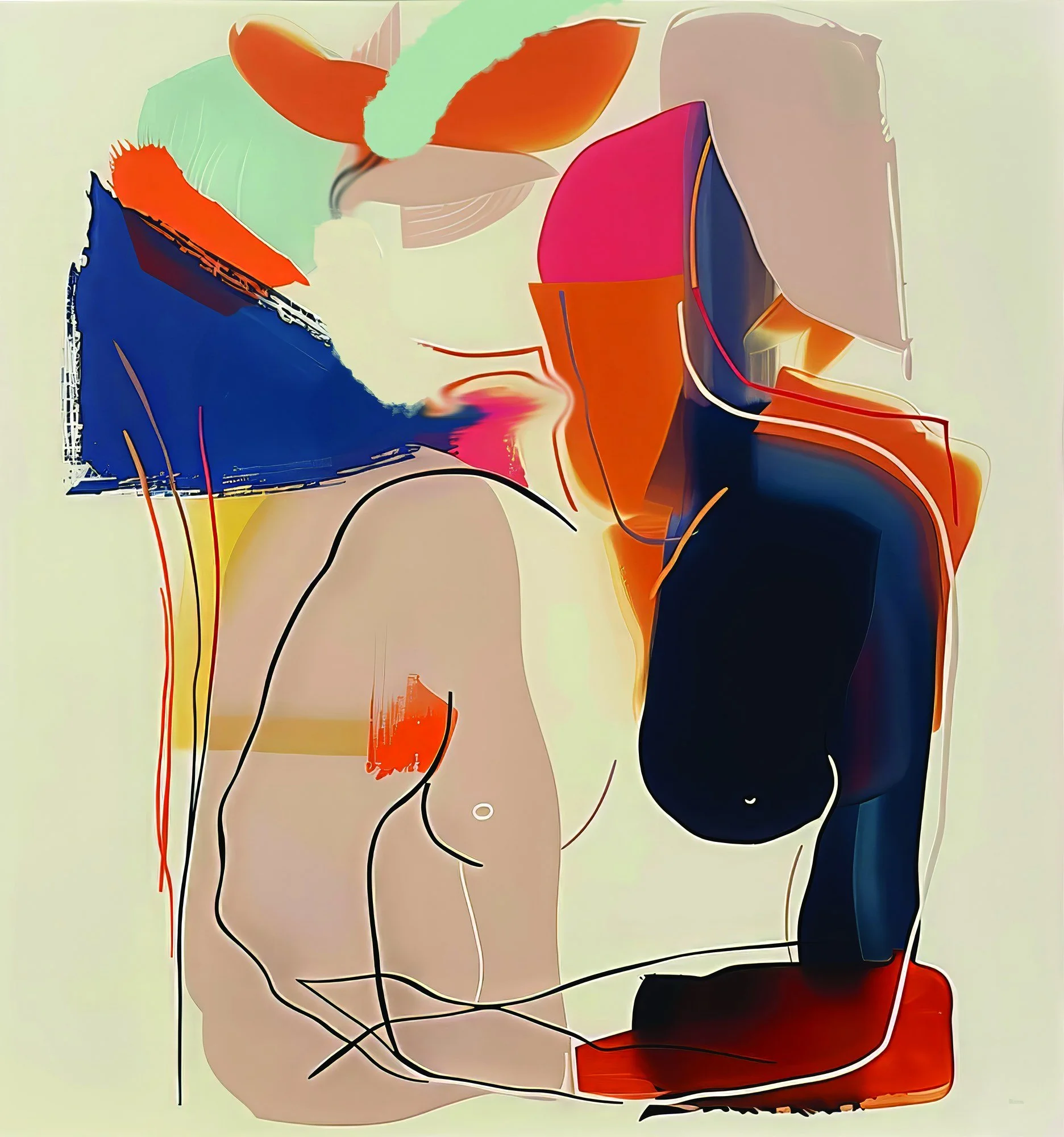
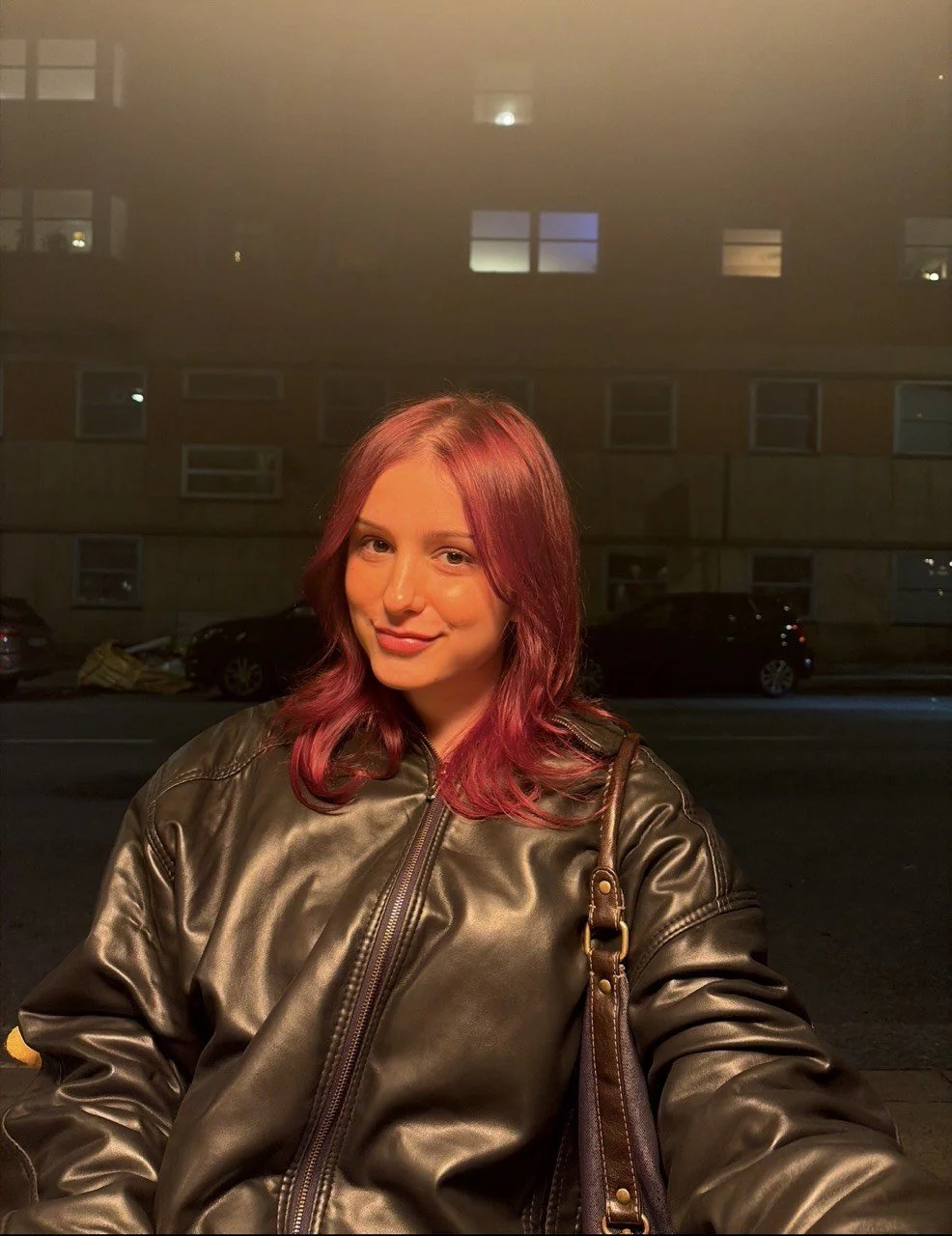
Delila Dazdarevic
@deliladazdarevic
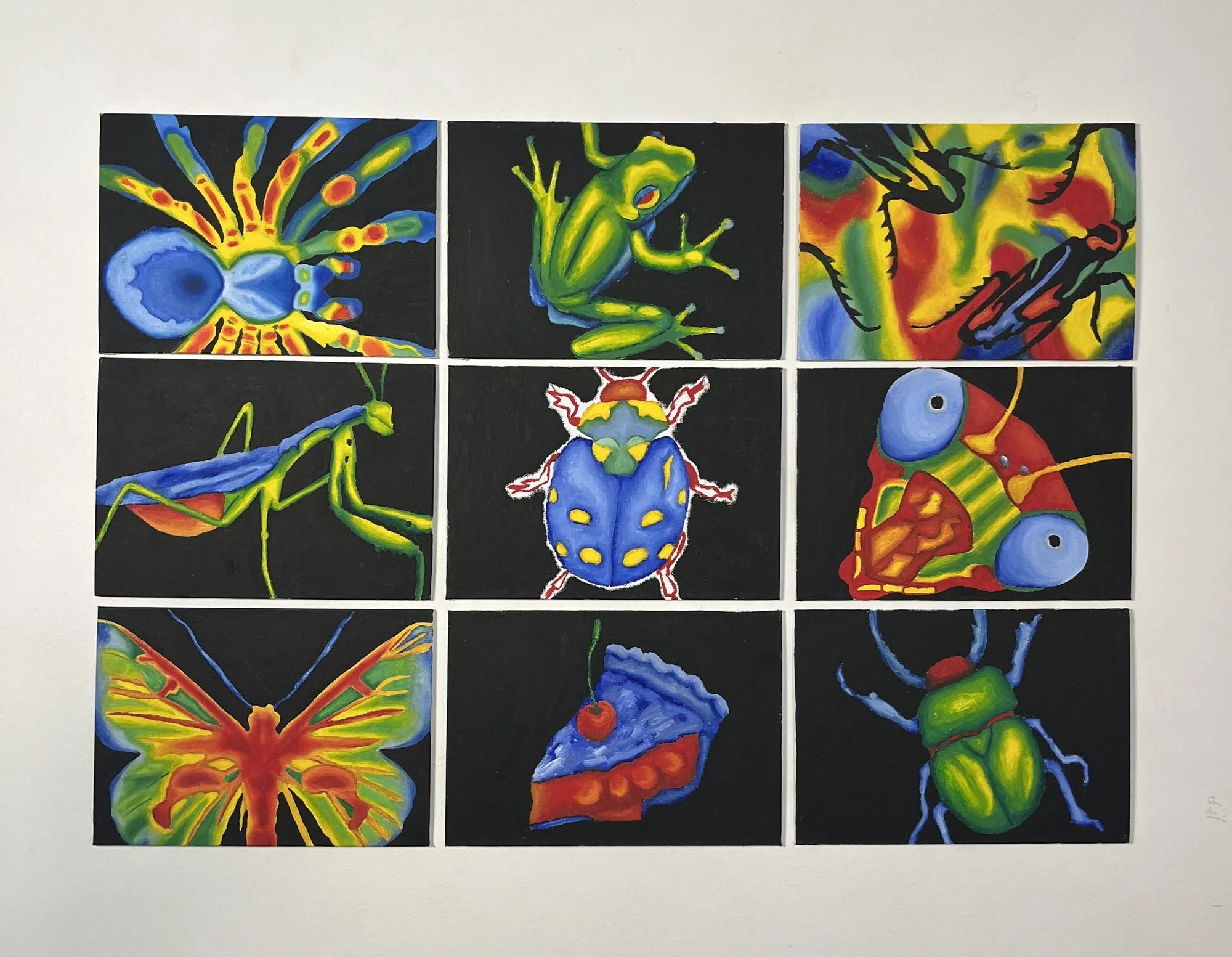
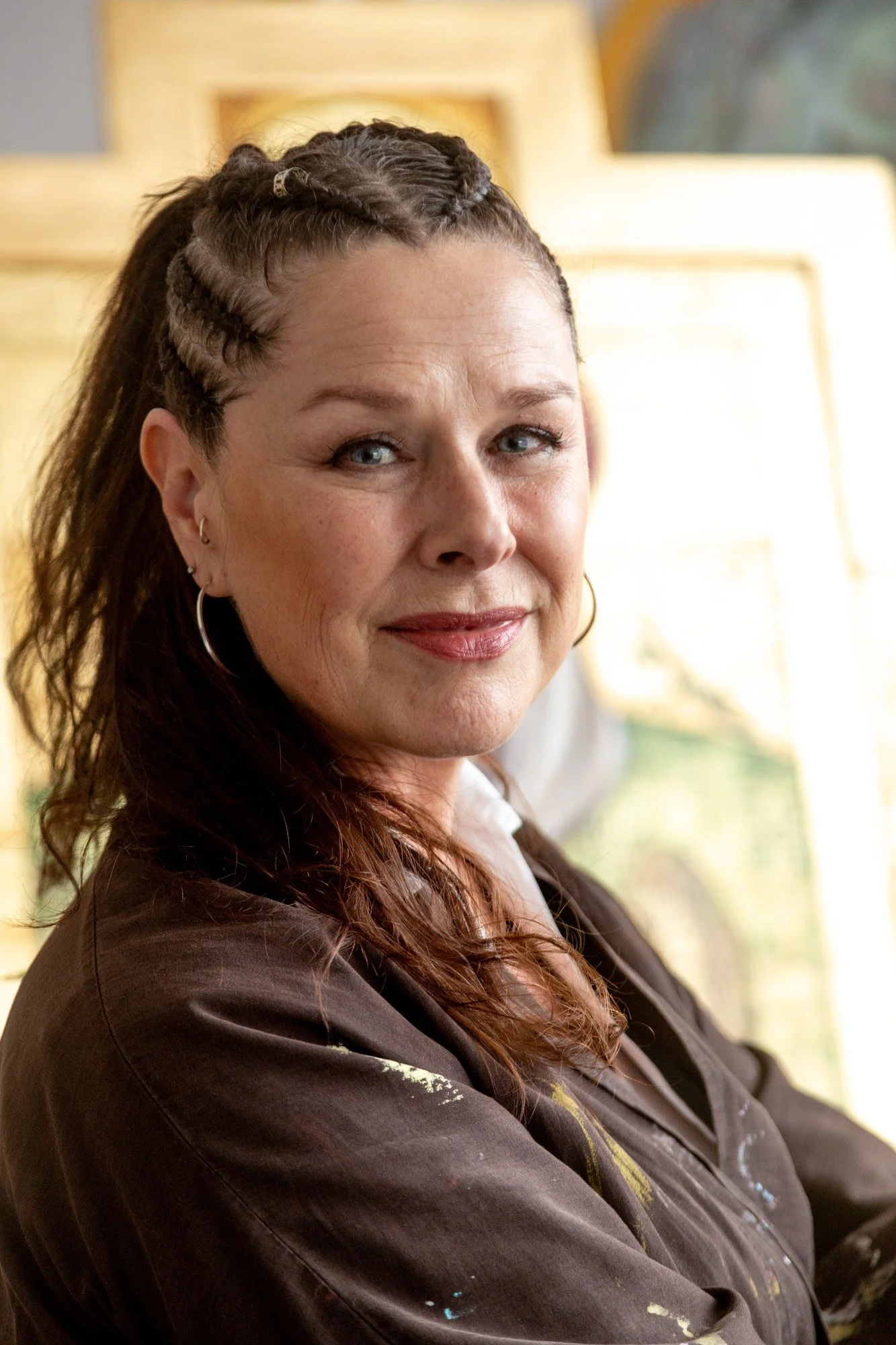
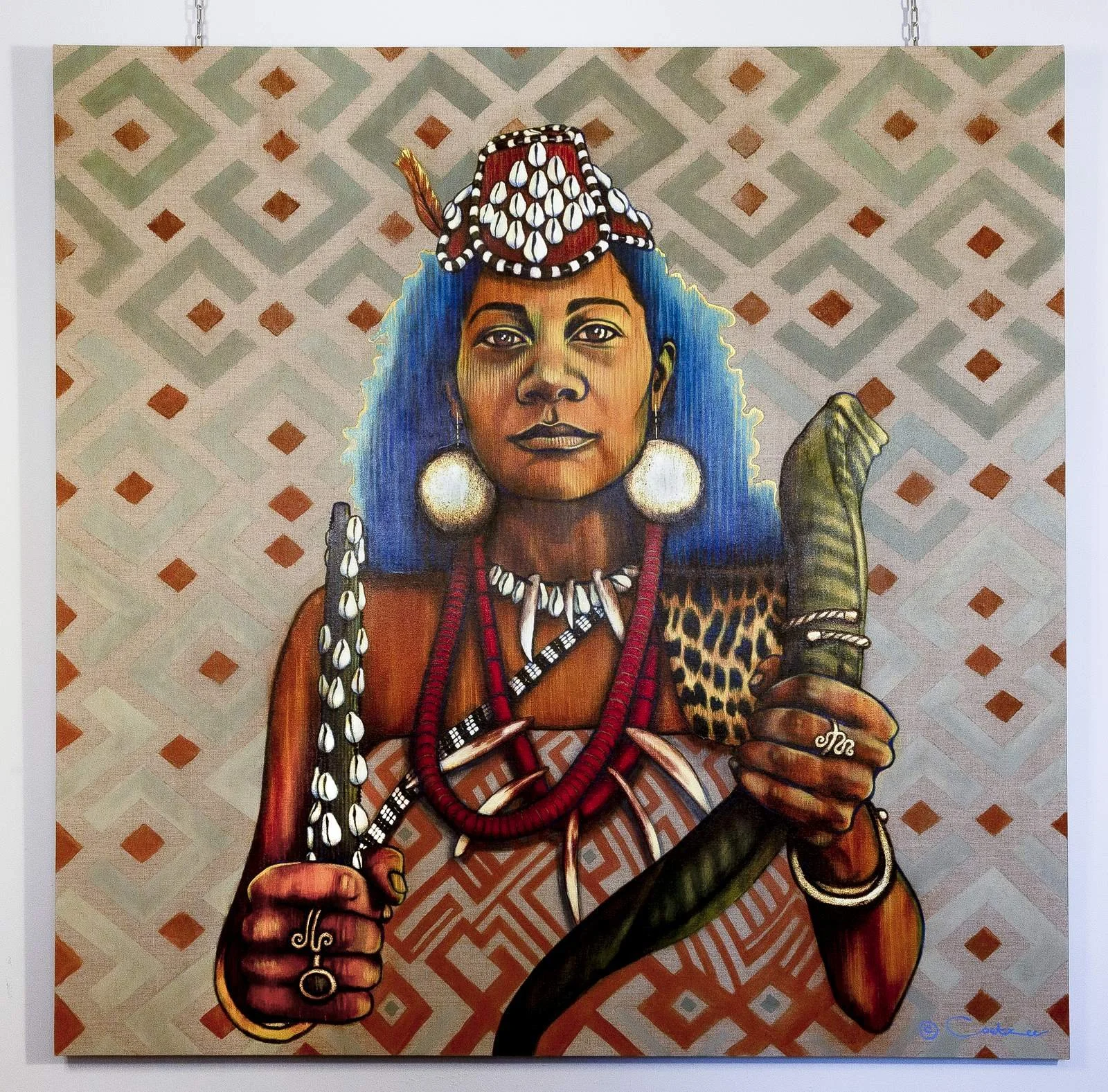
Chantal Coetzee
@chantal.coetzee.fine.art
Grace Easton
@graceeastonphoto
Liz Vinson
@bizzylvart
1. How did you first start making art, and what keeps you coming back to it?
Nick Alexander – @___nickalexander___
I've been interested in art for as long as I can remember. Being heavily involved in the graffiti scene was a big part of finding my own direction. It got me looking more closely at the surfaces around me and noticing how a wall changes over time as paint fades, posters peel and new marks cover old ones. That sense of layering has stayed with me and is a big part of how I paint today.
What keeps me coming back is the surprise of it. I can start a painting with a clear idea, then an accidental mark will take it somewhere I hadn't imagined. I love that a patch of rust or a bit of torn poster I'd normally walk past can be the starting point for a whole painting. Making art gives me a reason to slow down and pay attention to those things.
Svetlana Popović (Lana S) – @lanas.art_
My relationship with art has always been connected to a desire to understand what lies beyond the visible. I have long been fascinated by how memories, emotions, and experiences shape our inner worlds, often without our conscious awareness.
My artistic journey developed through my education in Belgrade and later through seven years of living in Bali, where I also studied painting and traditional batik.
What continually draws me back to painting is the possibility of discovering something that cannot always be expressed through words. Every painting becomes a journey into the unknown, and that sense of discovery never disappears.
Daniel Garbade – @d_garba_de
Art has always been part of my life. I grew up surrounded by creativity, with family connections to painting, sculpture, and culture. I began my professional career in cinema, working as an art director alongside filmmakers such as Fred Zinnemann and Yves Boisset. That experience taught me how to construct images, tell stories, and understand the emotional power of visual composition.
Eventually, I found that painting and photography gave me more freedom to express my ideas. What keeps me coming back is curiosity about human nature, identity, desire, and the contradictions of life. Art lets me ask questions without necessarily answering them. Even after decades of working, I still experience the excitement of discovering something unexpected on a blank canvas.
Moylin Buldain – @moylinstudio
My commitment to painting grew from an interest in the human figure and its ability to communicate experiences that are difficult to articulate. Studying Fine Art at WSA gave me the space to develop that interest into a sustained practice. What keeps me returning is the possibility of discovering something through painting that I could not have planned in advance. Figurative art kind of does that? A gesture, an unexpected colour relationship or a partially obscured expression can change the direction of a work. I continue to explore how those decisions can give form to memory, vulnerability and the uncertainty of being human within a painting.
Dimitris Pikros – @dimitrispikros
My relationship with painting has always been driven by curiosity about what the medium can become, rather than by the demonstration of technical skill or realistic representation. Studying Fine Arts at Aristotle University of Thessaloniki, where I graduated with First Class Honours, gave me the knowledge and foundation to question its established conventions.
In 2000, I developed my Innovative Painting Manifesto as a way of exploring painting beyond its traditional boundaries, bringing it into dialogue with other visual disciplines while maintaining its identity as painting. Although painting on canvas remains central to my practice, I have also explored performance, installation and audience interaction through my previous solo projects, extending the possibilities of how painting can be experienced.
What keeps me returning to it is the possibility of discovering new ways of thinking, constructing and experiencing the medium. At its centre remains an open question: How can painting continue to evolve?
Sharon Gershman – @sharons_art12
I grew up surrounded by art. My father was a painter, so creativity was always part of my world.
For me, making art is a way of expressing things I can't always put into words. I love the freedom of creating without knowing exactly where it will lead. Sometimes I start with a feeling, a colour, or a simple idea, and something unexpected happens along the way.
What keeps me coming back is the curiosity to create something new by playing with colours, shapes, and movement.
Delila Dazdarevic – @deliladazdarevic
I first started making art when I was 15, initially finding it to be a calming space where I could quiet my mind and focus on something practical. That grounding process led me to develop ideas for different characters and figures, and bringing these visual concepts from my imagination to the canvas is the main reason why I keep returning to art today.
Chantal Coetzee – @chantal.coetzee.fine.art
I was one of the lucky ones who was born knowing art was my calling. An old school friend reminded me recently that I was constantly doodling and she would save my scribbles from the trash can. What keeps me coming back to art-making is the spiritual high it gives me. One of my South African art (s)heroes is Helen Sebidi, who says "Making art is a form of worship", and that resonates so deeply for me!
Grace Easton – @graceeastonphoto
I first started photographing and making art in my early school years and it's developed into a passion for creating work and documenting the people and places around me throughout my university years as well. I gained a lot of inspiration from my Gran who is a talented painter and influenced me to capture the world around me using my own medium.
A lot of things keep me coming back to making my art, for example when I take a photograph it allows me to hold onto memories and moments that I would usually forget so coming back to it constantly allows me to make unforgettable images.
Liz Vinson – @bizzylvart
I have been creating art since I was old enough to wield a paintbrush! Selling my first commission aged 16 (which was a fair few years ago now) and I've not stopped since then!
2. Tell us about the work you're showing in London. What is it about?
Nick Alexander – @___nickalexander___
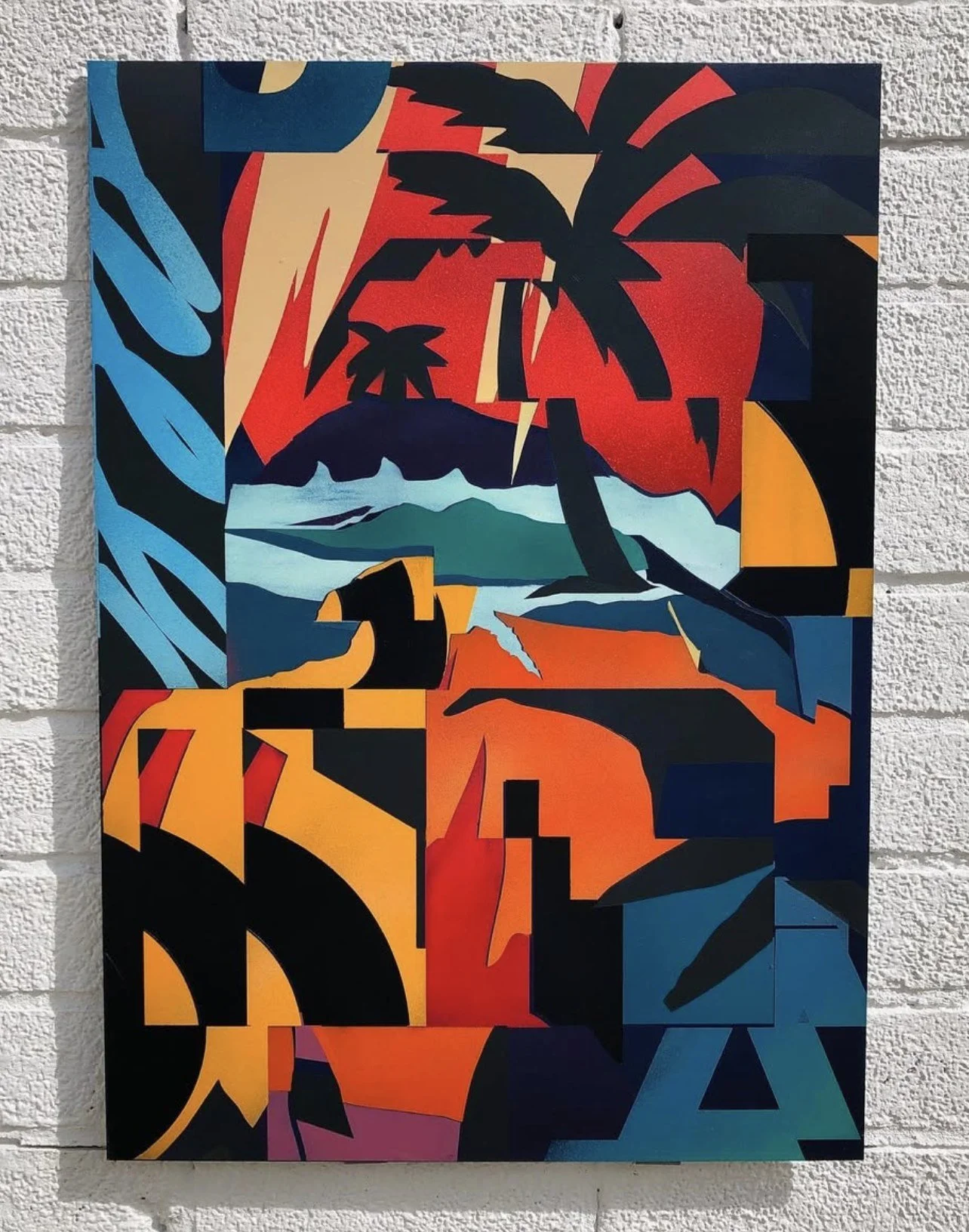
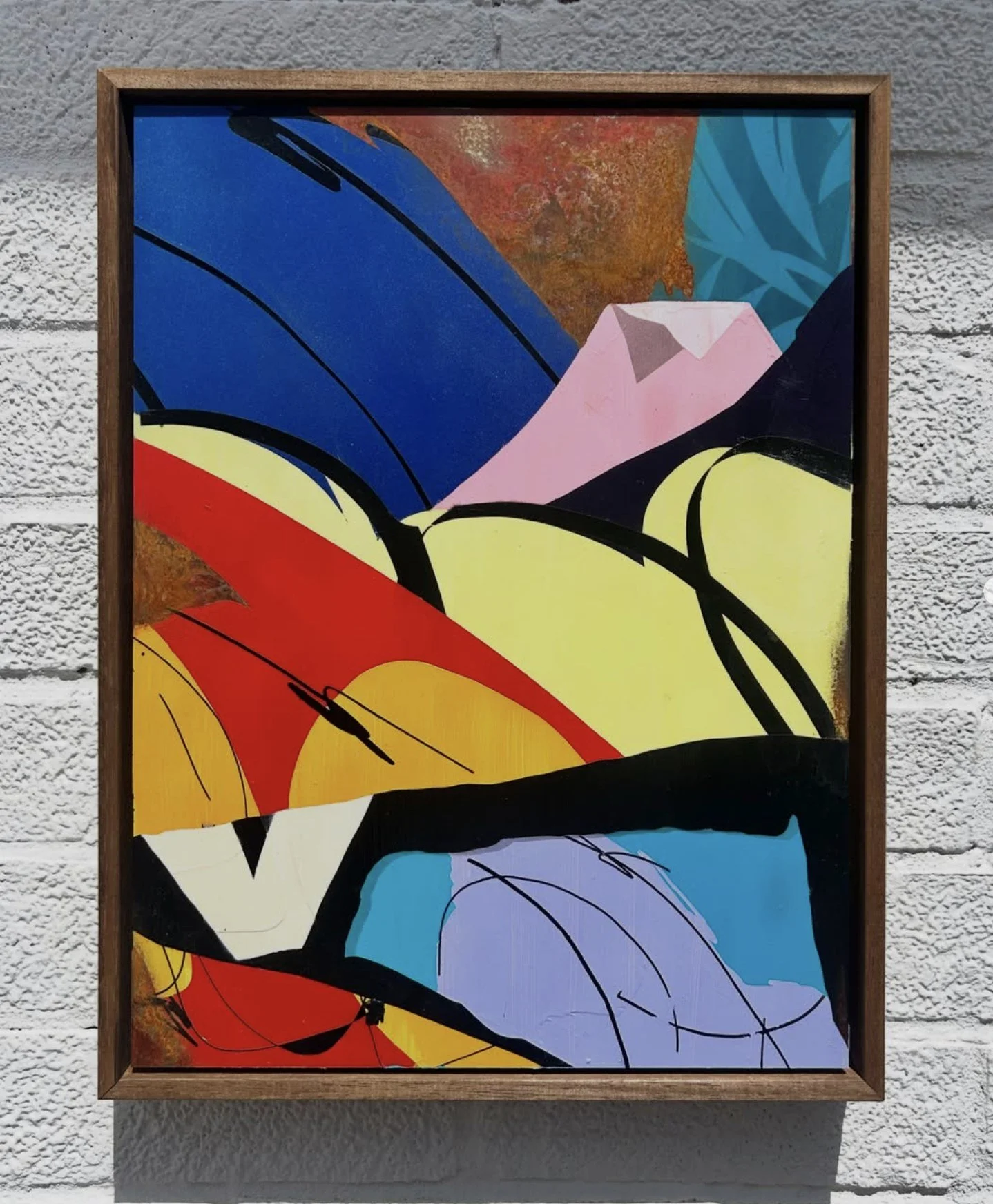
The painting began with photographs I took of accidental compositions I came across on the street. I used fragments from those photographs to build an abstract landscape where bold colours and jagged shapes collide. Through the chaos, there's a glimpse of paradise in the warm light behind the dark silhouettes. I wanted your eye to have to find its way through the painting to reach that light, echoing the sometimes beautiful struggle it can take to get somewhere better.
Svetlana Popović (Lana S) – @lanas.art_
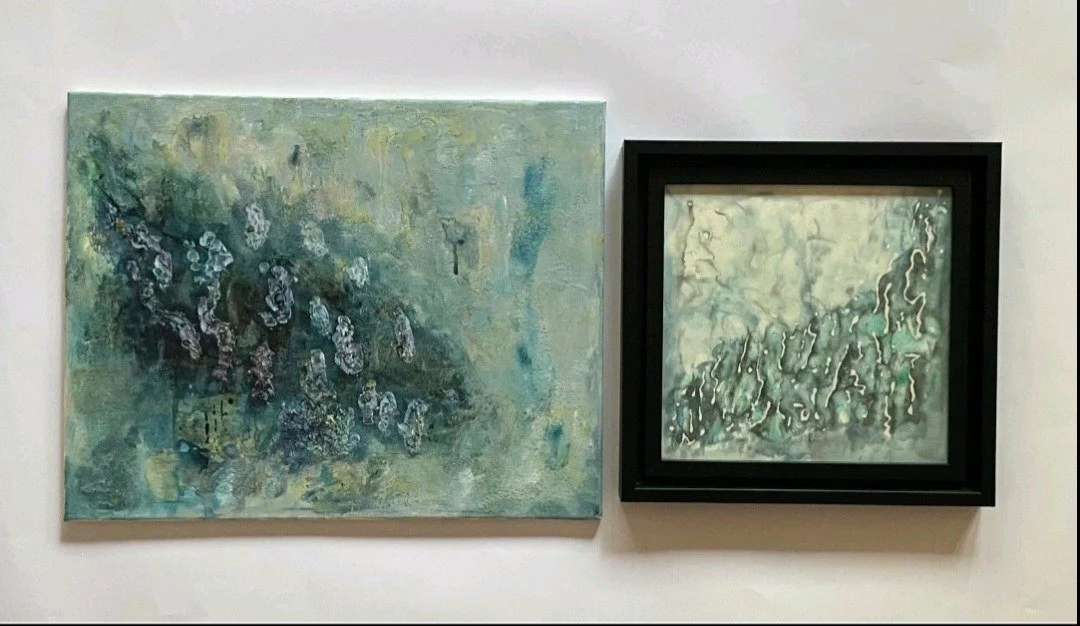
Between Two Breaths explores the subtle space between stillness and transformation.
Through two organic forms, layered textures, and a sense of movement within silence, the painting reflects those fragile moments when something within us is changing, even before that change becomes visible.
I am interested in the space between closeness and distance, presence and absence, and the quiet transitions that shape our emotional experiences.
For me, this painting is about the invisible movement of life beneath the surface of apparent stillness.
Daniel Garbade – @d_garba_de
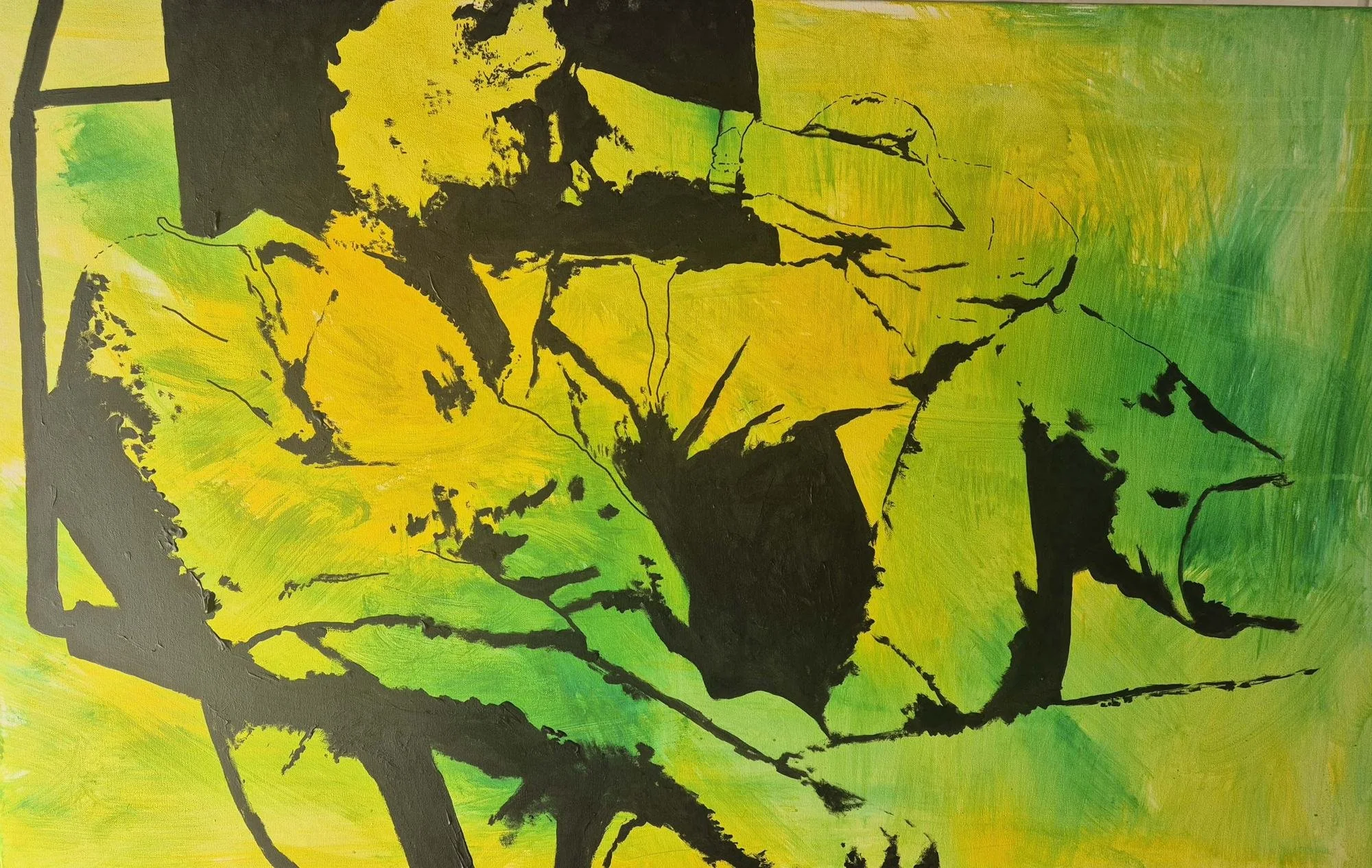
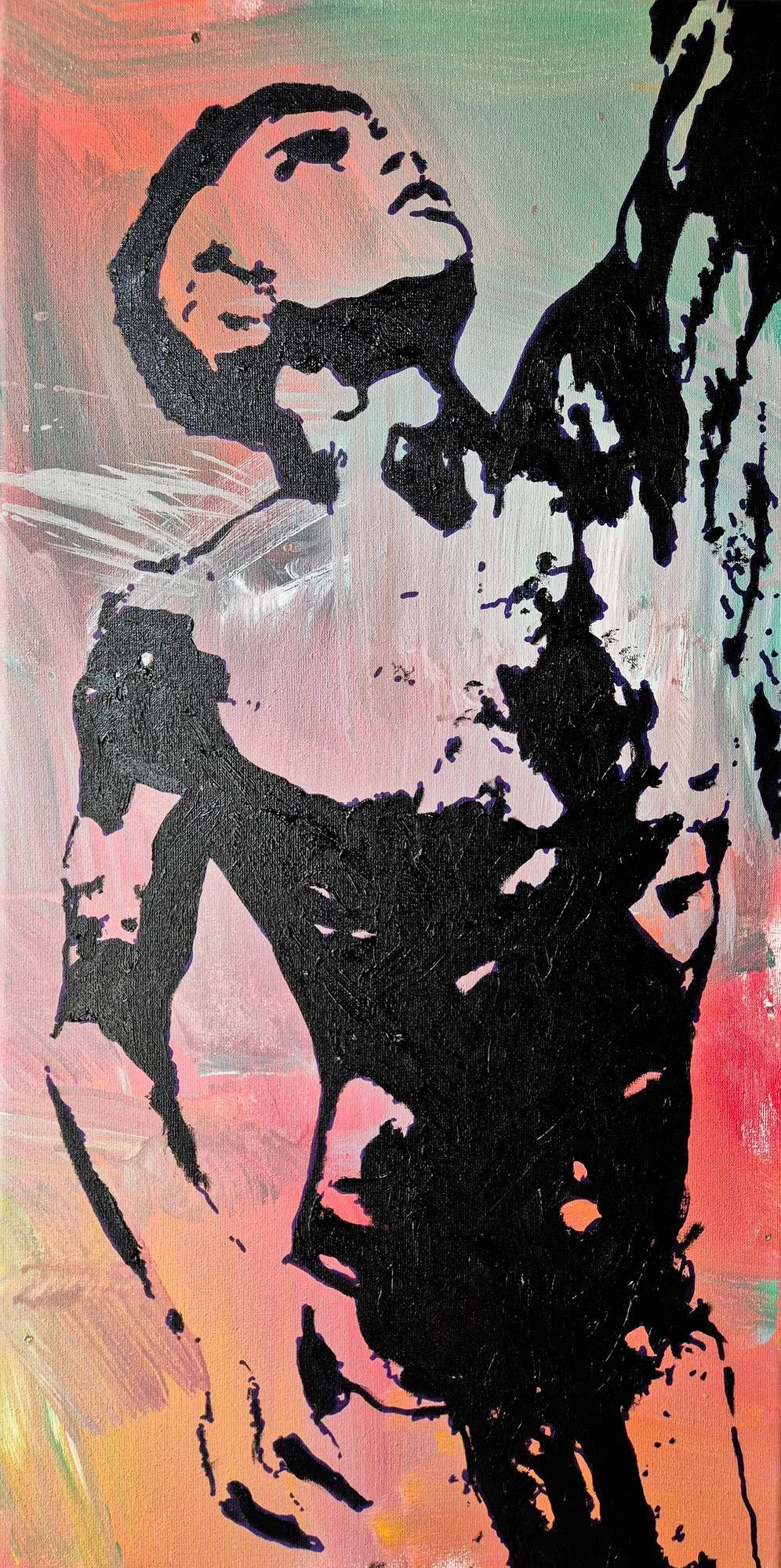
Leisure in the 70s is a reflection on memory, freedom, and the changing attitudes towards the human body and intimacy. The painting evokes the relaxed atmosphere of the 1970s, a decade associated with sexual liberation, experimentation, and a new sense of personal freedom.
I am interested in the way memories transform over time.
For me, the painting is also a nostalgic reflection on my youth, when freedom seemed full of possibilities, and the boundaries between friendship, intimacy, and desire were being redefined.
Moylin Buldain – @moylinstudio
Idle considers the emotional complexity of stillness. The figure, partially built upon family ties and a distant lineage of a family member, occupies a moment in which very little appears to happen, yet that pause leaves room for an internal life that remains partly concealed. I'm interested in how we interpret another person's presence through posture, expression and the space around them. The title carries an ambiguity: what looks like inactivity might also be reflection, retreat or a moment of transition. I wanted the painting to sustain that uncertainty and allow the viewer's understanding of the figure to shift over time.
Dimitris Pikros – @dimitrispikros
Tilda Swinton Is Cracking is the third painting, Object, in my Faceless Triptych, a series exploring different relationships between the figure, identity and representation. In this work, Tilda Swinton becomes a point of reference through which I explore the transformation of the human image beyond conventional portraiture.
The painting is less concerned with capturing a recognisable likeness than with constructing an alternative visual experience through colour, form and spatial relationships. It approaches the figure as something that can be reimagined, disrupted and transformed, rather than simply represented.
Sharon Gershman – @sharons_art12
My art is inspired by what I experience and feel, and by my curiosity to turn those feelings into something visual, colourful, and alive.
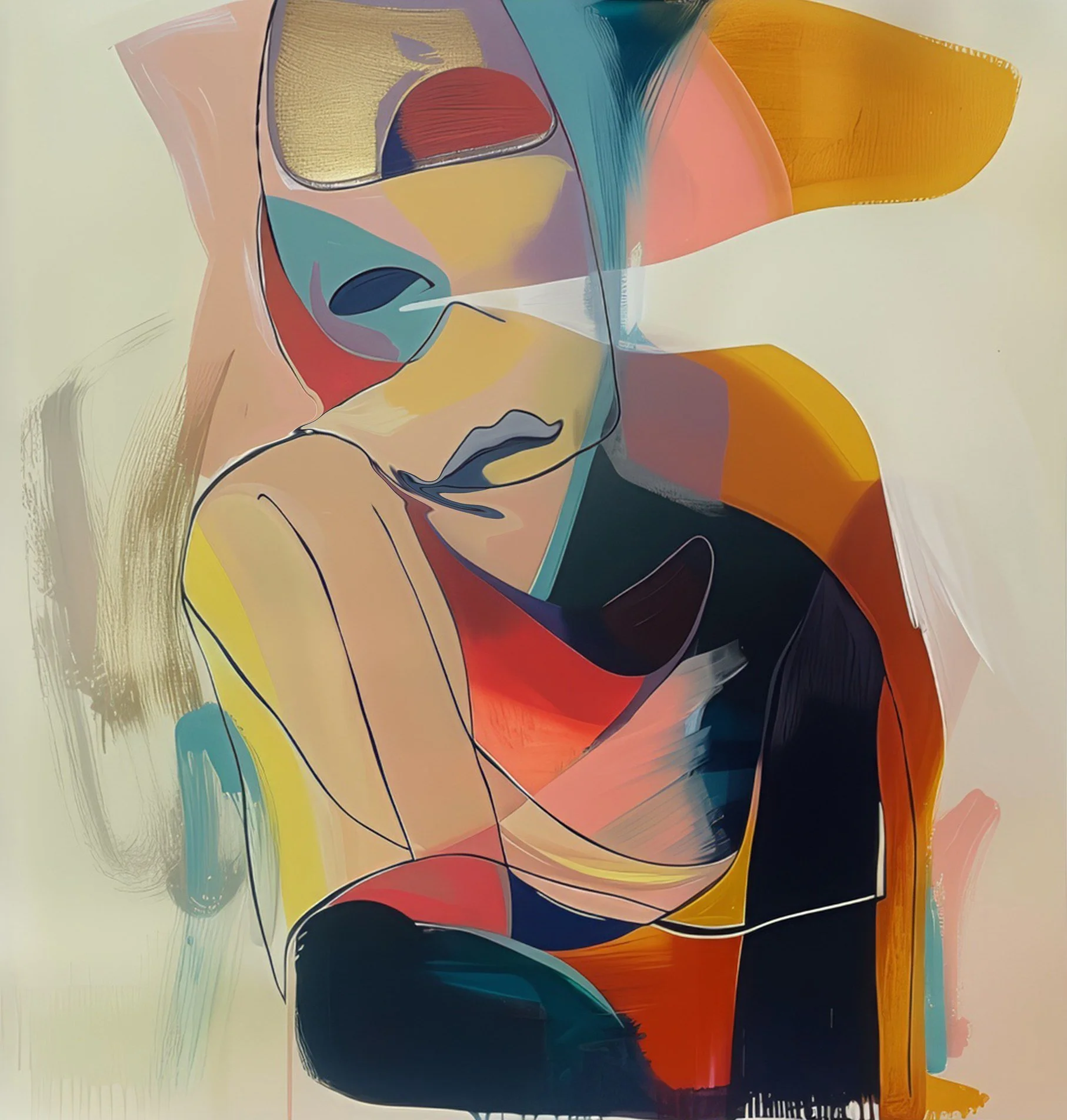
In Free Woman, I explore the liberation of body and soul, the freedom to express ourselves as women without fear, limitations, or holding back.
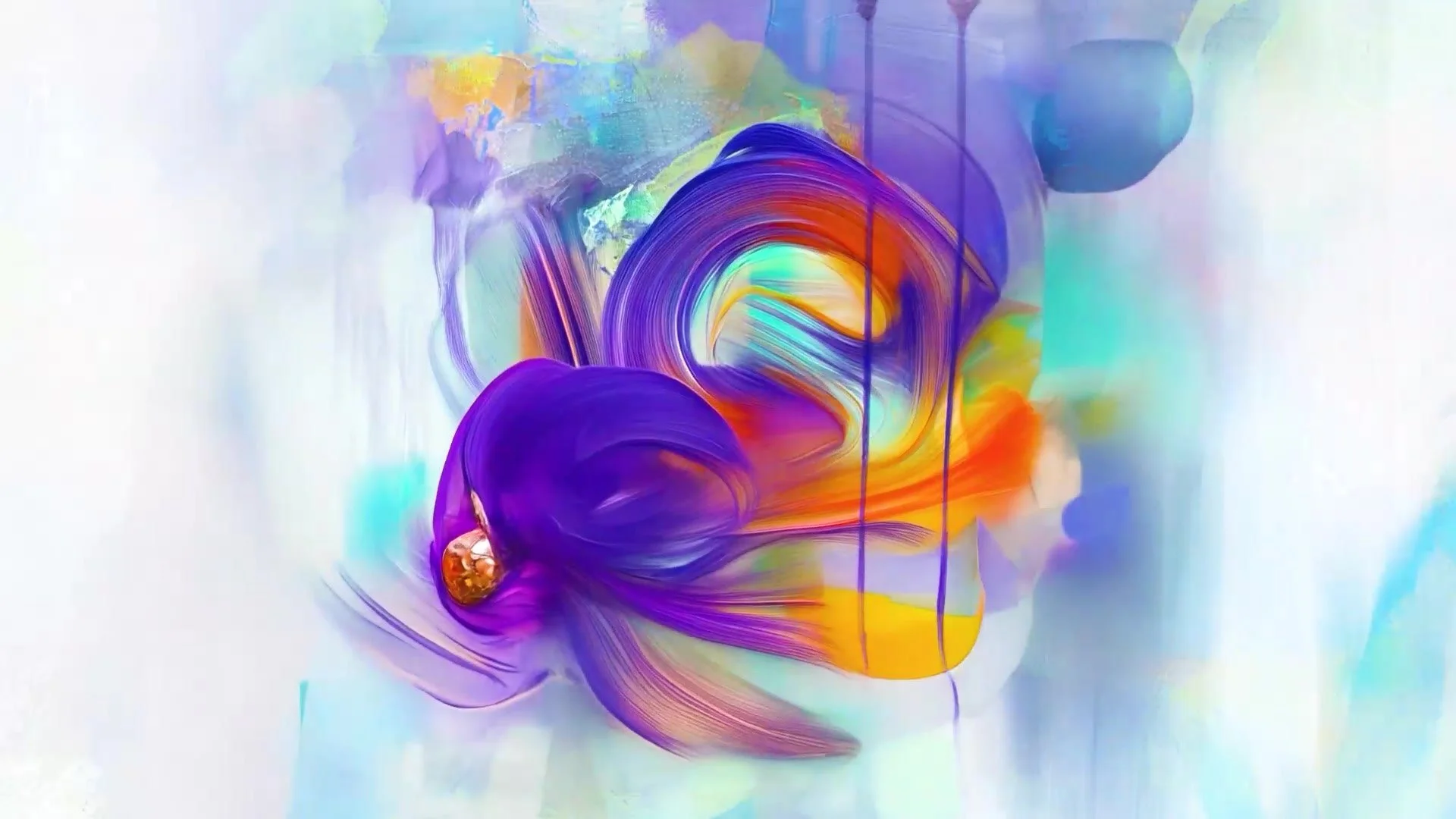
Mind Blowing begins with an abstract painting that blends with digital art, creating something unexpected and exciting. For me, it's about what becomes possible when we stay curious, open our minds, and allow ourselves to experiment beyond the familiar. The butterfly, a symbol of transformation that I feel deeply connected to, becomes part of this evolving visual experience.
Delila Dazdarevic – @deliladazdarevic
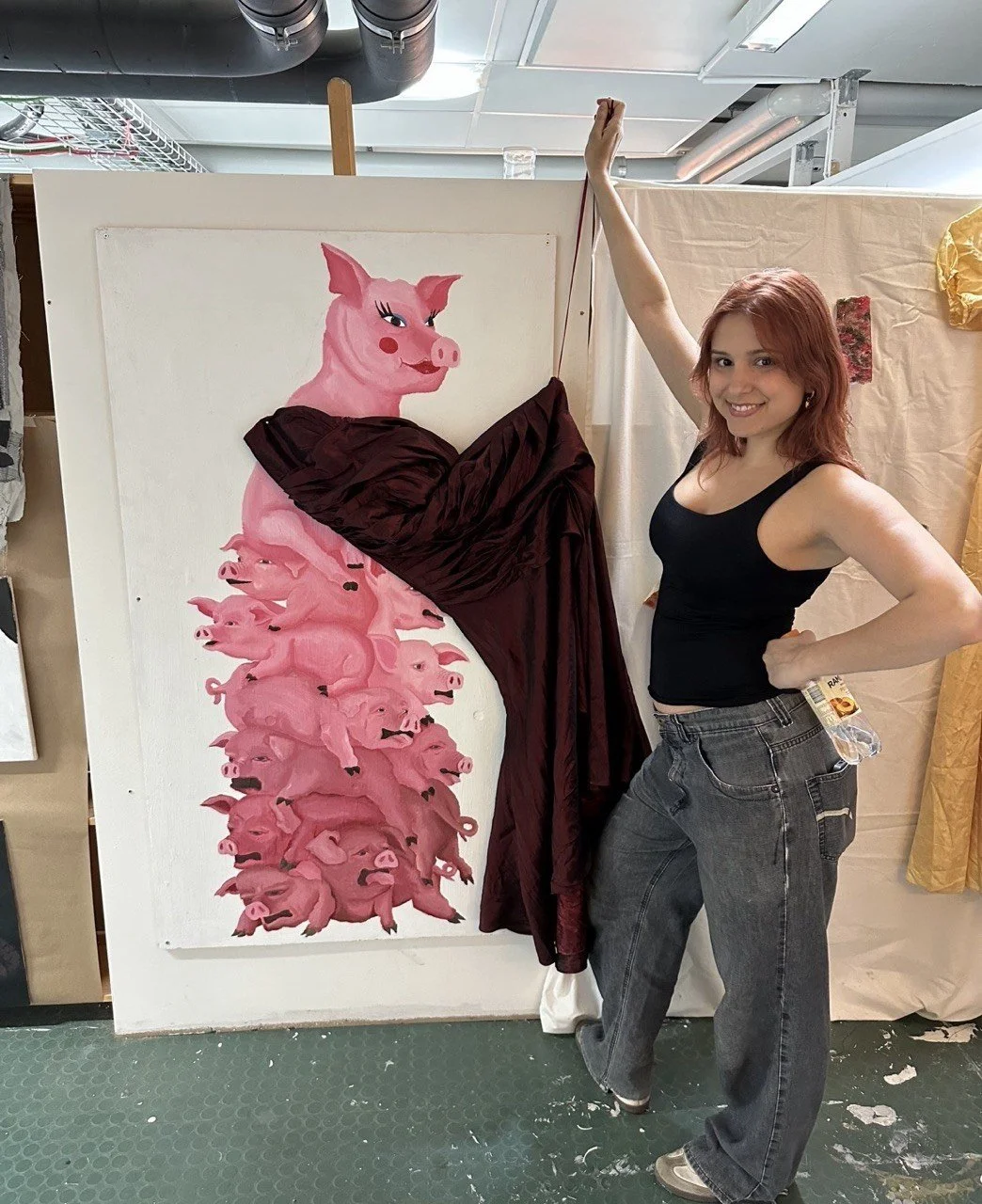
The concept behind the piece I'm showing in London comes from randomly reflecting on what temperature a specific creature or object would actually have, and where it would be located in its environment. My vision was to explore how temperature is another way of tying together everything that exists and turning something invisible into something we can actually see.
Chantal Coetzee – @chantal.coetzee.fine.art
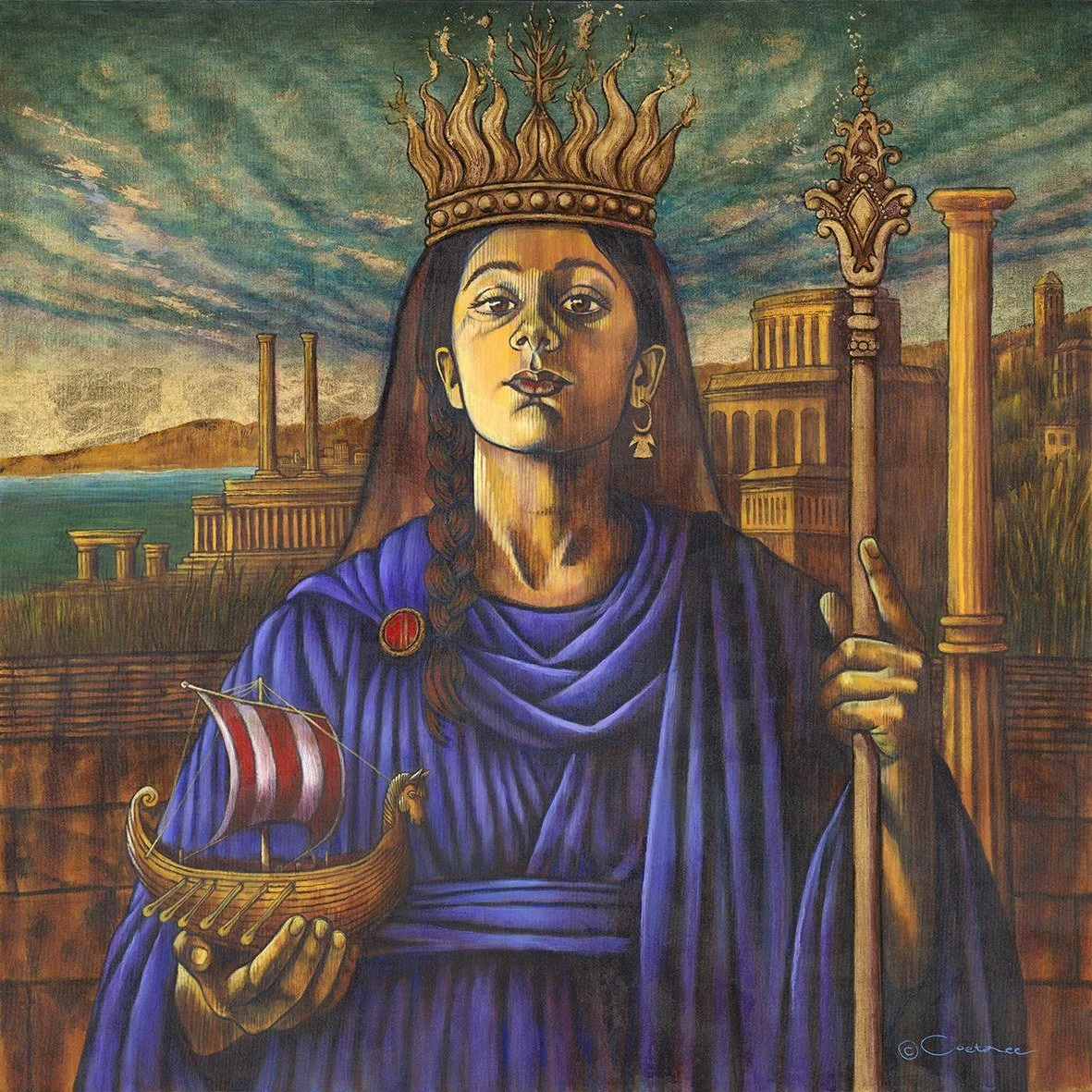
The two portraits that are showing in London are from an ongoing series titled African Queens: Restoring History. I'm passionate about re-writing history to include the powerful female rulers from my continent. My creative practice begins with extensive research into the lives of each queen, followed by the creation of large portraits of them based on this knowledge, with references to their identity and accomplishments.
Grace Easton – @graceeastonphoto
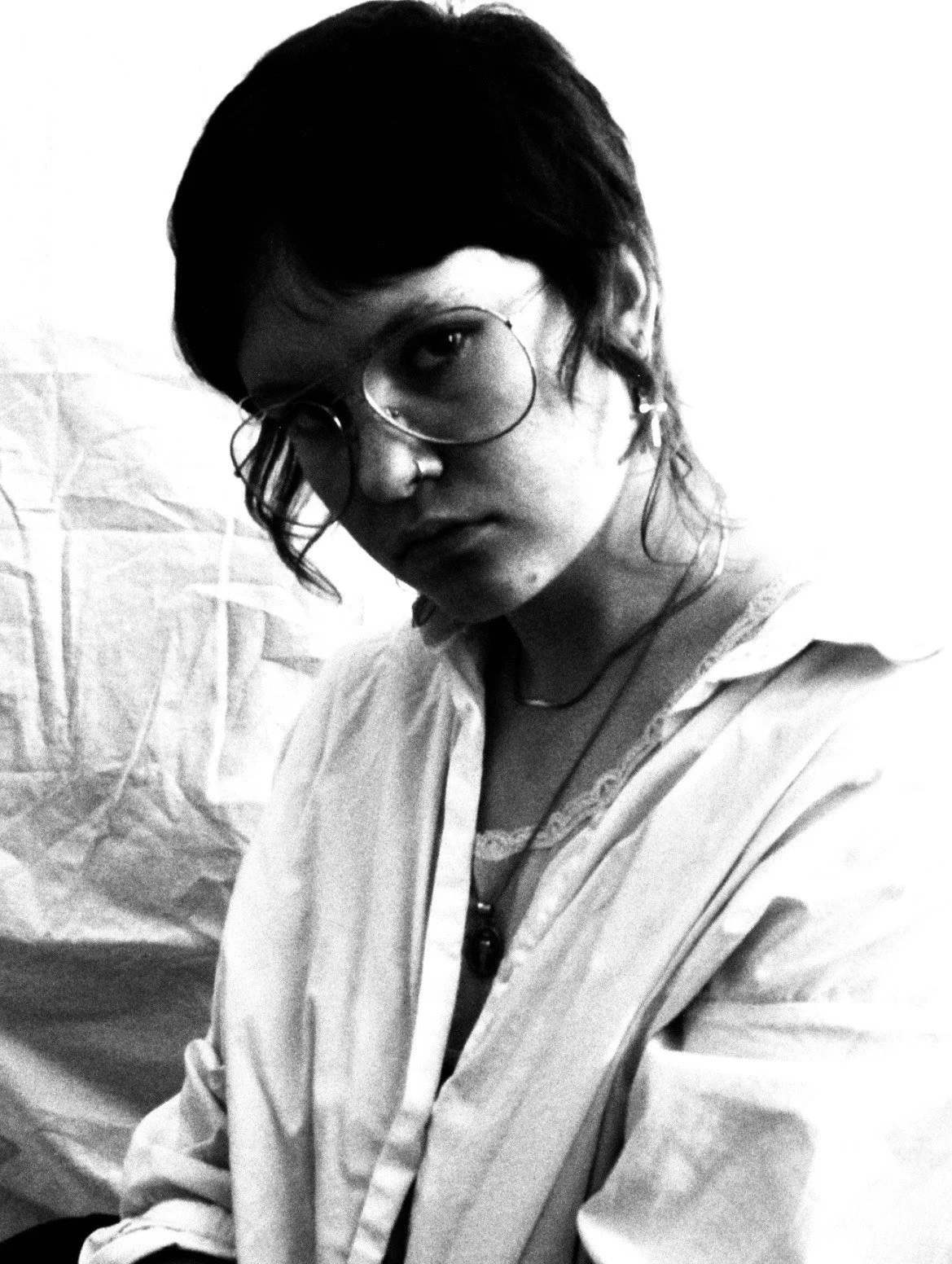
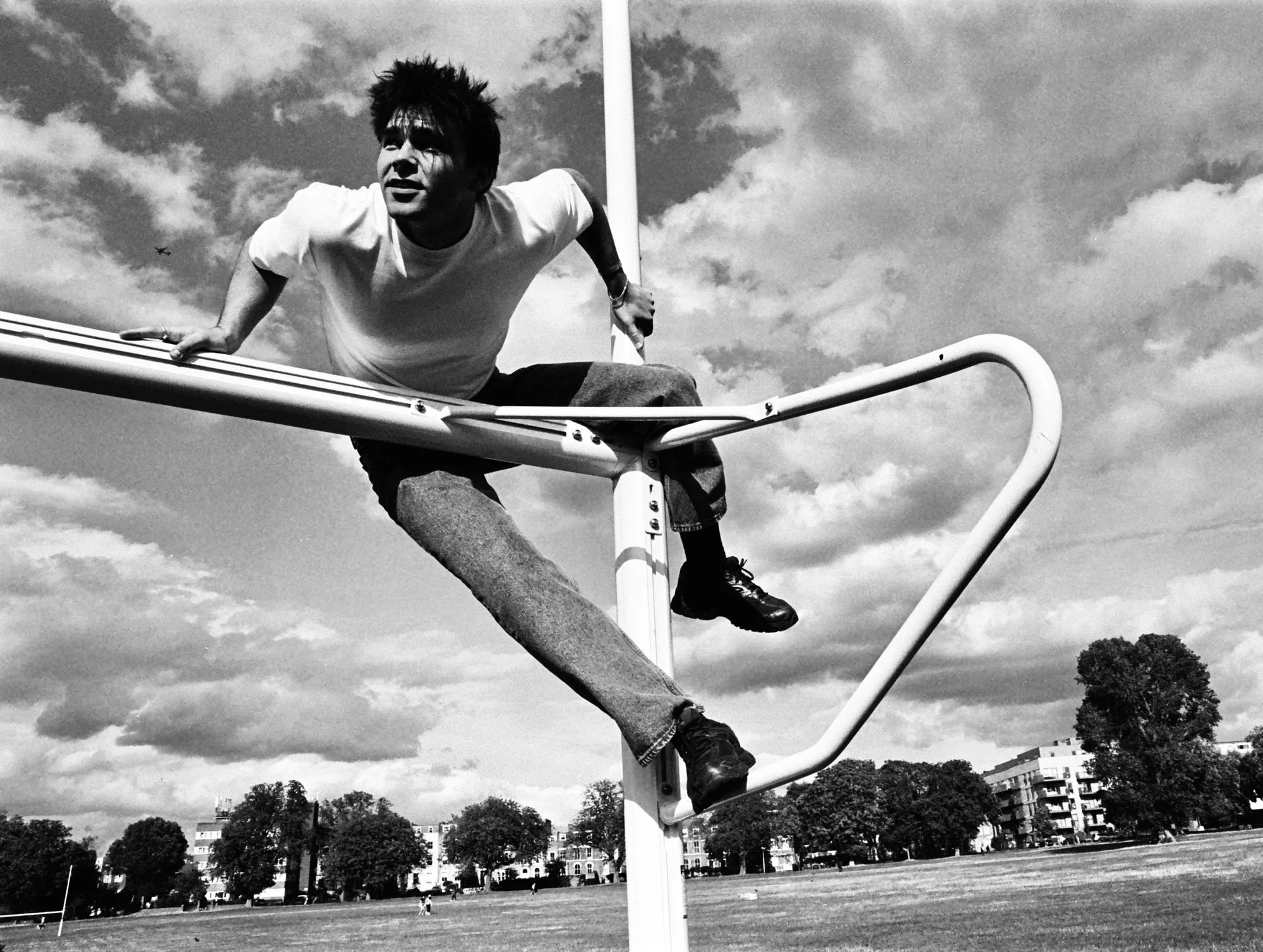
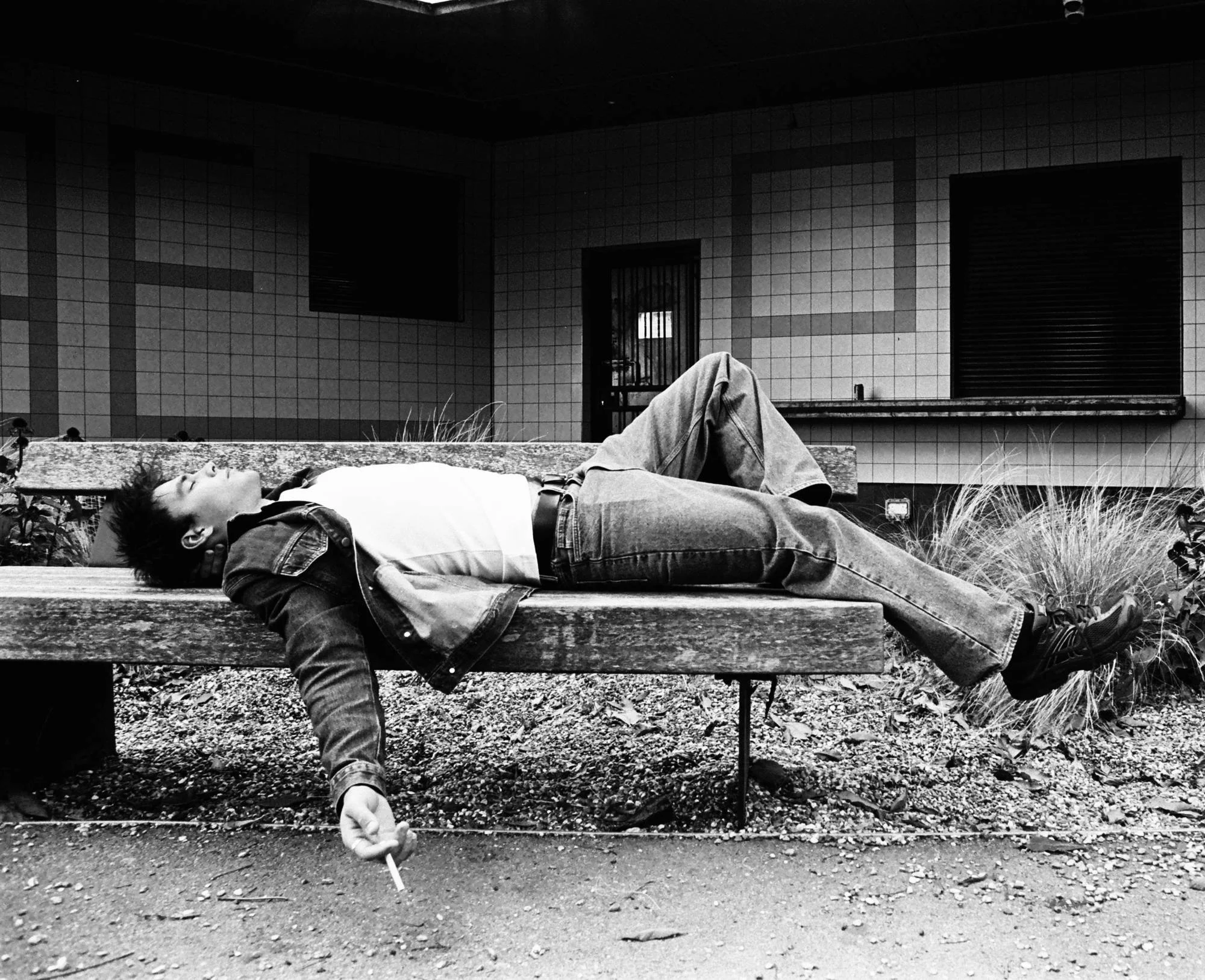
This image is part of an ongoing project called Lost in a place you call Home, which focuses on the themes of Home, Nostalgia and Identity. This image was taken during a leisurely walk around my best mate's hometown of Peckham. I also used to live in this area so by capturing this moment it helped me to remember the past and a place I also used to call home, which can be anything, anywhere or anyone.
Liz Vinson – @bizzylvart
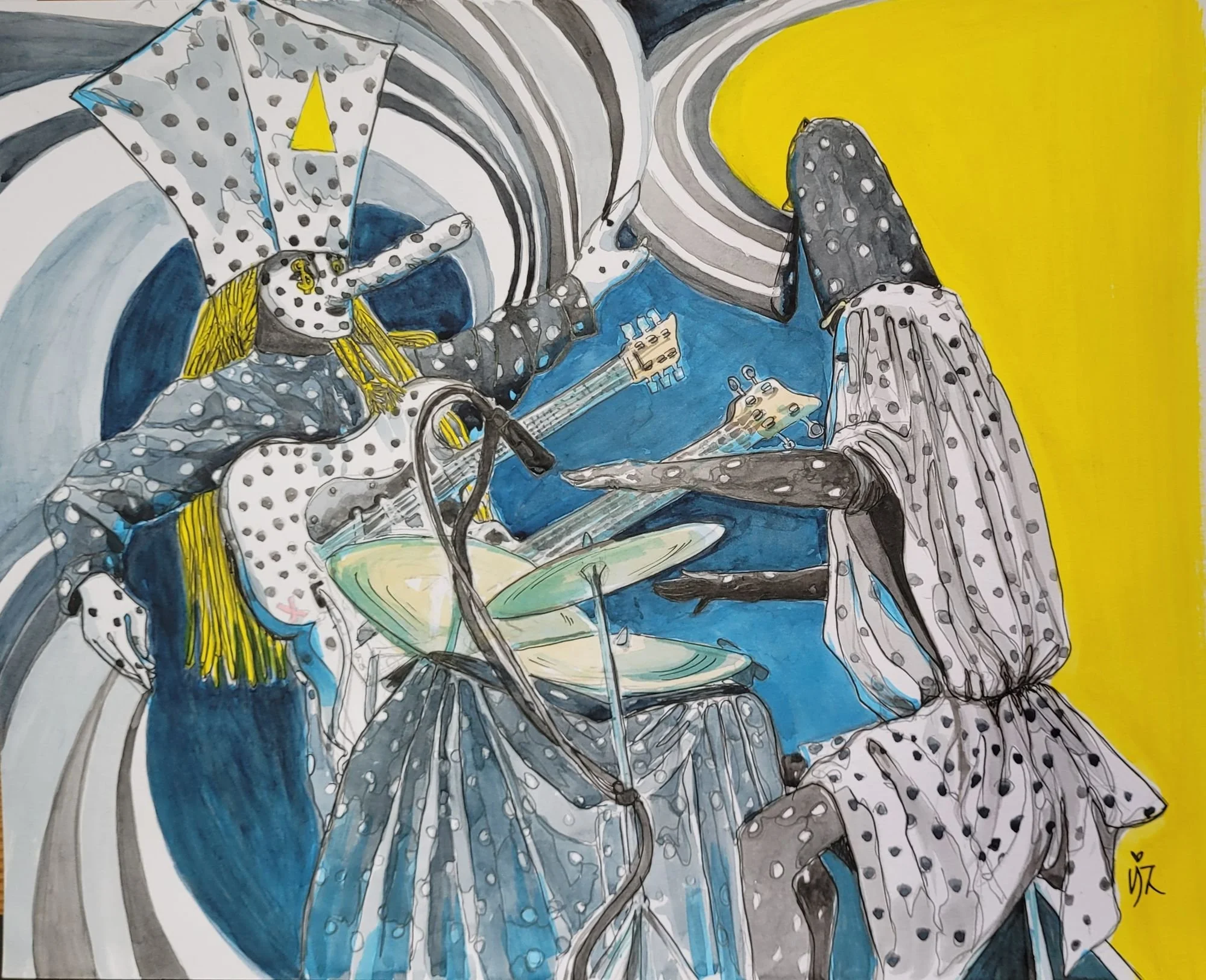
I have 3 pieces in the exhibition which I hope will show the different ways in which I create art. The irrepressible Canadian-French 300-year-old Microtonal Alien duo Angine de Poitrine, who are taking the alternative music scene by storm, in a piece called Microtonal Stretch.
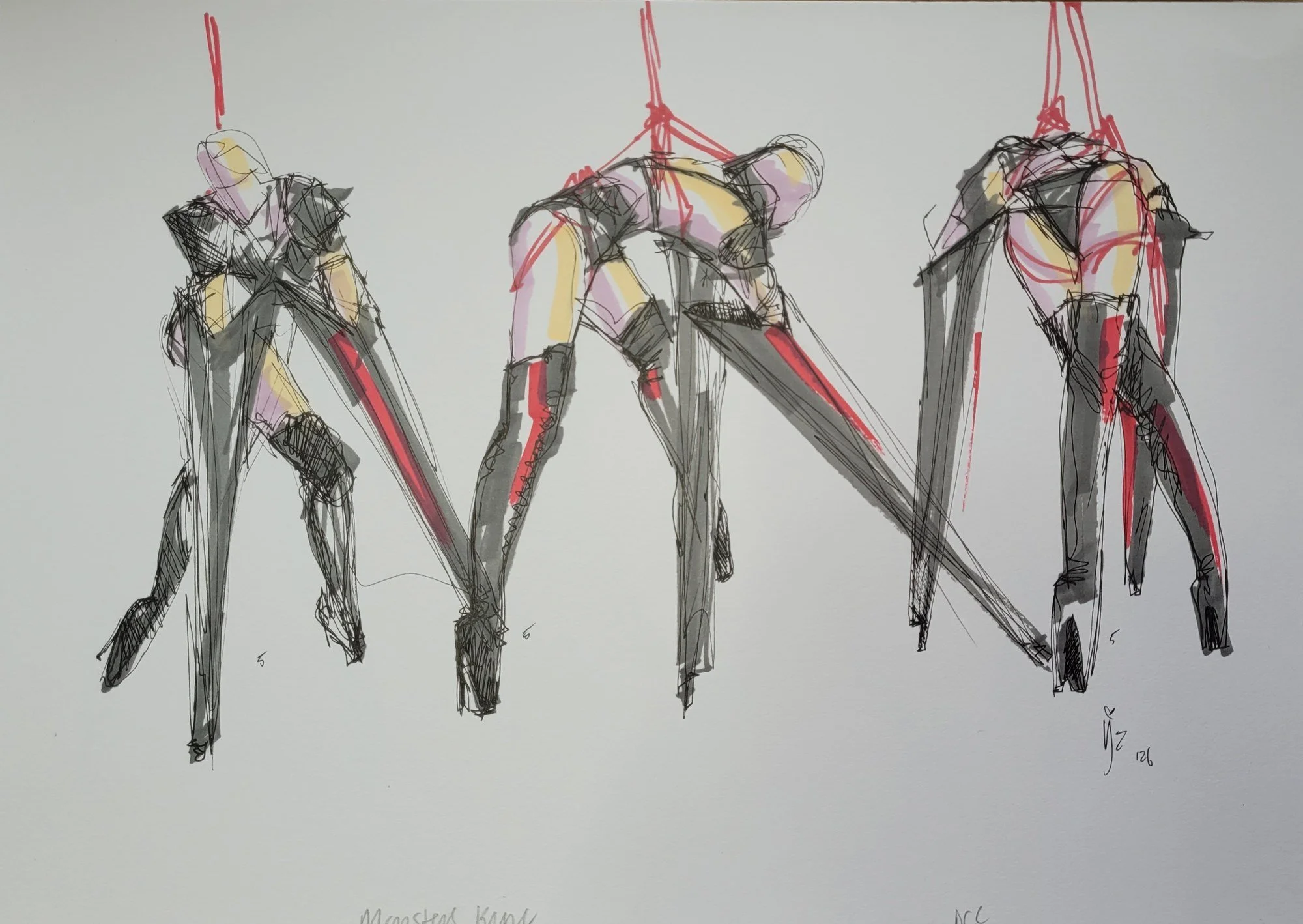
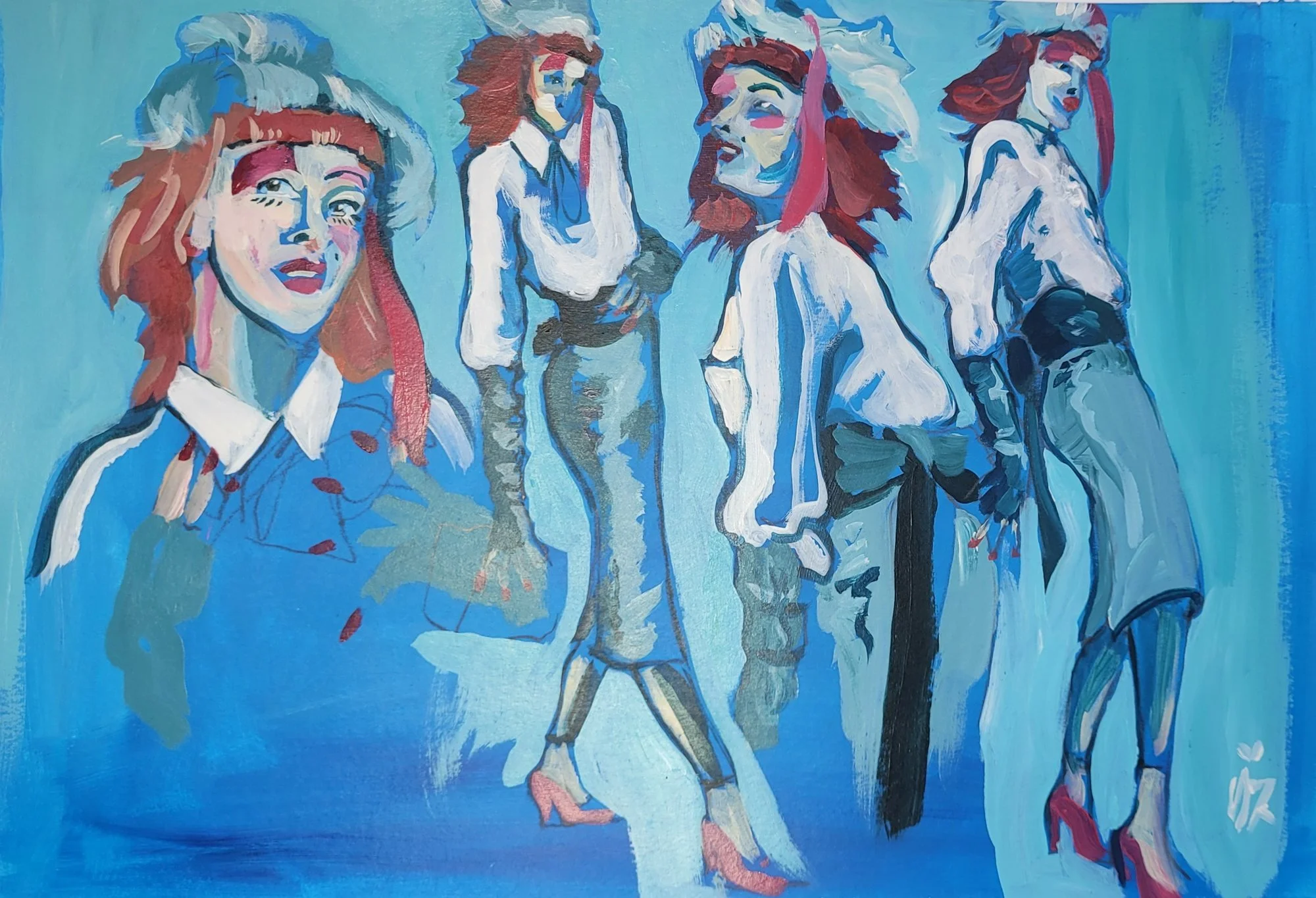
Monster Suspended II from a 2-hour live session with Drawing Cabaret Couture (DCC) featuring Monsters Kinc and Shibari Art, three 5-minute poses which took me out of my comfort zone to illustrate, however I loved the results.
Come Undone, acrylic on paper, created during a live fashion illustration session with DCC, featuring one of my favourite haute couture design collab creators, Karbon Kyd.
3. What materials and processes do you use, and why do they suit what you want to say?
Nick Alexander – @___nickalexander___
I build my paintings up in layers of spray paint and acrylic, sometimes using more than thirty layers in a single piece. I leave fragments of earlier layers visible, echoing the way marks build up on city walls over time. That process leaves room for unexpected combinations of colour and shape, much like the accidental compositions that draw me to those surfaces in the first place.
Svetlana Popović (Lana S) – @lanas.art_
I primarily work with acrylic and wax, incorporating mixed-media techniques on canvas. I also create original hand-painted silk works, which form another important dimension of my artistic practice.
Texture plays a central role in my visual language. I am interested in how layers can evoke memory, depth, and the passage of time.
My approach is intuitive and closely connected to a meditative state of awareness. Rather than illustrating a predetermined idea, I allow each painting to develop its own internal dialogue.
These materials enable me to express what is difficult to articulate — the emotional and psychological dimensions of human experience.
Daniel Garbade – @d_garba_de
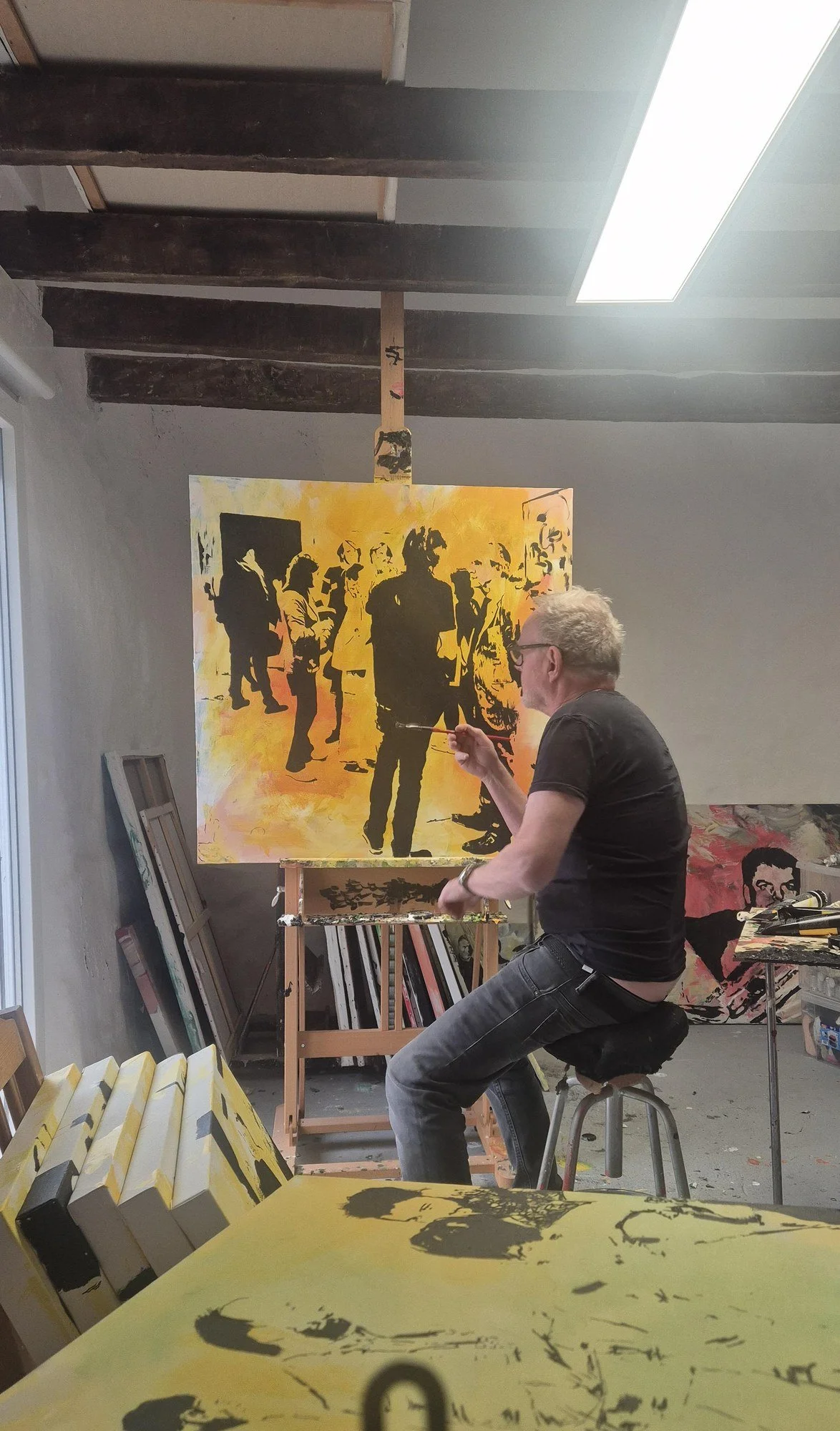
I work across painting, drawing, photography, and digital media, although painting has become particularly important in my recent practice. I frequently use oil or acrylic on canvas, often restricting myself to black and white.
I am fascinated by the relationship between light and shadow. The white canvas is not simply a background; it becomes the light itself, while the black brushstrokes create form, movement, and depth. I like the economy of this approach, where a few gestures can suggest an entire emotional world.
My drawings follow a similar philosophy: a simple line can sometimes express more than an elaborate composition. I also enjoy experimenting with photographic textures, negative images, and diptychs, creating visual dialogues between two seemingly similar realities.
Moylin Buldain – @moylinstudio
I work primarily with acrylic on canvas, developing the image through layers, revisions and changes in colour. Although I am moving into oils now, the layering process has helped me approach a response quickly to an emerging composition while returning to passages with greater precision. I'm also exploring other textural elements within the work: can I layer paper within gesso to create a rougher texture? Who knows, the experimentation will continue to happen in the studio.
Dimitris Pikros – @dimitrispikros
I work primarily with acrylic and mixed media on canvas. My approach to painting involves constructing forms through flat areas of colour rather than outlines or conventional tonal modelling. Instead of building volume through gradual transitions from dark to light, I use distinct colour relationships and contrasts to define shapes, establish perspective and create movement across the composition.
My work has visual references to illustration, graphic design, comics and manga, but my intention is not to imitate these disciplines. I am interested in how their visual languages can enter into dialogue with painting, while developing my own approach to its construction, possibilities and identity.
Beyond the canvas, I have also explored ways of extending the experience of painting through performance, installation and audience interaction, allowing the work to exist within a broader artistic and experiential context.
Sharon Gershman – @sharons_art12
I love working with bold colours, unexpected combinations, and fluid movement. Sometimes I begin with paint on canvas, and other times with a digital image or an idea that develops through experimentation.
Technology allows me to take my visual language further, introducing movement and bringing images to life.
I don't like being limited to one medium. Each one gives me another way to express what I feel and imagine.
Chantal Coetzee – @chantal.coetzee.fine.art
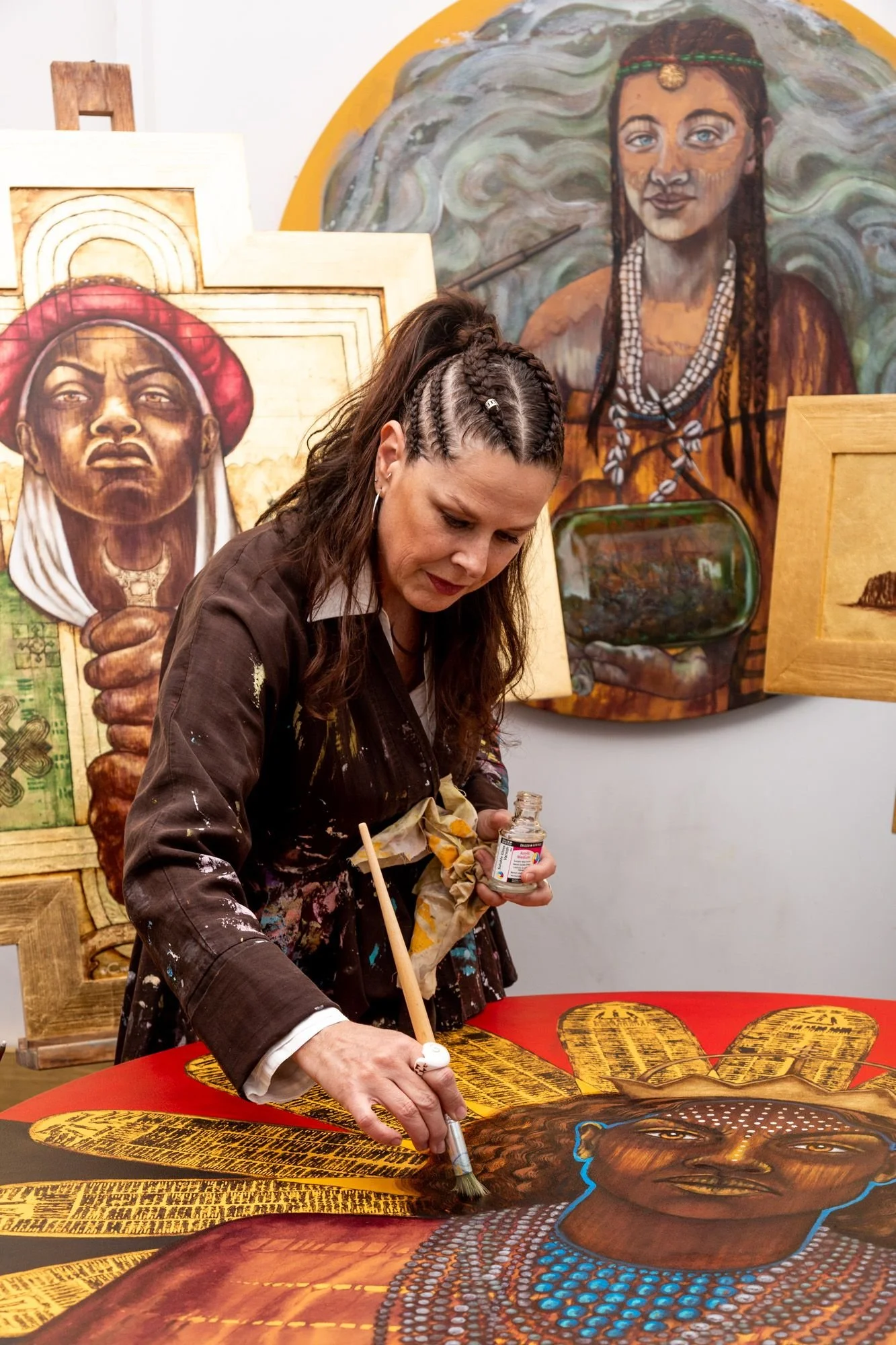
I often paint on gold-leaf surfaces that reference the royal status of my subject. Drawing directly on gold-leaf is high risk and mistakes cannot be erased without damage. I first draw my composition on paper, then re-create it on acetate, and project the drawing onto my canvas. I can then gently block my composition using charcoal.
Grace Easton – @graceeastonphoto
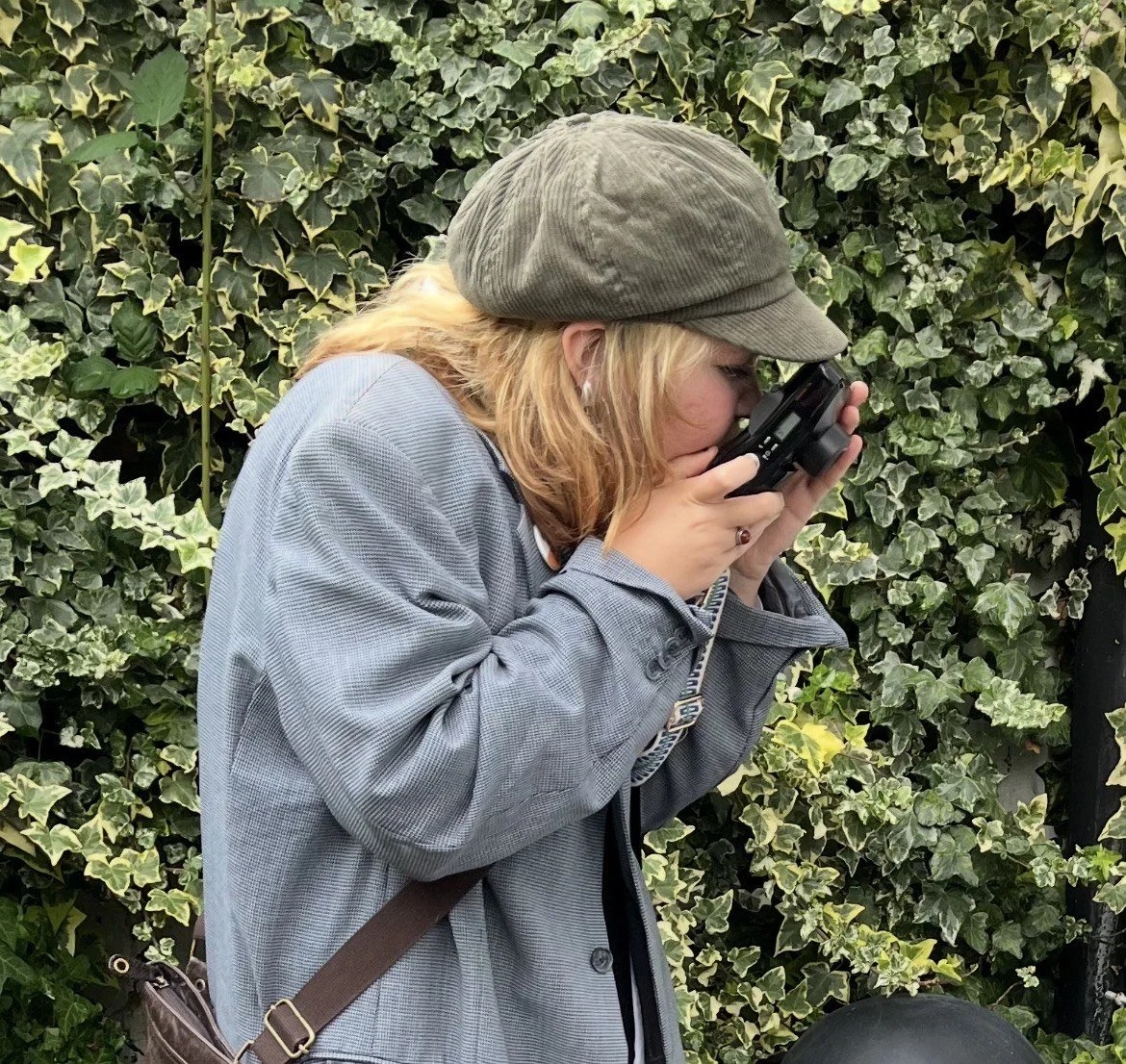
I predominantly use a Minolta 35mm analogue camera to create my work. I also work digitally but to get the look I want, analogue captures it perfectly. I experiment with my HP printer and scanner to elevate the texture and marks on my images which creates a nostalgic effect that brings the idea of memory into my work.
Liz Vinson – @bizzylvart
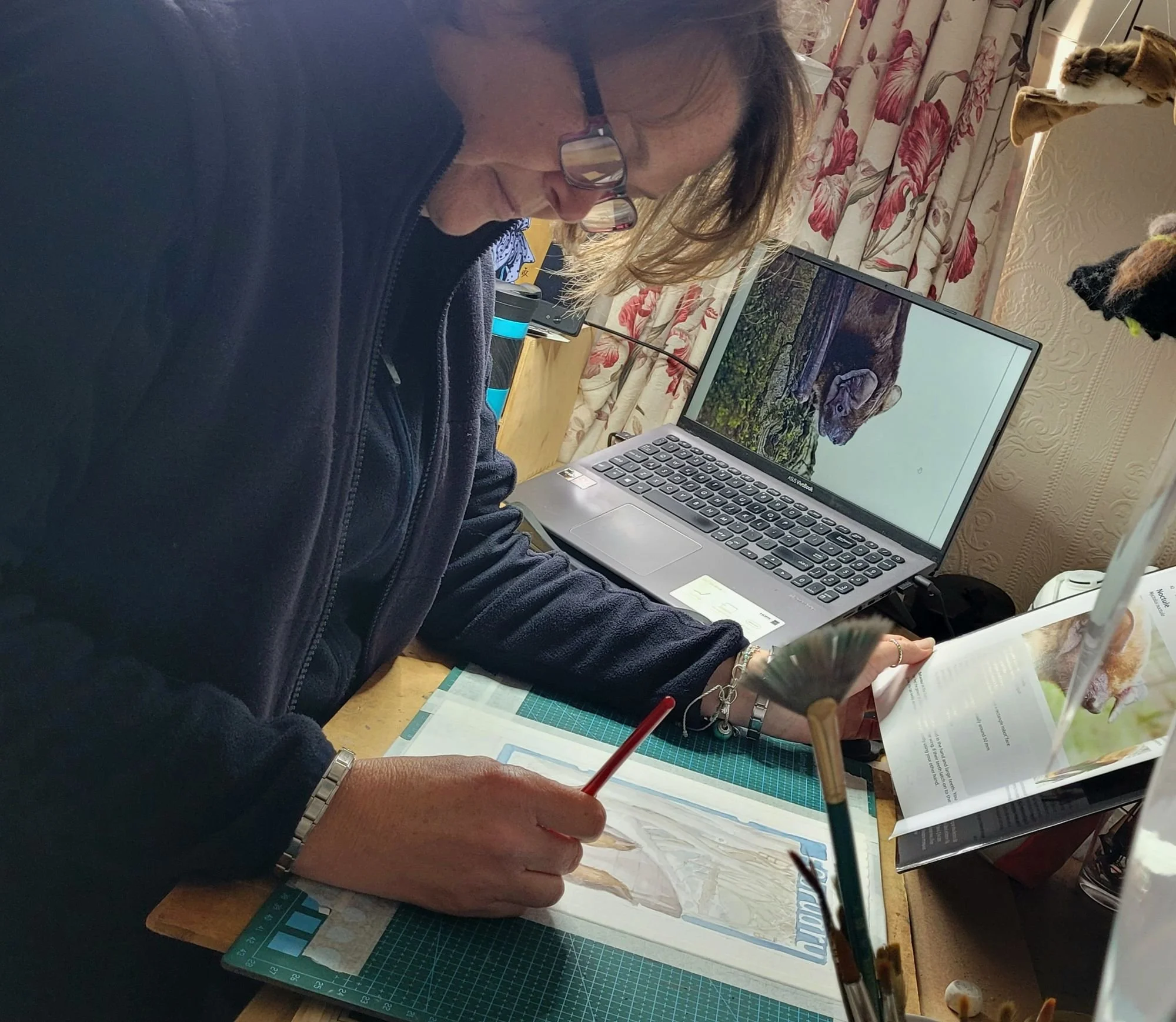
I work mainly on paper with pen and ink, watercolour and Promarker pens as they suit my illustration style, but I also love monoprint for speed and feeling, and acrylic as it brings out the inner fauve in me.
4. What does a typical day in your studio look like?
Nick Alexander – @___nickalexander___
I usually start by looking at the last pieces I have worked on, then make an initial composition by building up layers of spray paint and acrylic, stepping back often to see how the composition is coming together. I can drive myself a bit mad trying to get it right because even a tiny shift in a shape or a sliver of colour can change how the whole painting feels to me. Sometimes the most satisfying part of the day is realising that the little adjustment I've been going back and forth on is what finally makes the piece click.
Svetlana Popović (Lana S) – @lanas.art_
Every day in my studio is different. When inspiration takes hold, I can become completely immersed in painting, working for hours, sometimes through entire days and nights. At other times, the studio becomes a quiet space for contemplation and reflection.
I value these moments of stillness, when I can simply observe a work, connect with it, and allow its direction to emerge naturally.
For me, the creative process is not defined by a fixed routine. Painting is as much about observation and awareness as it is about the physical act of creation. Each artwork has its own rhythm, and I try to remain attentive to it.
There is something deeply meditative about this relationship between the artist and the work.
Daniel Garbade – @d_garba_de
I divide my time between Madrid and the countryside in Castilla-La Mancha, where the quieter surroundings offer a different rhythm and perspective.
There is no rigid routine. Most days I paint for hours; on others, I spend more time observing, photographing, reading, or developing ideas. I often work on several paintings simultaneously, allowing one image to influence another.
Music, silence, and natural light are important companions. I enjoy the moments when a painting begins to develop its own personality, sometimes moving in a completely different direction from what I originally imagined.
Moylin Buldain – @moylinstudio
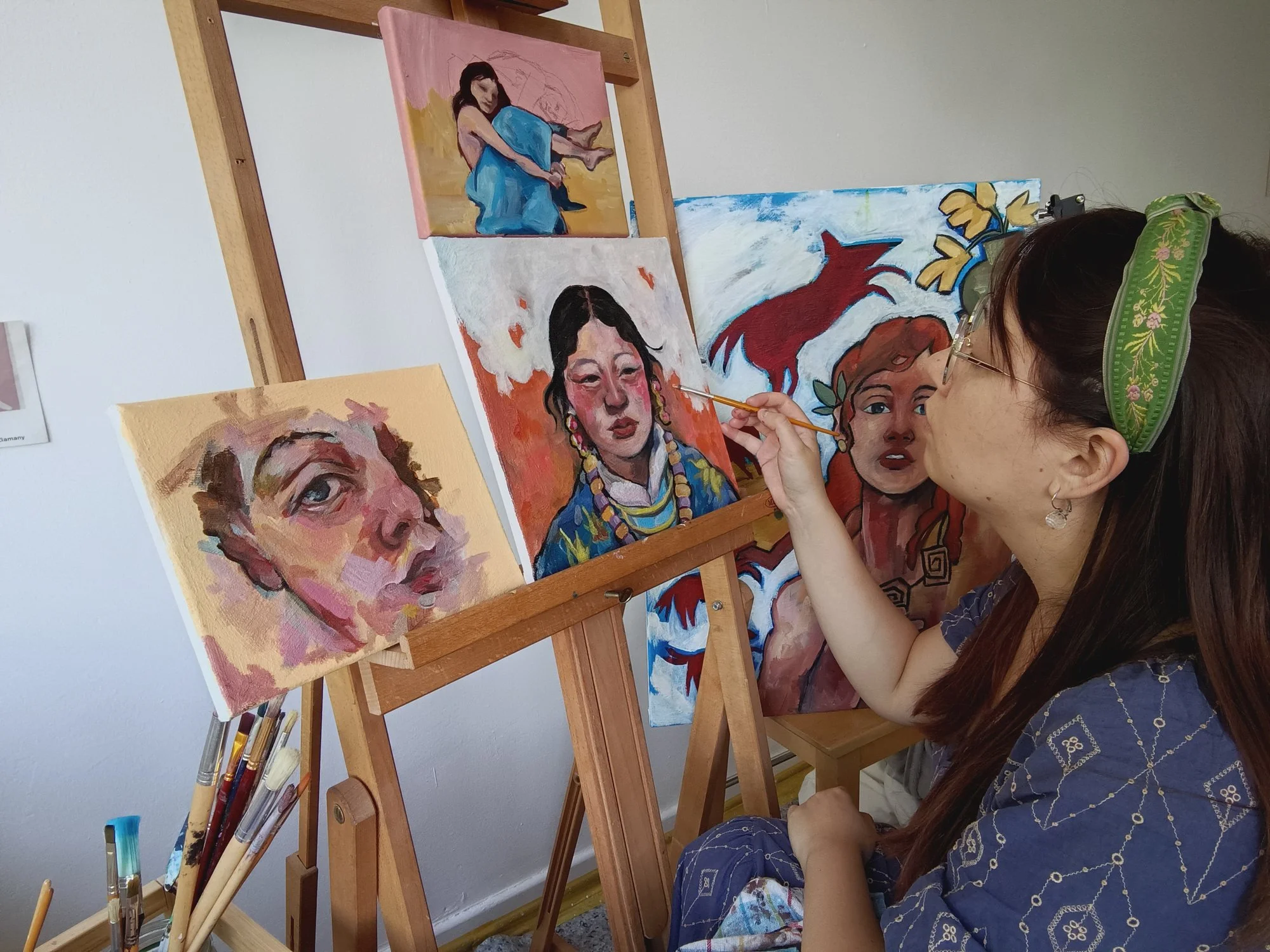
A studio session usually begins with looking. I spend time with the paintings in progress, considering what holds my attention and where something feels unresolved. From there, the work can involve substantial repainting or a small adjustment that changes the balance of the whole image. Moving between close work and viewing the canvas from a distance is an important part of my process. I try to remain responsive to what is happening in the painting, including the moments when it moves away from my original intentions.
Dimitris Pikros – @dimitrispikros
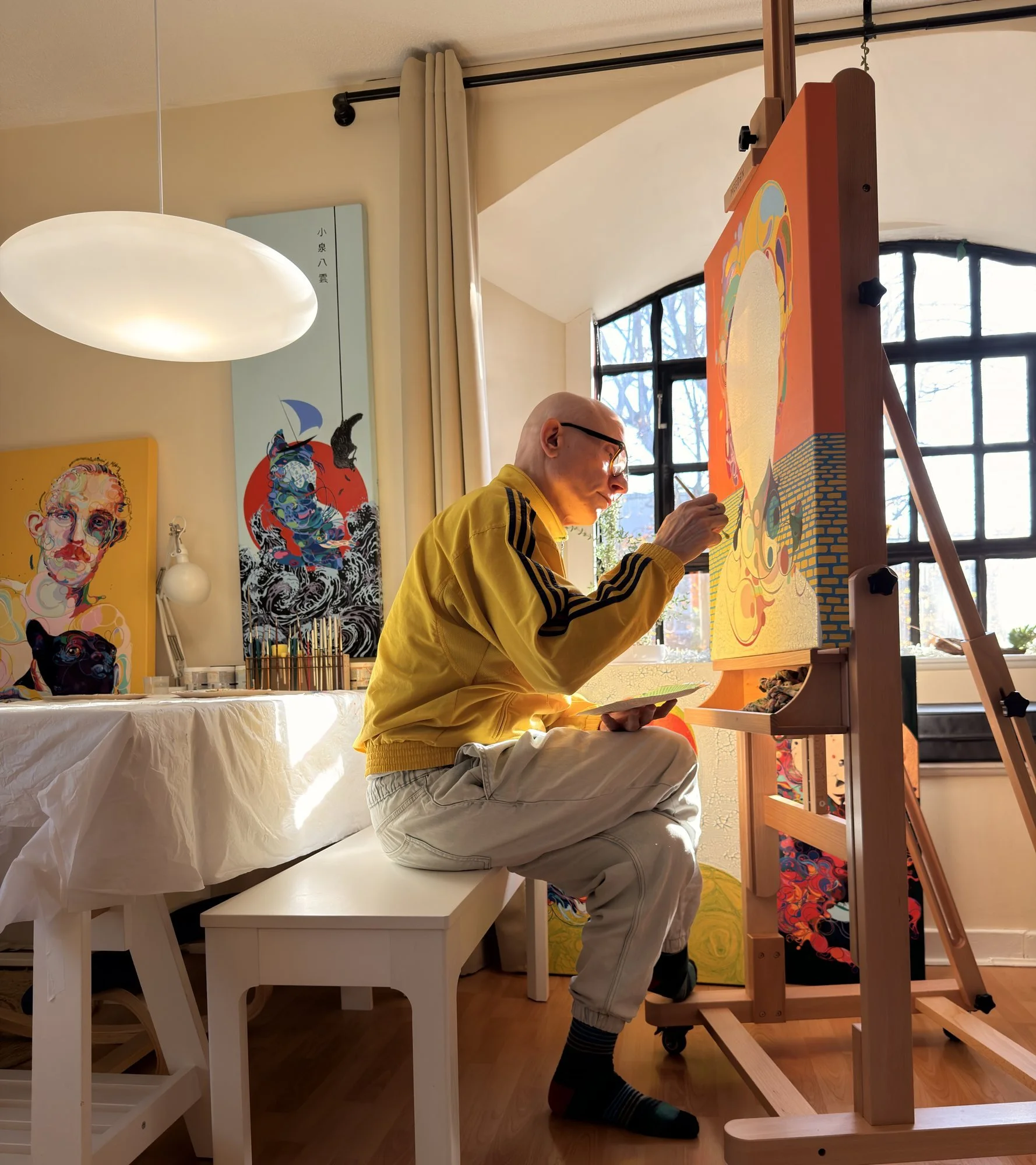
My studio is an important part of my creative mindset. I prefer a bright, tidy and almost Zen-like environment, which gives me a sense of clarity, focus and energy.
I don't necessarily associate creativity with the chaos often stereotypically attributed to artists' studios. For me, experimentation and unpredictability belong primarily to the canvas itself. I prefer to concentrate that energy within the painting, allowing the construction of forms, colours and compositions to develop through experimentation rather than through the surrounding environment.
A significant part of my practice involves thinking, observing and questioning how a painting might develop before making decisions on the canvas. Research and experimentation take place through different approaches, including digital sketches on my iPad or smaller surfaces, allowing me to explore possibilities before committing to a larger work. For me, the studio is both a space for reflection and a place for making, where ideas, research and experimentation ultimately find their expression on the canvas.
Sharon Gershman – @sharons_art12
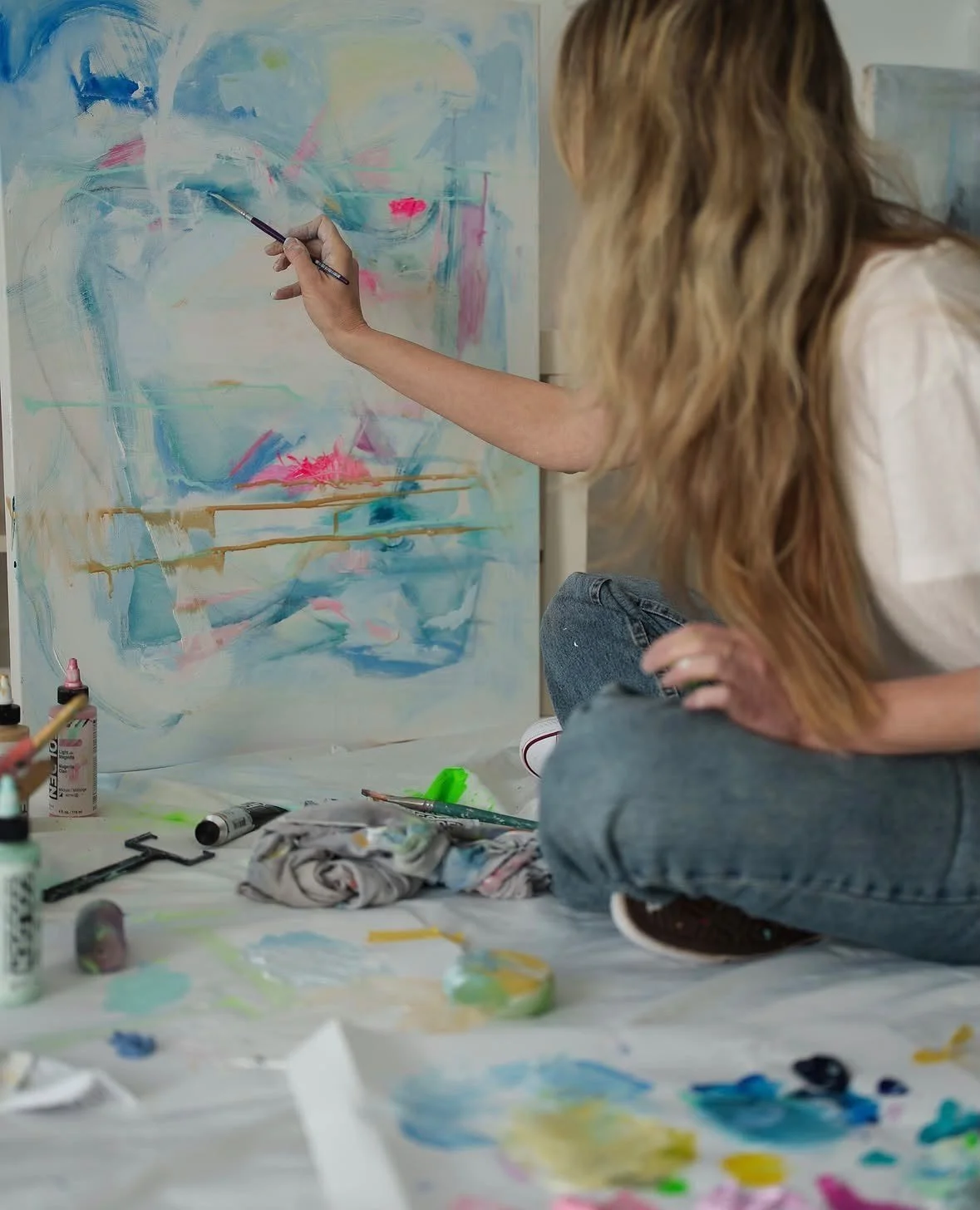
I'm starting a new daily ritual of painting, just to feel the canvas, play with colours, and enjoy the movement of the brush without having a particular outcome in mind.
From there, my day can take different directions. I might continue painting or move to my computer to work on digital collages, animation, and video.
Music is often part of my process. I love those moments when I get completely absorbed in creating and lose track of time.
Chantal Coetzee – @chantal.coetzee.fine.art
I usually start my day catching up on correspondence, often doing a little more specific research regarding my current subject, and then by the afternoon I'll be painting or gold-leafing her portrait.
Grace Easton – @graceeastonphoto
I don't currently have a studio space mainly because my so-called 'studio' is my surroundings. I create work wherever I go as I feel that my biggest inspiration for being creative is being out and about.
Liz Vinson – @bizzylvart
It depends upon what I have on the easel! Currently I have a large commission I'm working on which requires a high level of accuracy, so I will be sourcing images from my own photographic collections and reference books, going out with my camera to photograph more wildlife, land and seascapes, liaising with my clients, and processing orders from my Etsy shop. I try to do social media daily, but it is a fickle friend! I can get distracted by the lovely view from my studio window, so a pair of binoculars is always at hand!
5. Who or what has influenced your practice most?
Nick Alexander – @___nickalexander___
The biggest influence on my work is the world around me, especially the accidental compositions I find where nature and everyday life overlap. It could be the shapes left behind by a torn poster or the way weeds grow through a crack in the pavement. I like taking something you might walk past every day and giving it a whole painting's worth of attention. Celebrating the overlooked.
Svetlana Popović (Lana S) – @lanas.art_
Living in Bali for seven years profoundly influenced both my artistic practice and my understanding of life.
I studied painting and traditional batik at the Indonesian Art Institute in Denpasar on a scholarship. Beyond formal education, I was deeply influenced by the island's relationship with spirituality, ritual, nature, and the everyday presence of art.
That experience encouraged me to approach painting not merely as an aesthetic activity, but as a form of inner exploration.
The relationship between the visible and invisible, so deeply embedded in Balinese culture, continues to resonate throughout my work.
Daniel Garbade – @d_garba_de
My influences come from many directions. Growing up between Swiss and Spanish cultural traditions gave me an awareness of different identities and ways of seeing the world.
Cinema has been particularly influential, especially its use of framing, dramatic lighting, and visual storytelling. In painting, I feel connected to artists such as Picasso, Bacon, and David Hockney, whose treatment of light and the human body continues to fascinate me.
Literature has been equally important. My encounters with writers such as José Saramago and Rafael Alberti reinforced my belief that art can be both poetic and socially engaged.
Above all, I am influenced by ordinary human encounters, the vulnerability of people, and the strange beauty hidden in everyday situations.
Moylin Buldain – @moylinstudio
I'm drawn to painters such as Andrew Salgado, Kent Williams and Soey Milk for their individual approaches to the figure, expressive colour and the physical possibilities of paint. Their work ethic as well towards understanding the human figure is more than impressive for me; their precision in defining their practice and just working more towards understanding it, and not focusing on the amount of work produced, is what makes a good painter for me. A collection of work is good, obviously, but in their interviews about their practice, it's just a by-product of what matters when they are just exploring what they do.
Dimitris Pikros – @dimitrispikros
My practice has been influenced by a combination of artists, visual cultures and, particularly, the spirit of experimentation I associate with the 1990s. It was a period I found especially exciting, particularly in London, when painting was entering into dialogue with music, fashion, illustration, graphic design and emerging technologies. Francis Bacon and Gary Hume are among the artists whose work has informed my broader engagement with painting, alongside my interest in Japanese culture, comics and manga.
What interests me most, however, is not influence as imitation, but the possibility of discovering new ways of thinking and creating. I have always had an enormous curiosity about life, about how things develop, change and become something else. This curiosity is inseparable from my creative practice. I find the idea of becoming creatively or intellectually stuck difficult to accept, and it is precisely this desire for continuous development that led me to develop my Innovative Painting Manifesto in 2000. It provides a framework through which I can pursue new possibilities, question established conventions and continue exploring how painting can evolve.
Sharon Gershman – @sharons_art12
My father was my first introduction to art. Growing up with a painter gave me a natural connection to creativity.
I'm also deeply inspired by the Israeli painter Lea Nikel. I love the freedom in her work, her intuitive approach, and her fearless use of colour.
Beyond artists, I'm influenced by music, relationships, and personal experiences. Much of my work begins with something happening inside me that I want to give a visual form.
Delila Dazdarevic – @deliladazdarevic
What influences me is constantly changing. I try to visit exhibitions and galleries as much as I can, and back in art school I spent a lot of time looking through books and researching artists I found interesting. I pick up bits and pieces that excite me and draw my inspiration from that. Over the past year, someone I really admire creatively has been bouncing ideas around with me and discussing concepts, which has had a big influence on my work. And of course, a lot of it just comes from letting my mind wander and letting ideas pop up on their own.
Chantal Coetzee – @chantal.coetzee.fine.art
As a student, a million years ago in the eighties, I was impressed by the feminist works of Simone de Beauvoir, Gloria Steinem, Judy Chicago and many others. Discovering that patriarchal and colonial historical narratives have largely overlooked the existence and impressive achievements of African Queens, I feel compelled to address this in my own work. I've chosen to do so by celebrating womanhood and bringing these powerful women out of the shadows.
Grace Easton – @graceeastonphoto
I would say my four older brothers are my biggest influence on my work through their constant passion and drive to make art through music and performance. Each of them individually influences me to create in as many ways and as regularly as possible in order to express myself through my work.
Liz Vinson – @bizzylvart
I am inspired by colour and form; I see something and reach for a sketchbook. So many artists have influenced my practice over the years, but currently it's Ravilious, Hockney and Simon Palmer who tick all my inspirational boxes!
6. When London visitors stand in front of your work, what should they look out for?
Nick Alexander – @___nickalexander___
I'd let your eye wander through the painting and see where it gets caught. The bold colours might grab you first, but look for the smaller shapes that only reveal themselves once you've spent a bit of time with it. For me, it's that sliver of warm light behind the dark silhouettes that holds the whole thing together. It's the glimpse of paradise I wanted you to find for yourself in the middle of all that chaos.
Svetlana Popović (Lana S) – @lanas.art_
I would invite viewers to look beyond the immediate visual impression and explore the relationships between forms, textures, and the spaces that separate them.
In Between Two Breaths, a quiet tension exists between two organic forms, suggesting both connection and distance.
I am particularly interested in how a painting can evoke different responses in each person, shaped by their individual experiences and emotional landscapes.
I don't believe an abstract painting needs to offer a definitive answer. Sometimes its greatest potential lies in the questions and feelings it awakens.
Daniel Garbade – @d_garba_de
I would encourage visitors to look at what is absent as much as what is present. The abstract spaces in my paintings are not unfinished areas; they are active elements that create light, silence, and sometimes uncertainty.
Look at the simple scene; it might suggest affection, competition, loneliness, or something entirely different.
I hope viewers will spend a little time with my work and allow their own memories and experiences to become part of its meaning.
Moylin Buldain – @moylinstudio
I hope visitors find something that holds their attention beyond the initial encounter, whether that is a gesture, a colour relationship or a feeling they cannot immediately name. A sense of familiarity would also be great for me to know, either in appearance or tone, or a secret message that they have imagined. I would love to know about it.
Dimitris Pikros – @dimitrispikros
I would encourage visitors to look beyond the subject and pay attention to how the painting is constructed. In my work, forms emerge through relationships between flat areas of colour, contrasts and spatial arrangements, rather than through conventional outlines or tonal modelling. These relationships create a sense of movement and establish the way the different elements occupy the composition.
I am interested in how viewers experience these visual decisions, perhaps discovering connections or interpretations that were not immediately apparent. Ultimately, I would like them to approach the painting with curiosity and openness, allowing themselves to engage with it beyond the expectations of conventional representation.
Sharon Gershman – @sharons_art12
I'd love them to feel the colours, the movement, and the energy of transformation that runs through my work, while finding their own personal meaning in it.
I don't think everyone needs to see or feel the same thing. Sometimes an image connects with something personal that we can't quite explain.
If someone stops for a moment, feels curious, smiles, or recognises a little piece of themselves in the work, that means a lot to me.
Delila Dazdarevic – @deliladazdarevic
Since I placed the colours based purely on my own intuition, I'm hoping visitors take a moment to notice where the different temperatures are placed and ask themselves if they would place them the same way and how that would change the feel of the piece.
Chantal Coetzee – @chantal.coetzee.fine.art
Viewers can have good fun guessing the identity of each queen before reading the wall text! Each portrait contains clues, so look at the design of her clothing, the objects that she holds, the background, and challenge your friends to do the same. No prizes, just the satisfaction of meeting the challenge!
Grace Easton – @graceeastonphoto
I want the viewer to detect a candid approach to my work. When I take most of my images they are in a candid form because I feel a raw image can tell more of a story to the audience rather than having a posed subject.
Liz Vinson – @bizzylvart
More depth than they might initially think.
7. What's next for you after the show?
Nick Alexander – @___nickalexander___
I'm looking forward to getting back into the studio, to keep on creating and developing my practice and see where it takes me. That's really exciting for me.
Svetlana Popović (Lana S) – @lanas.art_
I am continuing to develop my abstract painting practice, exploring new compositions and the relationships between texture, memory, and transformation.
Alongside my paintings, I am further developing my hand-painted silk works, expanding the dimensions of my artistic expression.
International artistic exchange has become an increasingly meaningful part of my journey, and I look forward to establishing new connections and collaborations, particularly in London.
Ultimately, I see my artistic path as a continuous exploration rather than a destination. Each new experience opens another passage into something yet to be discovered.
Daniel Garbade – @d_garba_de
I am continuing to develop several interconnected bodies of work exploring identity, human relationships, and the tension between individuality and collective experience.
Following my recent exhibitions in South Korea and Spain, I continue presenting my work and will be collaborating with other artists in my next exhibition in Madrid.
Moylin Buldain – @moylinstudio
I'm developing a body of figurative paintings under the title What Remains, What Changes, exploring the relationship between memory and personal folklore. My focus is on deepening the connections between individual works and considering how they speak to one another when exhibited together. I'm working towards opportunities to present this body of work in a solo exhibition and to build lasting relationships with galleries and collectors who connect with the practice. The London show is a welcome opportunity to introduce my practice to a wider audience and begin those conversations.
Dimitris Pikros – @dimitrispikros
Following the exhibition, I will continue presenting my work through forthcoming exhibitions while developing new paintings and exploring the possibilities of my practice. I am currently working towards a new series that introduces an avatar through which I explore aspects of my own identity and personal experience, opening up another direction within my work.
I am also developing ideas that bring painting into dialogue with animation, technology, performance and audience interaction. Projects such as Scan-me and Waiting to Arrive reflect my interest in exploring how painting might extend beyond the canvas through movement, performative elements and more participatory experiences.
Having previously developed solo projects incorporating performance, installation and intellectual dialogue with visitors, I would like to revisit and expand these possibilities. My ambition is to develop a solo exhibition that brings these different elements together, creating an experience in which audiences can engage not only with the paintings themselves but also with their concepts and the wider artistic environment surrounding them.
Sharon Gershman – @sharons_art12
I'm currently developing Video Walls, a project that brings moving art into physical spaces through video installations and screens.
I'm interested in how art can change the atmosphere of a place and create an emotional connection with the people experiencing it.
I'm also looking forward to expanding my practice through collaborations with brands, designers, and creative spaces internationally.
Delila Dazdarevic – @deliladazdarevic
Honestly, I'm just planning to get back to painting and develop new concepts and ideas. I aspire to make more art and hope to develop my skills and process further, which makes me very excited.
Chantal Coetzee – @chantal.coetzee.fine.art
The collection of portraits, African Queens: Restoring History, now consists of 15 incredible queens. My next step is to travel the entire collection to London, together with a lecture tour on the lives of these extraordinary women. I believe the time is right, as European nations are finally willing to acknowledge their colonial pasts and make reparations to the African nations that were pillaged and misrepresented.
Grace Easton – @graceeastonphoto
I'm planning to move to Brighton next year to broaden my creativity and find some collaborators in a new city while also developing my practice.
Liz Vinson – @bizzylvart
The C Word! Shhhhhh!!
In Their Own Words: One Question Each
Nick Alexander: You combine spray paint and acrylic on wooden panels. What draws you to spray paint, and how does working on wood change the way you paint?
I've painted traditional graffiti throughout my life, so bringing spray paint into my studio work felt like a natural progression. I like how quickly I can build up colour with it and how it sits alongside the acrylic. Wood has a warmth to it, and I like that I can be quite rough with it. I can sand back and wear away the surface to reveal earlier layers of paint, echoing the weathered walls and accidental compositions I'm drawn to on the street. I also like how you can see the grain and texture of the wood through the paint.
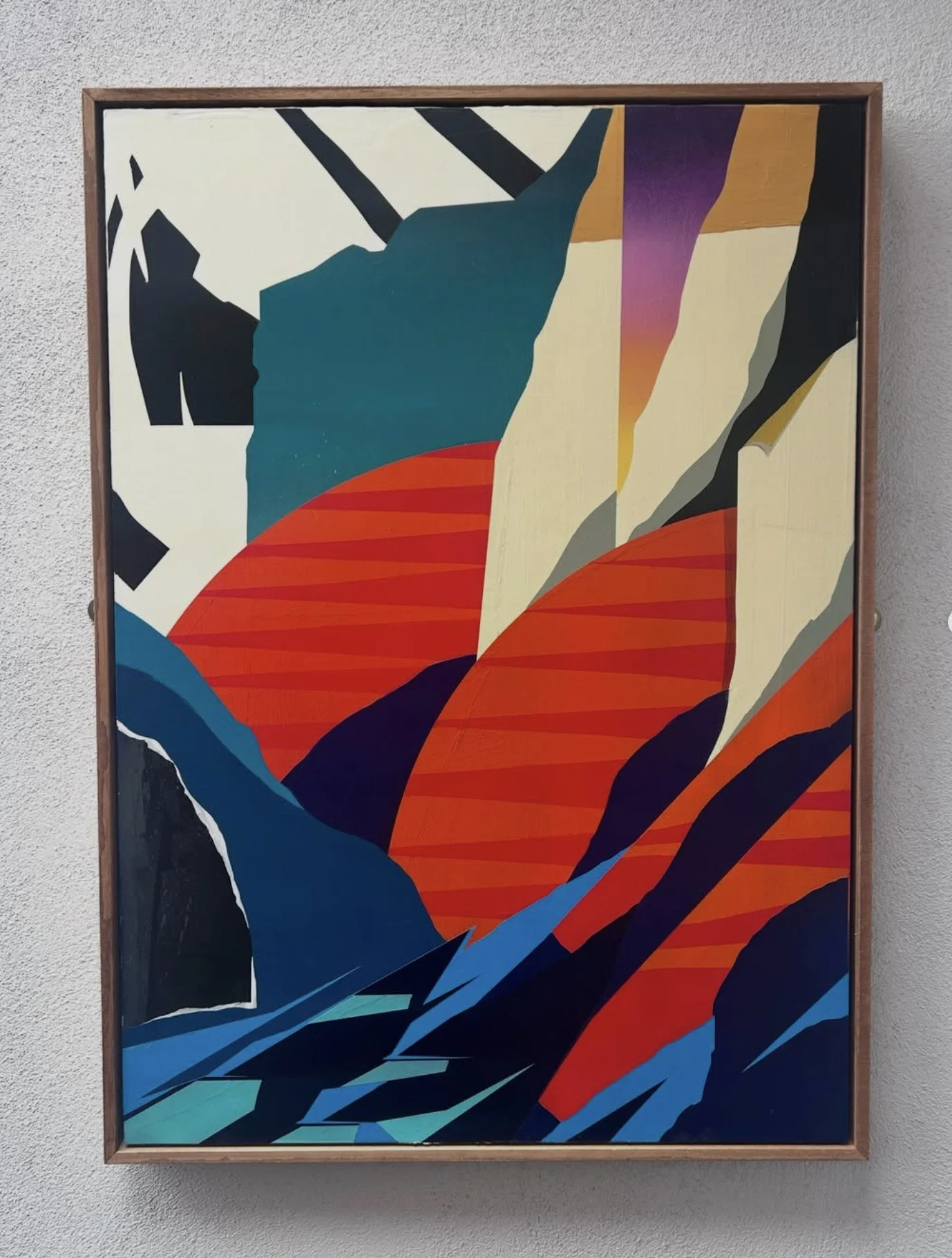
Svetlana Popović (Lana S): The title Between Two Breaths suggests a pause or a held moment. What moment were you trying to capture?
I wasn't trying to capture a particular event, but rather an almost imperceptible moment of transition.
There are moments in life when something within us is shifting, when one state of being slowly gives way to another. We may not fully understand what is happening, yet we can sense that something has changed.
Between Two Breaths exists within that interval.
To me, the silence between two breaths is not an absence of movement. It is a space filled with possibility, where endings and beginnings can coexist.
Moylin Buldain: Your work is contemporary and figurative. What story sits behind the figure in Idle?
The story behind Idle centres on the experience of being present while remaining emotionally difficult to read. I'm interested in those moments when a person's outward stillness reveals very little about what they are experiencing. The figure holds something back, and that distance becomes part of our encounter with them. Rather than providing a complete account of who they are, the painting leaves a space for recognition and projection. For me, its intimacy comes from that tension: we can feel close to someone while acknowledging that much of their inner life remains their own.
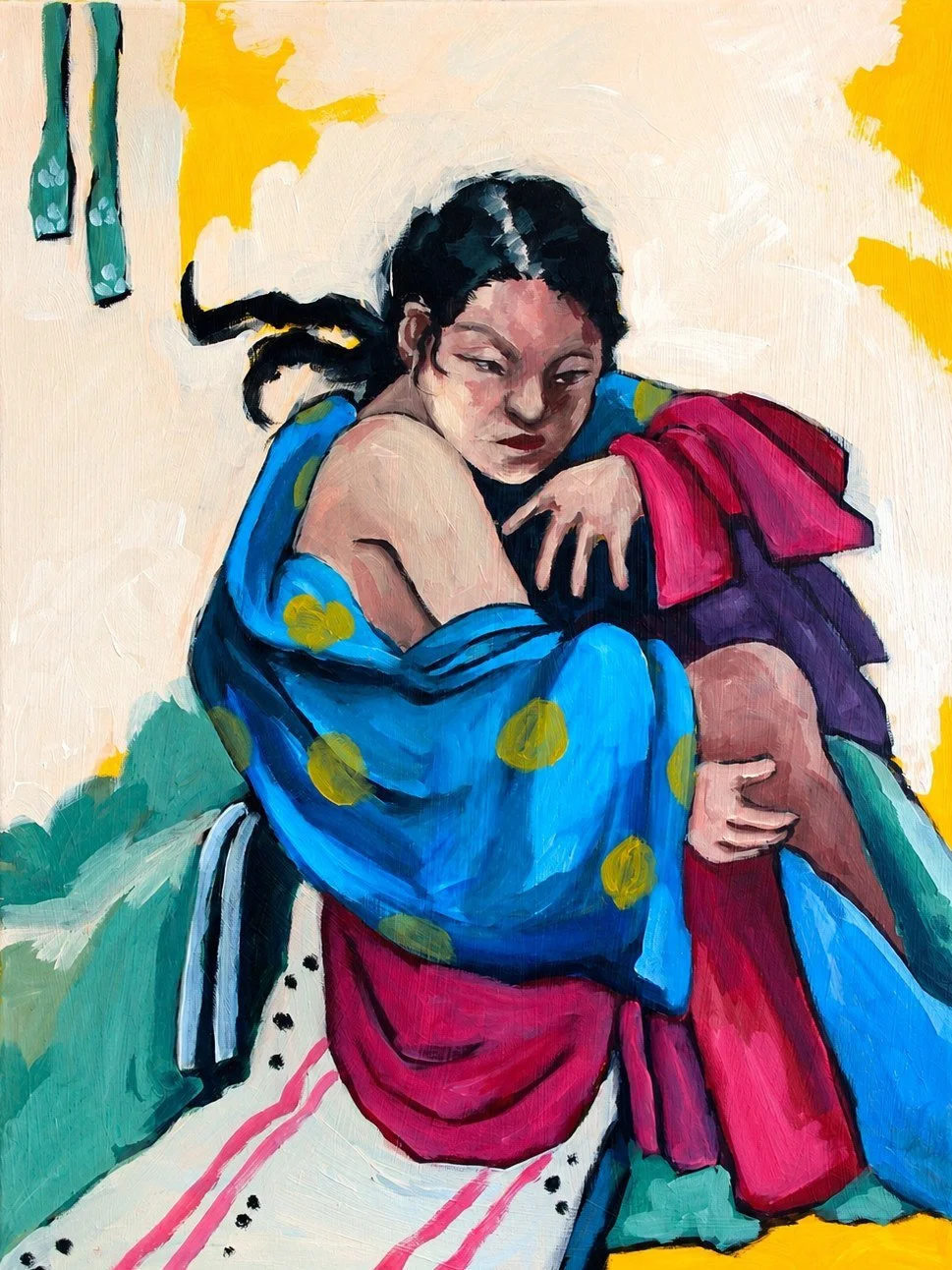
Dimitris Pikros: Tilda Swinton Is Cracking is a striking title. Why Tilda Swinton, and what does 'cracking' mean to you?
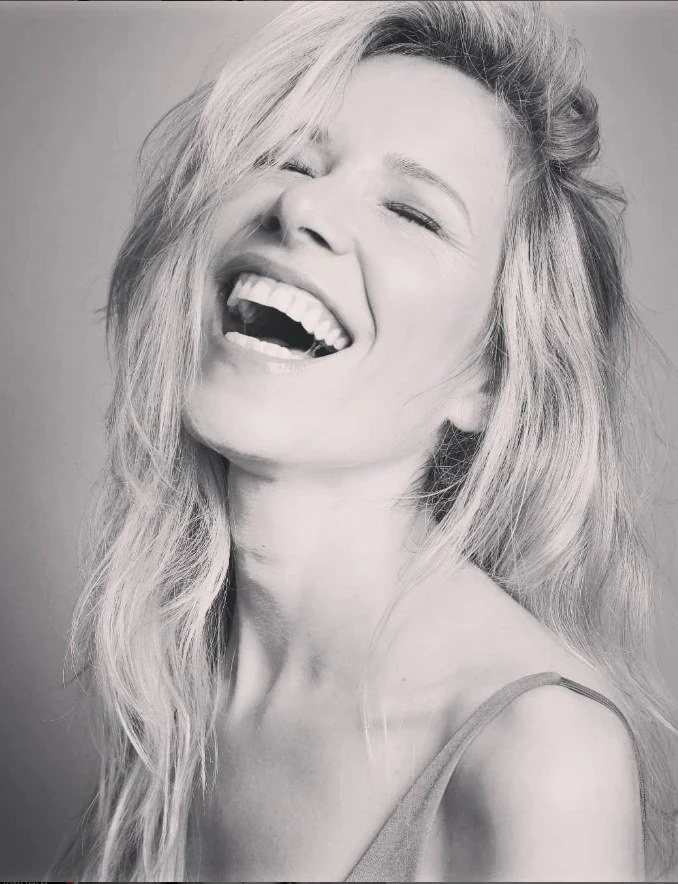
When I was thinking about what the Object in my Faceless Triptych should represent, Tilda Swinton was the first person who came to mind. Her distinctive appearance, unconventional identity and extraordinary ability to transform herself have always fascinated me. She can move beyond conventional expectations of beauty and representation, becoming a film star, fashion icon, muse or artist in her own right.
Interestingly, I had the opportunity to explain the painting to Tilda herself when I met her at the Royal Court Theatre, where she was performing in Man to Man by Manfred Karge. I gave her an art print as a gift, which she loved. During our conversation, she asked whether I had known about her performance before creating the painting. In the play, her body was covered with makeup that appeared to be cracking. Neither of us had known about this connection beforehand, making the coincidence particularly intriguing.
For me, cracking is about allowing transformation to happen. It is about breaking away from a fixed image or conventional understanding of beauty, allowing something more authentic, vulnerable and unexpected to emerge. I see this as an invitation to become more transparent, to reveal something of ourselves while remaining both delicate and strong. Tilda Swinton becomes a reference through which I explore this possibility, but the idea is also deeply personal: the freedom to transform, question our own image and remain open to becoming something else.
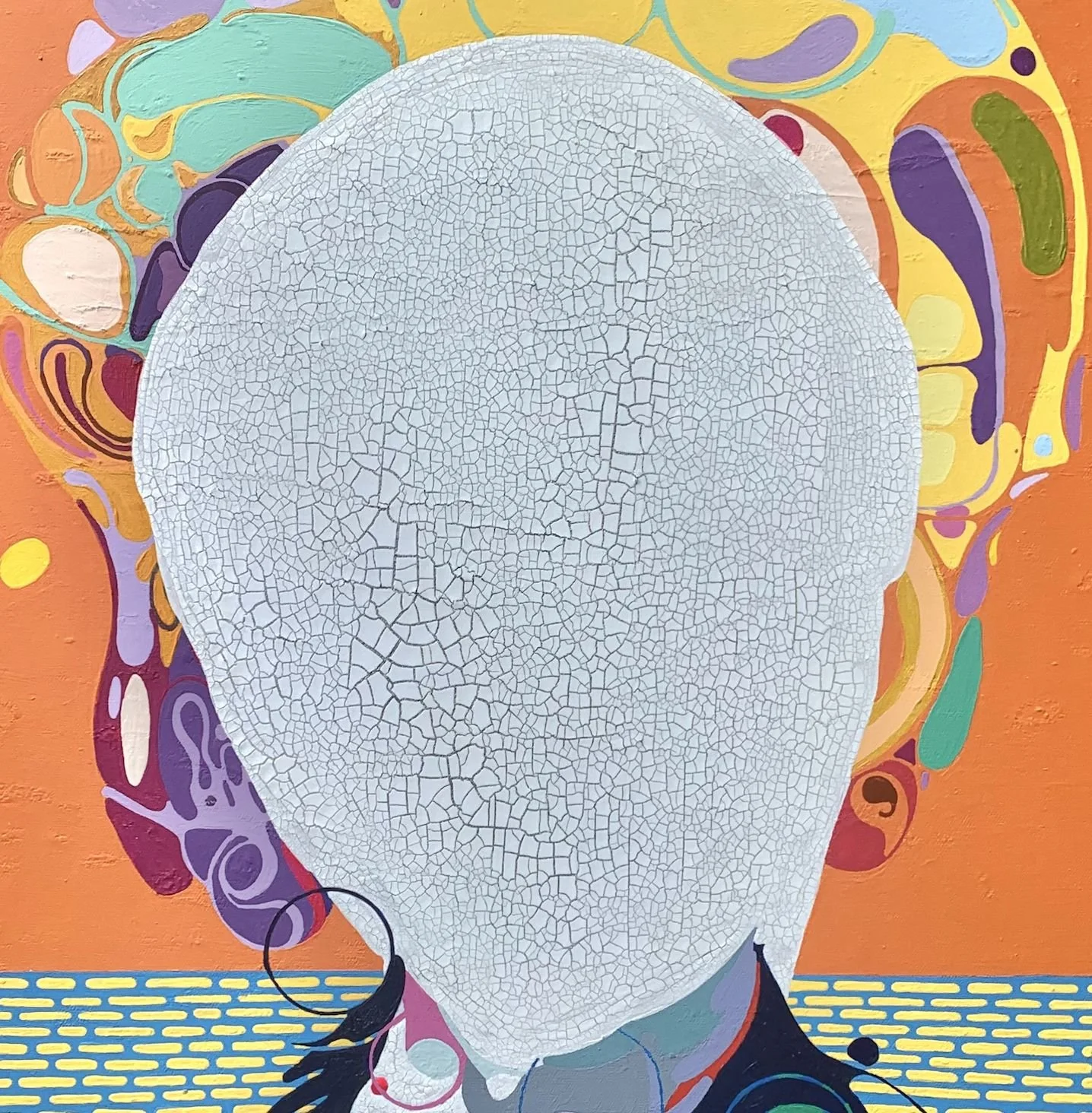
Chantal Coetzee: Your portraits Queen Elissa and Queen Diambi are named after queens. Who are they, and why did you want to portray them?
Queen Elissa was a Phoenician princess who fled her home of Tyre, in modern-day Lebanon, to escape her power-hungry and greedy brother. She took her wealth and a small army of loyal supporters and sailed westwards. She eventually founded the city of Carthage in 814 BC, in what is now modern-day Tunisia. Her skills of directing the design and building of a harbour city that would become the most successful trading port in the Mediterranean established her as one of history's most powerful queens.
Queen Diambi is the current queen of the Luba people in the Democratic Republic of Congo. She studied in Belgium and later in the US, obtaining her master's degree in Psychology, before returning to her homeland to accept the responsibility of her royal status. She is passionate about developing her nation and addressing the poor infrastructures surrounding access to potable water, health services and education. Queen Diambi is an ambassador for her nation in the truest sense of the word!
Grace Easton: Carnegie on 35mm is a film photograph. Why do you shoot on film, and what does it give you that digital doesn't?
Shooting on film I personally find more exciting. You can plan the image you want to take as much as possible, but you won't know the outcome until the developing stage. An accidental analogue image can turn out to be the best photo you ever take so by working with analogue it can allow you to make beautiful surprises. There's also a limit to how many images which I find useful to have a solid selection of work rather than having random images that are pointless and use up too much storage.
Liz Vinson: You work as an illustrator under BZ Illustrations. How does your illustration practice feed into the work you make for exhibitions?
For the past 3 exhibitions I have tapped into 6 years' worth of weekly fashion and life drawing. Finding the illustrations which will hopefully speak to others and not just me is a practice within itself!
Meet the Artists
Nick Alexander
Nick Alexander is a British abstract artist creating layered, abstract and typographic landscapes inspired by the overlooked and unsung corners of our world.
Drawing inspiration from weathered walls, peeling posters, faded typography and the marks left behind by time, his work explores the unexpected beauty found in everyday environments. Fragments of colour, texture and forgotten surfaces become the starting points for compositions that blur the boundaries between abstraction, urban landscapes and the natural world.
In the London show:
- Stairway to Daybreak, 2026. Spray paint and acrylic on wooden panel, 50 × 70 cm.
Also by the artist:
- Gnostic Gateway. Spray paint and acrylic on wooden panel, 50 × 70 cm.
- Unmapped. Acrylic and spray paint on rusted Corten steel panel, 30 × 40 cm.
- Utopia. Spray paint and acrylic on aluminium panel, 40 × 50 cm.
- Instagram: @___nickalexander___
Credits: All images courtesy of Nick Alexander (@___nickalexander___).
Svetlana Popović (Lana S)
Svetlana Popović, professionally known as Lana S, is a contemporary visual artist based in Belgrade, Serbia, working in abstract painting and hand-painted silk. She holds an MA from the Faculty of Culture and Media in Belgrade and studied painting and traditional batik at the Indonesian Art Institute (ISI Denpasar) on a scholarship during her seven years in Bali. Her artistic practice explores memory, transformation, and the invisible emotional landscapes beneath the surface through layered textures, organic forms, and intuitive abstraction.
In the London show:
- Between Two Breaths, 2026. Mixed media on canvas, 80 × 120 cm.
Also by the artist:
- Rain in Battersea – Diptych, 2026. Mixed media on canvas and hand-painted silk.
- Instagram: @lanas.art_
- Website: lanas.rs
Credits: All images courtesy of Svetlana Popović (Lana S) (@lanas.art_).
Daniel Garbade
Daniel Garbade (born in 1957 in Zurich) is a Spanish visual artist of Swiss-Cuban heritage, based in Madrid and Castilla-La Mancha. Working across painting, drawing, photography, and sculpture, his practice explores identity, desire, vulnerability, and the complexities of human relationships through a distinctive visual language. His work has been exhibited internationally in galleries, museums, and art fairs across Europe, Asia, and the Americas, and is represented in numerous public and private collections.
In the London show:
- Leisure in the 70ties, 2026. Acrylic, 117 × 75 cm, shown digitally.
Also by the artist:
- Reach, 2026. Oil on canvas, 60 × 40 cm.
- Instagram: @d_garba_de
- Website: garbade.art
Credits: All images courtesy of Daniel Garbade (@d_garba_de).
Moylin Buldain
Moylin Buldain is a British contemporary figurative painter based in Hamburg, Germany. Working primarily in acrylic on canvas, eventually leading into oils, she explores memory, folklore and personal narrative through expressive colour, layered surfaces and the human figure. She holds degrees in Fine Art from Winchester School of Art and the Cambridge School of Visual and Performing Arts, and has exhibited internationally, including in the UK, Japan and New York City.
In the London show:
- Idle, 2026. Acrylic on canvas, 30 × 30 cm.
Also by the artist:
- Idle 2, 2026. Acrylic on canvas, 30 × 40 cm. Not part of the London show.
- Instagram: @moylinstudio
- Website: moylinstudio.com
Credits: All images courtesy of Moylin Buldain (@moylinstudio).
Dimitris Pikros
Dimitris Pikros is a Greek contemporary painter based in London and a graduate of the Fine Arts Department at Aristotle University of Thessaloniki, where he received First Class Honours. His practice explores how painting can continue to evolve through an innovative approach to colour, form and composition, bringing painting into dialogue with other visual disciplines while maintaining its identity as painting. Developed through his Innovative Painting Manifesto in 2000, his work continues to investigate new possibilities for painting and its experience.
In the London show:
- Tilda Swinton Is Cracking, 2023. Acrylic and mixed media on canvas, 80 × 60 cm.
- Instagram: @dimitrispikros
- Website: dimitrispikros.com
Credits: All images courtesy of Dimitris Pikros (@dimitrispikros).
Sharon Gershman
Sharon Gershman is a conceptual mixed-media artist based near Tel Aviv, Israel. Combining intuitive painting, digital collage, and emerging technologies, she creates colourful, expressive works exploring emotions, identity, freedom, and personal transformation. Her work has been exhibited in Israel and internationally.
In the London show:
- Abstract Game, 2026. Generative looped video.
- Free Woman, 2024. Digital collage printed on aluminium, 60 × 64 cm.
- Mind Blowing, 2026. Generative looped video.
- Instagram: @sharons_art12
- Website: sharonsart.art
Credits: All images and video courtesy of Sharon Gershman (@sharons_art12).
Delila Dazdarevic
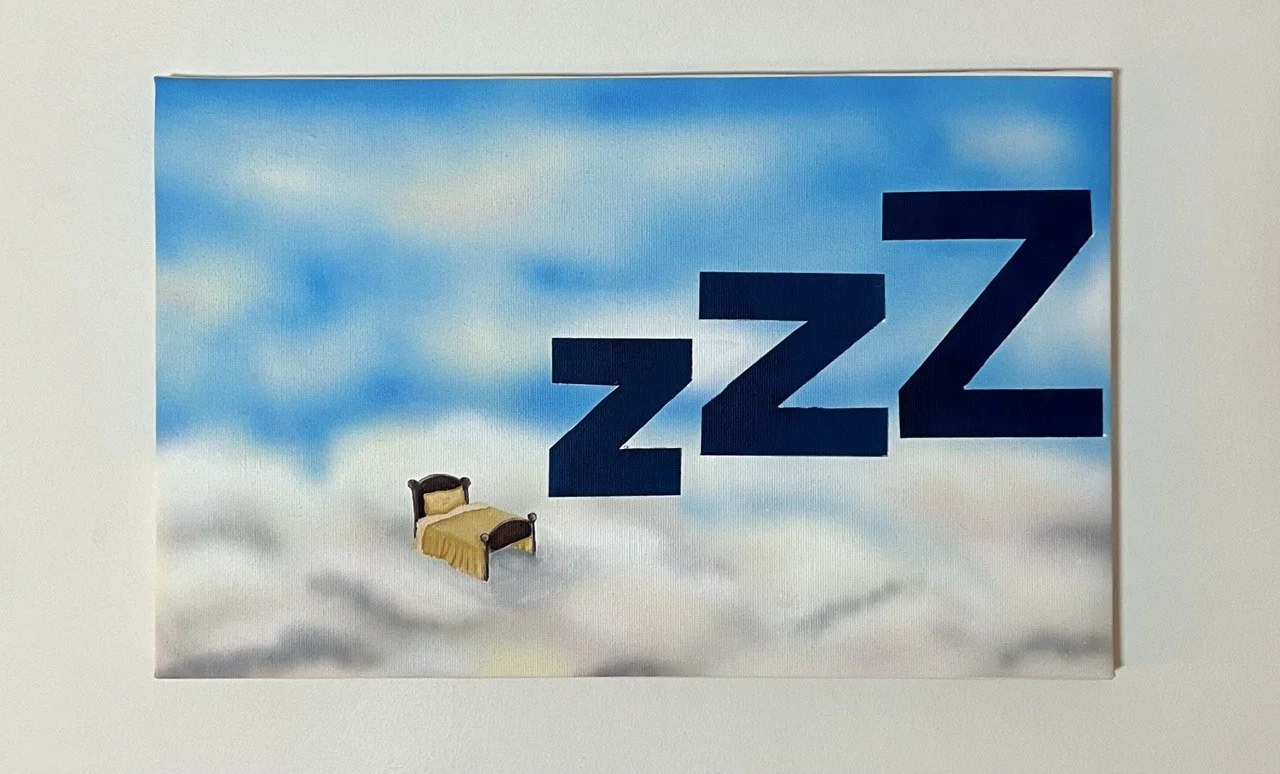
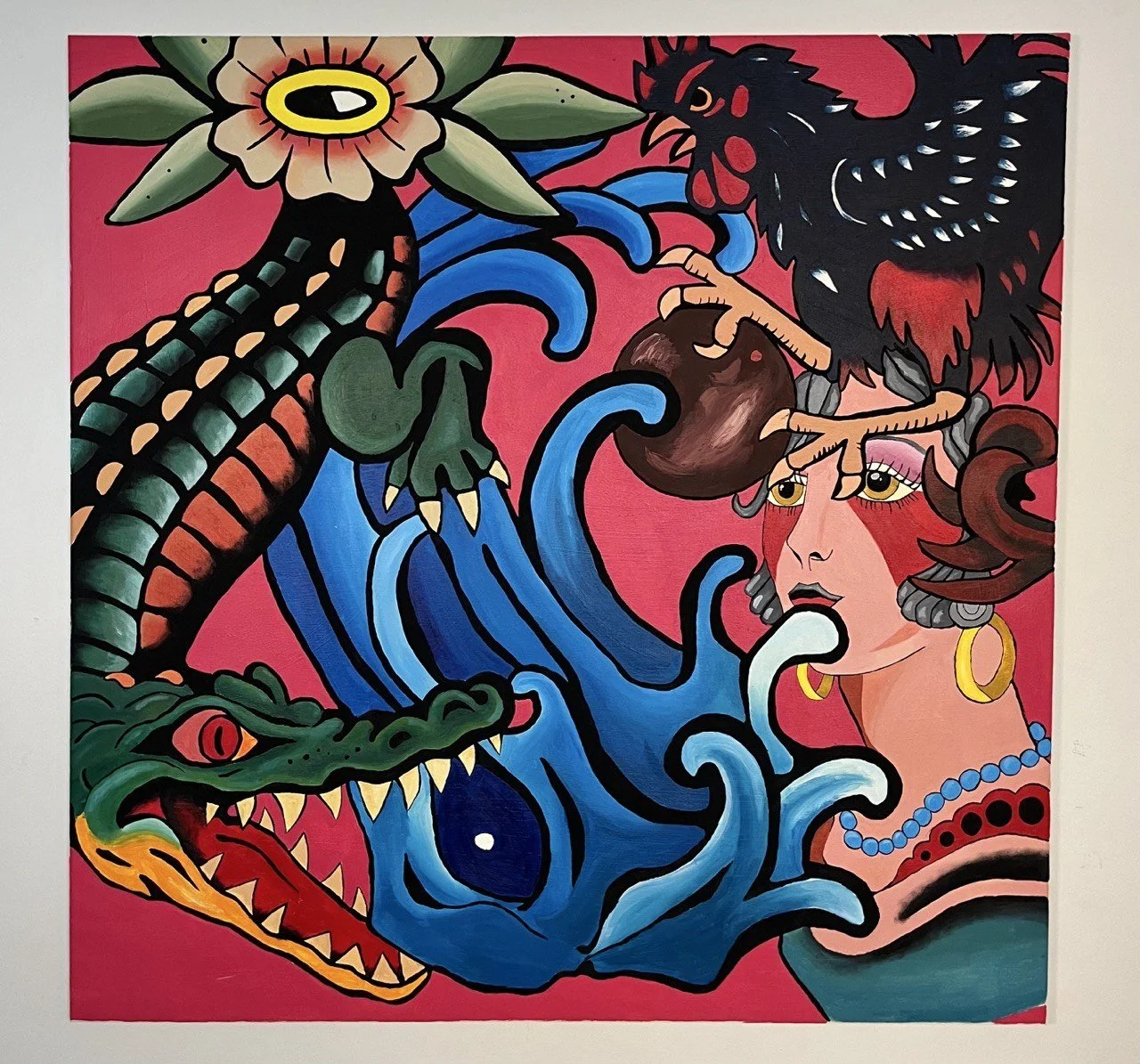
Delila Dazdarevic is a 25-year-old artist based in Stockholm working across acrylic, oil and airbrush. Her world merges vivid, pop-infused colour palettes with surreal storytelling, featuring uncanny figures, graphic shapes and thermal-inspired imagery. Through her multi-layered paintings she invites viewers into a playful universe of vibrant distortion.
In the London show:
- Bug Incident, 2026. Oil on nine canvas panels, 21 × 15 cm each.
Also by the artist:
- ZZZ, 2026. Airbrush and acrylic, 49 × 31 cm.
- Untitled, 2026. Acrylic, 100 × 100 cm.
- Instagram: @deliladazdarevic
Credits: All images courtesy of Delila Dazdarevic (@deliladazdarevic).
Chantal Coetzee
Chantal Coetzee is a well-known Cape Town-based artist, historian and radio presenter. She is inspired by the mighty women of Africa and celebrates women in all areas of her practice.
In the London show:
- Queen Diambi of DRC, 2026. Acrylic and gold leaf on Belgian linen, 130 × 130 cm.
- Queen Elissa of Carthage, 2026. Acrylic and gold leaf on canvas, 130 × 130 cm.
- Instagram: @chantal.coetzee.fine.art
- Website: art.co.za/chantalcoetzee
Credits: Portrait and studio photographs: Nick Aldridge. Artwork images courtesy of Chantal Coetzee (@chantal.coetzee.fine.art).
Grace Easton
Grace Easton is a London/Kent based photographer who delves into many different genres of photography. She studied Fine Art: Photography for 3 years at the University of the Arts London and since graduating is developing her artistic style through analogue photography documenting people and places dear to her.
In the London show:
- Carnegie on 35mm. A3 film print.
- Instagram: @graceeastonphoto
- Website: graceeastonphoto.com
Credits: Photograph of Grace at work: Nat Easton. Portrait and artwork images courtesy of Grace Easton (@graceeastonphoto).
Liz Vinson
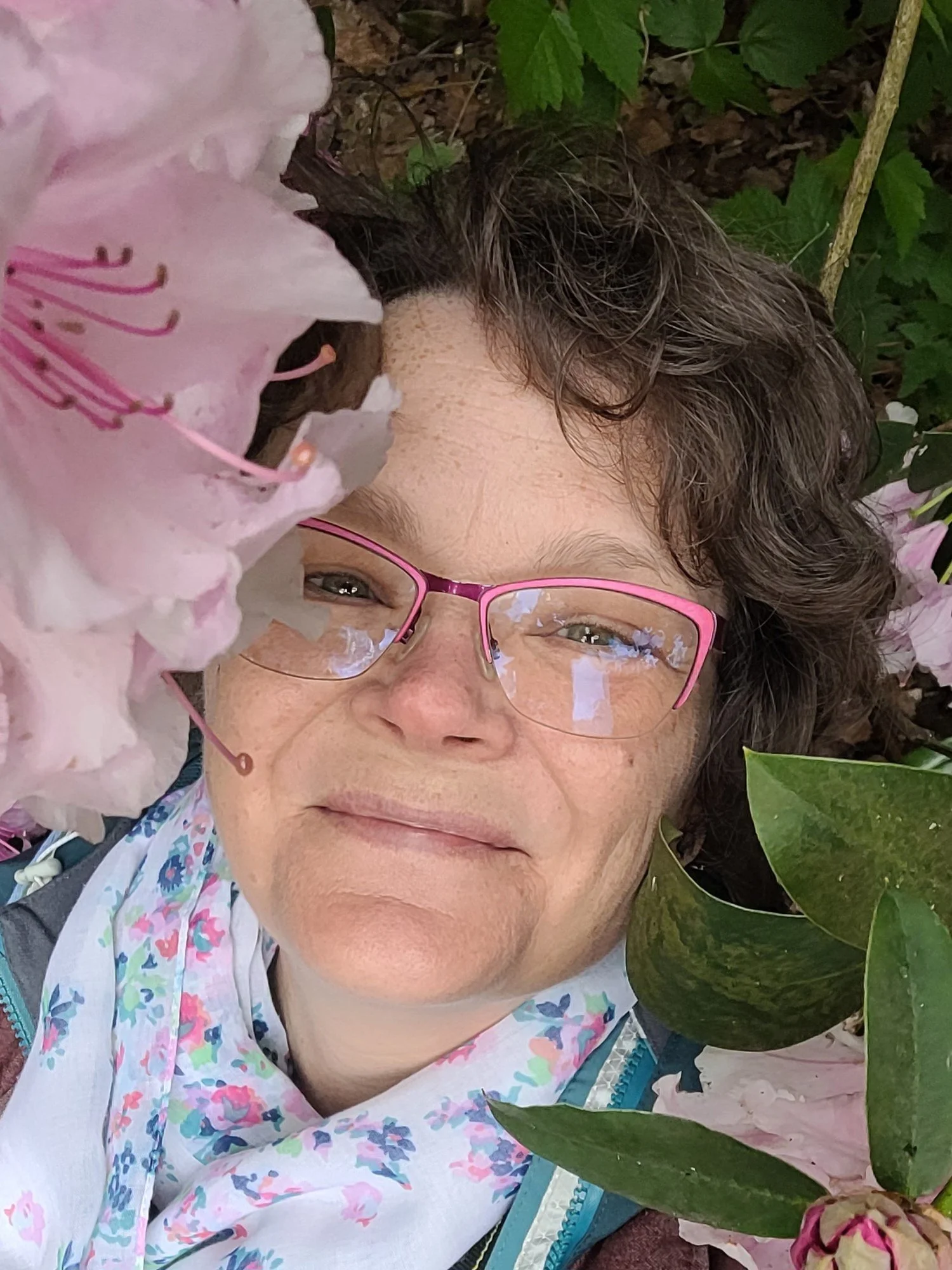
Liz is based in Kent and has a passion for life drawing, colour and form. Her work has been described as storytelling as well as expressionist, with movement and character being a main focus in her pieces. Her fashion illustrations have been published in FABUK Magazine, LAZIN Magazine, FASHION MAGAZINE 24 and Zoot. Liz has exhibited in London, Kent and Sussex, and her wildlife illustrations have been featured on TV, published in the UK and Europe, and sell worldwide.
In the London show:
- Microtonal Stretch: Fabienk, 2026. Mixed media on paper, 29.7 × 35 cm.
- Monster Suspended II, 2026. Pen and ink with Promarker on paper, 29.7 × 40 cm.
- Come Undone, 2025. Acrylic on paper, 29.7 × 40 cm.
- Instagram: @bizzylvart
- Website: bizzyillustrations.co.uk
- Etsy: bizzyillustrations.etsy.com
Credits: All images courtesy of Liz Vinson (@bizzylvart).
See the Work in London
HUGE Gallery London
The Factory, 21–31 Shacklewell Lane, London E8 2DA
27–29 November 2026
Get your tickets on Eventbrite
Are you an artist who would like to show with us? See our current open calls.
